
India
Leh & Ladakh
Ancient monasteries, turquoise lakes, and the roof of the world
Overview
Why Visit
Ladakh is India's high-altitude desert — a landscape of extraordinary austerity and beauty carved by glaciers and shaped by the Indus River over millions of years. Sitting at 3,500 metres and rising, it offers a richness that few destinations can match: ancient Tibetan Buddhist monasteries perched on impossibly steep ridgelines, the remarkable Changpa nomads and their Pashmina-bearing yaks moving across high passes, vast mountain landscapes in shades of ochre, burgundy, and silver, and Pangong Lake — a 134 km stretch of vivid turquoise at 4,350 metres, reflecting sky and mountains with mirror clarity. The Nubra Valley's sand dunes and Bactrian camels, the Zanskar gorge, and some of the darkest skies on earth for astrophotography complete a destination unlike anywhere else.
Nitin's Tips
Experiencing Leh & Ladakh
Ladakh demands a different photographic patience from the African safaris. Nitin structures the Ladakh itinerary around the monasteries at the right time of day — Thiksey at sunrise, Hemis during the June festival, Diskit in the late afternoon light. The Pangong Lake is at its most extraordinary at dawn, when the pre-sunrise colour in the sky reflects in the still water before any wind disturbs the surface. Tsomoriri Lake, deeper into the Changthang plateau, offers a wilder and far less visited alternative — black-necked cranes nest on its shores, and the surrounding mountains rise to over 6,000 metres. The Nubra sand dunes with Bactrian camels against the Karakoram Range produce compositions that exist nowhere else on earth. Hanle Observatory, one of the highest astronomical observatories in the world, sits above Hanle village and on clear nights provides an extraordinary context for astrophotography at altitude.
Book This Destination
Pricing (per day)
Year-round
Highlights
- ✦Ancient Tibetan Buddhist monasteries at golden hour
- ✦Pangong Lake — 134km of vivid turquoise at 4,350m
- ✦Tsomoriri Lake — remote Changthang plateau, black-necked cranes
- ✦Hanle Observatory — astrophotography at 4,500m
- ✦Changpa nomads and Pashmina yak herds
Wildlife
6 speciesBest Time to Visit
May – September (roads open, passes clear, monasteries and lakes accessible); October – November (autumn colours, fewer tourists)
Travel Essentials
Visa
e-Visa required
Currency
INR (Indian Rupee)
Language
Hindi, English
Timezone
IST (UTC+5:30)
At a Glance
Average altitude
3,500 m+
Pangong Lake length
134 km
Year-old monasteries
1,000+
Best photography season
May–Sep
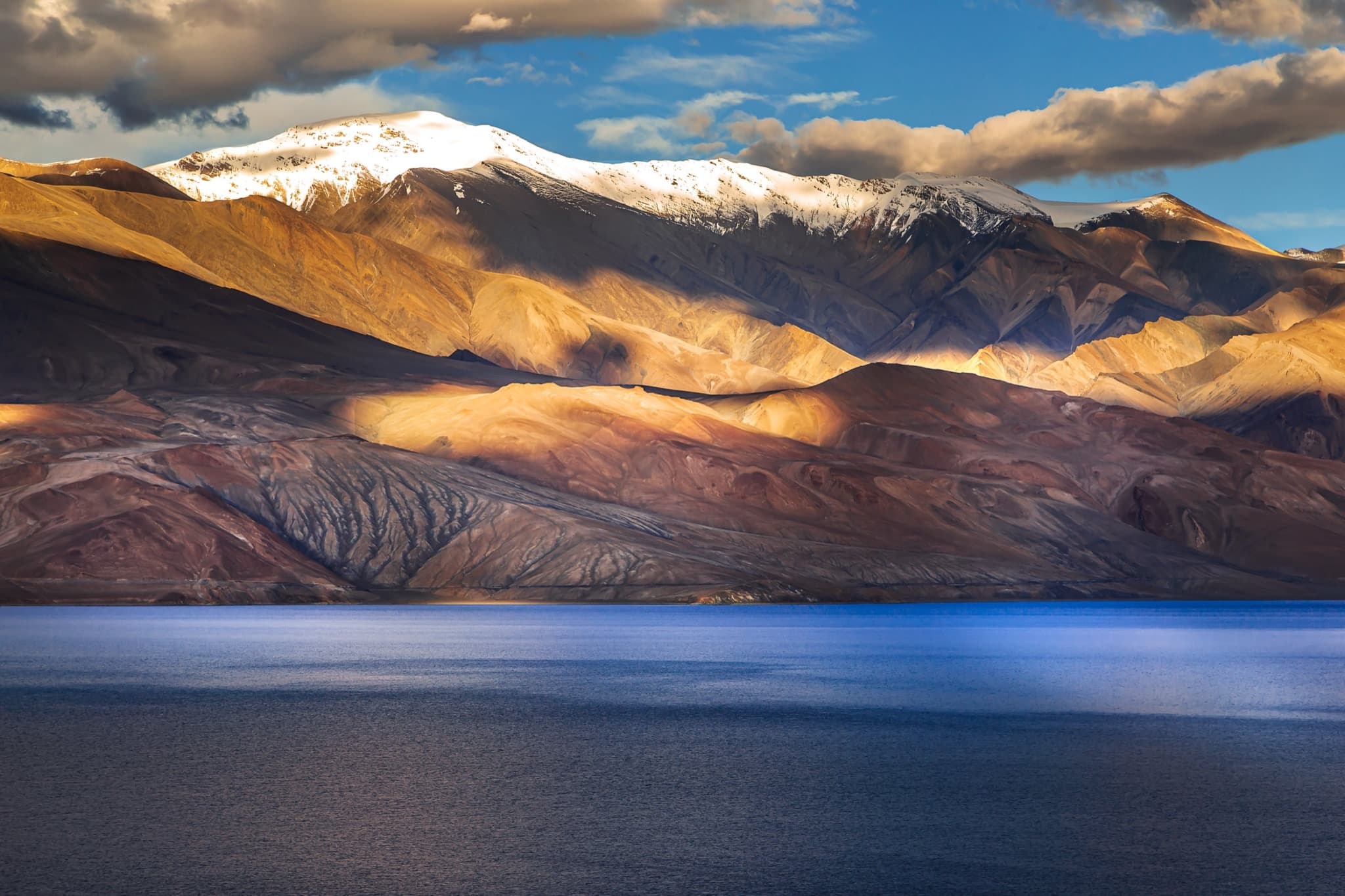
Ladakh, India — Tso Moriri lake at sunset. © Nitin Vyas

Ladakh, India — Tso Moriri lake. © Nitin Vyas

Ladakh, India — Pangong Tso, turquoise waters at 4,350m. © Nitin Vyas

Ladakh, India — Nubra Valley sand dunes beneath the Karakoram. © Nitin Vyas
What to Expect
High-Altitude Landscapes
Pangong Lake, Nubra Valley, and the high passes of the Zanskar and Karakoram ranges — landscapes that redefine your sense of scale and light.
Monastery & Landscape Sessions
Monasteries, lakes, and mountain passes are timed precisely around the best light — golden hour at altitude is extraordinary.
Max 12 Guests
Small groups allow quiet approaches in sensitive mountain terrain and Nitin's full attention on your goals.
Sample Itineraries
Photography Tours in Leh & Ladakh
These are starting points. All dates and details are customised for your group.
Plan Your Leh & Ladakh Safari
Tell us your vision and we'll build the experience around you. No fixed dates, no set groups.
Get in Touch