Best Camera Settings for African Wildlife Photography
From cheetah sprints to leopards at rest, these camera settings will help you capture sharp, compelling wildlife images on your East Africa photography safari.
The Golden Rule: Light First, Settings Second
Before discussing specific camera settings, the most important variable in African wildlife photography is light. The quality, direction, and intensity of light determines more about the final image than any camera setting. This is why professional wildlife photographers — and Nitin Vyas — structure every safari day around dawn and dusk game drives. The midday hours offer harsh, flat, shadowless light that flattens detail and reduces contrast. The golden hour offers directional, warm, low-contrast light that transforms even ordinary subjects into extraordinary images.
Plan your safari around the light. Camera settings exist to make the most of it.
Core Settings by Situation
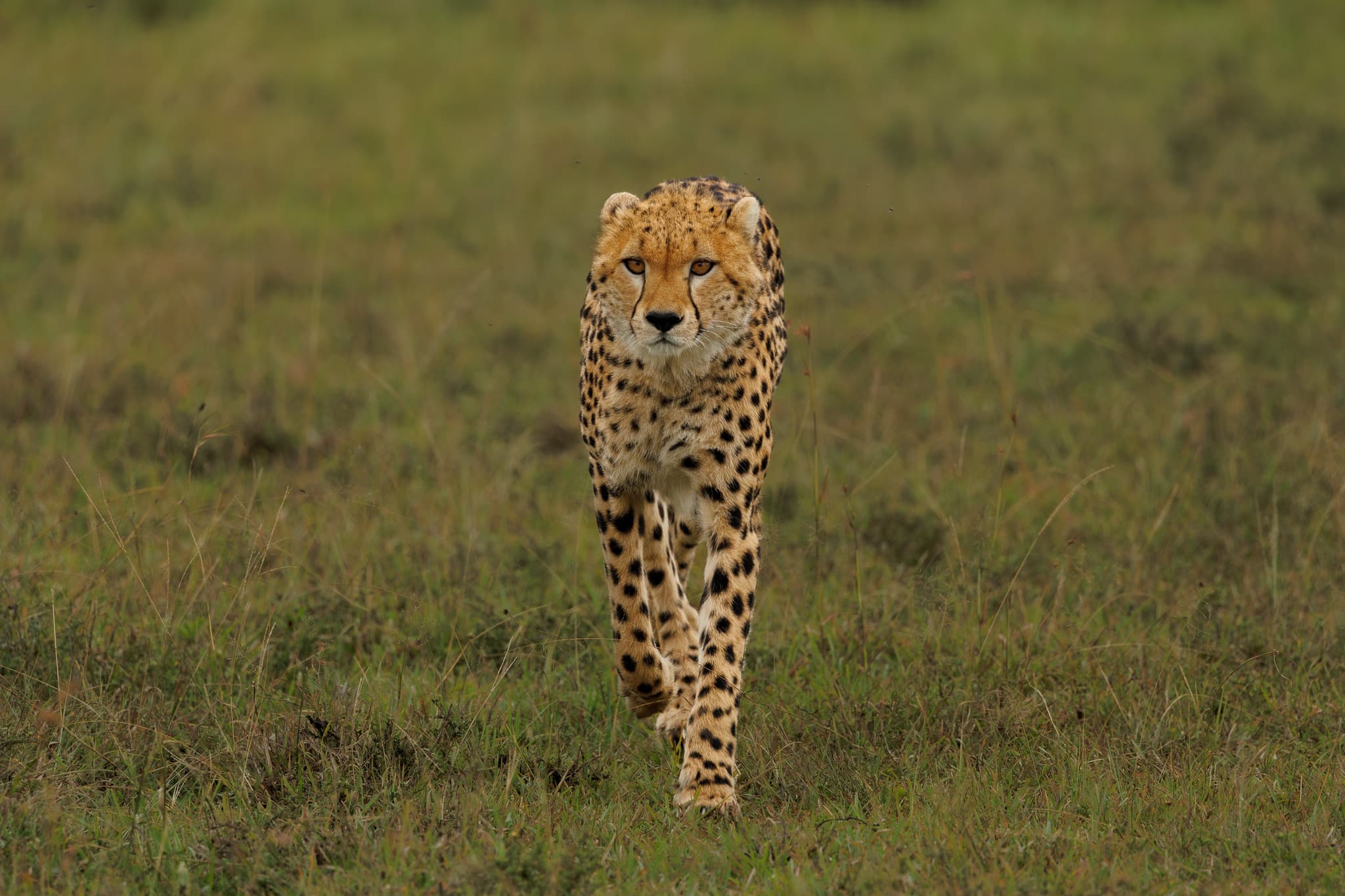
Fast-Moving Action (Cheetah Hunt, River Crossing, Bird in Flight)
Shutter speed: 1/1600s minimum; 1/2500s for freezing fast action like a cheetah sprint or crocodile strike.
Aperture: f/5.6–f/6.3. Wide enough for background separation; narrow enough to keep a moving subject sharp even if AF isn't perfect.
ISO: Auto ISO capped at 6400 (modern cameras handle this well; some handle 12800 cleanly). Let the camera decide — your primary control is shutter speed.
AF mode: Continuous (AI Servo on Canon, AF-C on Sony/Nikon). Use face/animal detection if your camera has it — it is genuinely useful for wildlife.
Drive mode: High-speed burst. Don't hold the shutter continuously — you'll fill the buffer. Instead, burst in 1–2 second bursts around the peak action moment.
Focus point: Use a single expandable AF point rather than full-zone AF in complex backgrounds (grass, branches). Zone AF can hunt between subject and background.
Resting Animals and Portraits (Lions, Leopards at Rest, Elephant Close-Ups)
Shutter speed: 1/400s minimum (faster if hand-holding). Most resting animals offer time to compose — prioritise aperture for background blur.
Aperture: f/4–f/5.6 for subject isolation and background bokeh. Stop down to f/7.1 if you want both eyes sharp on a large animal close-up.
ISO: As low as the light allows while maintaining your target shutter speed. Use Auto ISO with a minimum of 1/400s enforced.
AF mode: Single shot (One Shot / AF-S) once on the eye. Lock focus, compose, shoot.
White balance: Auto works well in African light. Some photographers prefer Cloudy or Shade preset during golden hour for slightly warmer rendering — but shoot RAW and adjust in post.
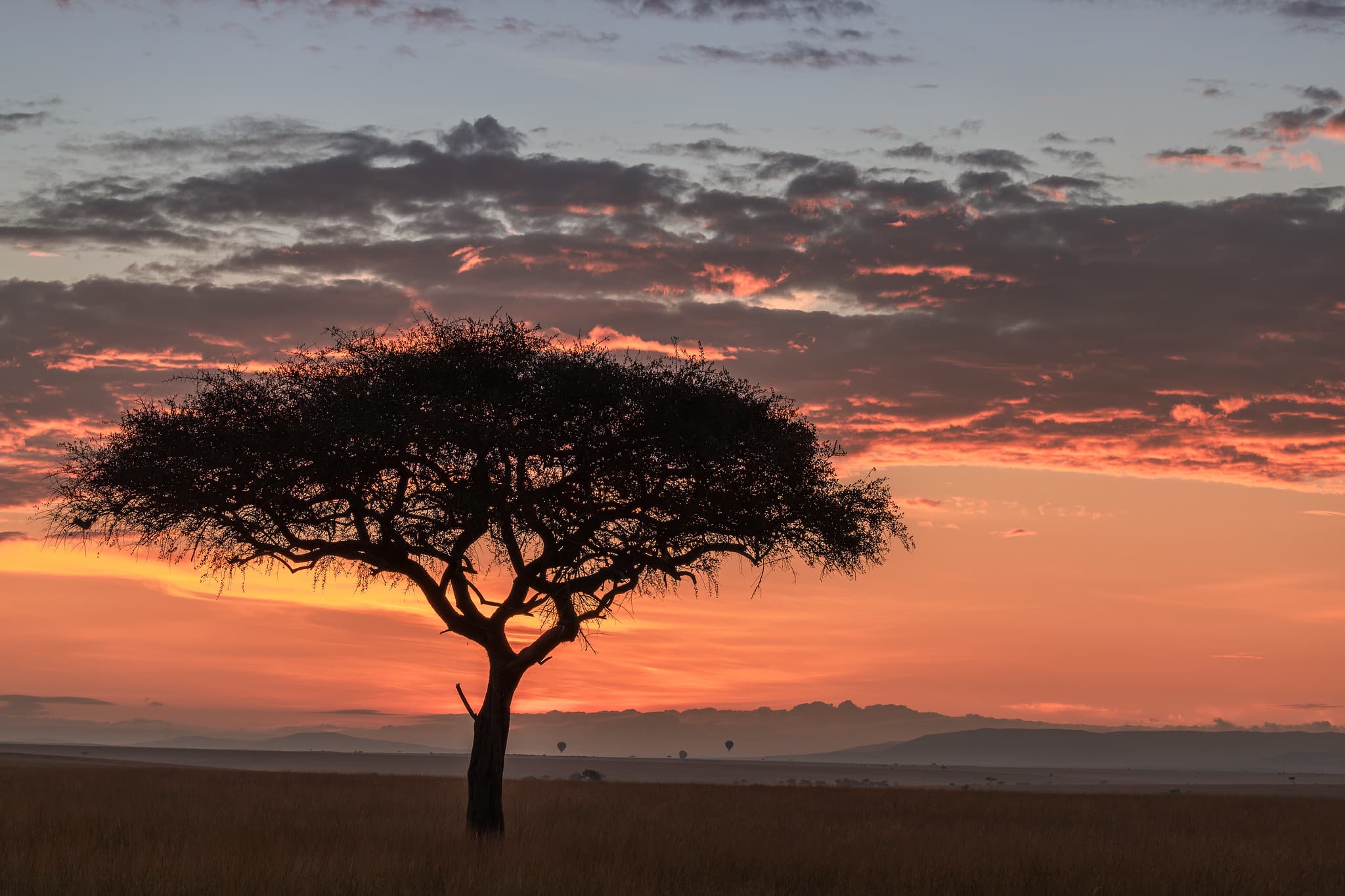
Landscape and Environmental (Plains, Kopjes, Herd Scale)
Shutter speed: 1/125s is sufficient if the scene has no fast movement. Use a tripod or beanbag for maximum sharpness.
Aperture: f/8–f/11 for front-to-back depth of field across a landscape.
ISO: 100–400 — you have time to use the base ISO in landscape work.
Composition notes: Rule of thirds for horizon placement (usually bottom third to emphasise dramatic skies). Leading lines — animal tracks, dried riverbeds, tree lines — draw the eye through the frame.
The Beanbag: Your Most Important Accessory
In an open-top safari vehicle, a beanbag draped over the window frame is the single most effective stabiliser available. It is more stable than a monopod, more flexible than a tripod, and allows you to track moving subjects smoothly. Fill it with rice or dried lentils on arrival (empty for the flight to avoid baggage weight).
Every fototrails 365 vehicle is equipped with beanbags, but bring your own if you prefer a specific size or weight.
RAW vs JPEG
Shoot RAW. Always. African wildlife photography involves rapidly changing light, mixed colour temperatures (open sky, shade, golden light), and subjects that may be over- or under-exposed due to the speed of action. RAW files give you the latitude to recover highlights, lift shadows, and correct colour casts in post. JPEG bakes those decisions in and gives you no recovery headroom.
If your camera card capacity is a concern, add capacity rather than switching to JPEG.
A Word on Patience Over Settings
The most technically perfect camera settings produce nothing without patience and positioning. On every fototrails 365 tour, Nitin's priority is getting you into the right position before the action happens — not reacting to it. A cheetah spotted walking toward open ground may deliver a hunt in 20 minutes. An hour at a river crossing site may end in a crossing or in the herd retreating. The settings above will serve you in those moments; the wait is what creates them.