Bird Photography on African Safari: Species, Settings & Techniques for Stunning Shots
Africa has over 2,500 bird species, and most safari photographers walk right past them. Here's how to photograph the continent's extraordinary birdlife — from shoebills and bee-eaters to raptors in flight.
The Overlooked Subjects
On every safari I lead, guests arrive wanting to photograph lions, leopards, elephants, and gorillas. And they should — these are extraordinary animals. But by the end of the trip, the images many guests are most proud of are their bird photographs.
Africa is home to over 2,500 bird species — from the prehistoric shoebill stork to jewel-like sunbirds no larger than your thumb. Birds are everywhere on safari, they are often approachable, and they offer photographic variety that mammals simply cannot match: colour, flight, behaviour, and intimacy.
The best part? While 20 vehicles jostle for position around a sleeping lion, you can photograph a lilac-breasted roller in perfect light, completely alone.
The Birds You Must Photograph
The Shoebill Stork (Uganda)
The shoebill is one of the most extraordinary birds on earth — a living dinosaur standing nearly five feet tall, with a shoe-shaped bill designed for catching lungfish. They are found almost exclusively in the wetlands of Lake Victoria, Uganda, accessible on a half-day excursion from Entebbe.
Shoebills are patient, slow-moving hunters. They stand motionless for long periods, then strike with explosive speed. This makes them excellent photographic subjects — if you can reach them. Access is by small boat through papyrus swamps, and you will need a guide who knows where the resident individuals are.
Settings: 200–400mm lens. f/5.6 for subject isolation against the papyrus. 1/500s for static poses, 1/2000s for the bill strike.
Bee-Eaters
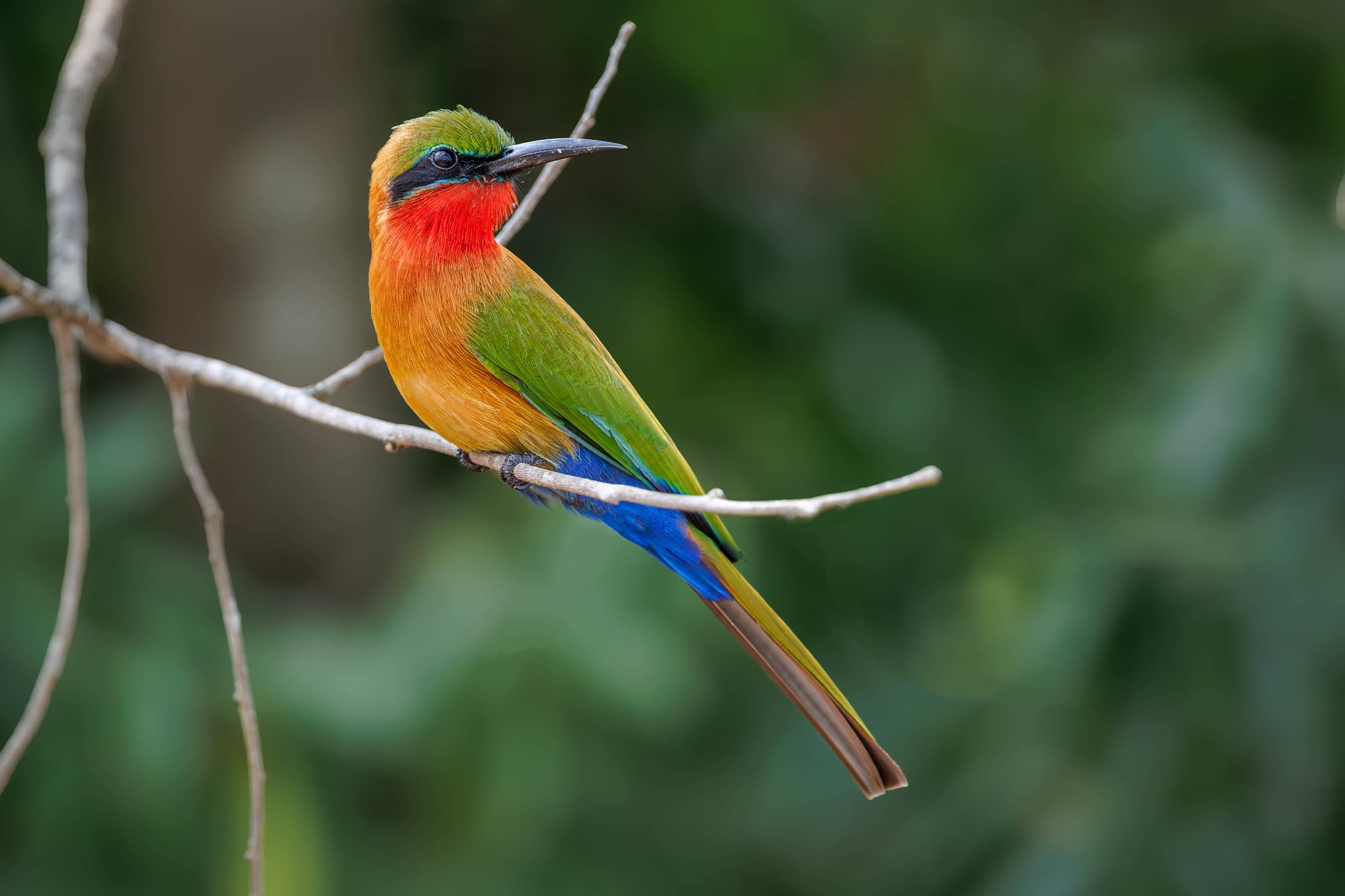
Africa has 20 species of bee-eater, and they are all stunningly colourful. The carmine bee-eater, with its deep crimson plumage, nests in huge colonies along riverbanks in East and Southern Africa. The white-fronted bee-eater is a cooperative breeder with complex social dynamics.
Bee-eaters catch insects on the wing and return to their perch to eat. This creates a predictable pattern you can exploit: focus on the perch, wait for the bird to return, and shoot in burst mode as it lands.
Settings: 400–600mm lens (they are small). f/5.6–f/6.3. 1/2000s+ for flight shots. Continuous AF with bird tracking.
Raptors
Africa's raptors are among the most photogenic birds of prey in the world. Key species to target:
- African fish eagle — found near every lake and river. Their distinctive call is the soundtrack of the African bush. Photograph them catching fish or calling from a dead tree.
- Bateleur eagle — a striking short-tailed eagle with a crimson face, often seen soaring low over the savanna. In-flight photographs of bateleurs with their distinctive rocking flight are very rewarding.
- Martial eagle — Africa's largest eagle. Massive, powerful, and increasingly rare.
- Secretary bird — a ground-hunting raptor that stomps snakes to death. Photographing one in stride across the grasslands is a classic safari image.
Lilac-Breasted Roller
Arguably the most photographed bird in Africa — and for good reason. The colours are extraordinary: lilac breast, turquoise wings, green head, orange back. They perch conspicuously on bushes and wires, making them accessible even with a modest telephoto.
The key to a great roller photograph is background. A roller against a clean, blurred background is stunning. Against a busy background, the colours are lost. Position your vehicle so the bird is above the horizon line, giving you sky as background, or find one perched with a distant, uniform background.
Grey Crowned Crane
Uganda's national bird — elegant, colourful, and increasingly endangered. They are common in the wetlands around Queen Elizabeth National Park and Murchison Falls. Photographing a pair in courtship dance (jumping, wing-spreading, calling) is one of Uganda's finest bird photography opportunities.
Camera Settings for Bird Photography
Perched Birds (Static)
- Focal length: 400–600mm. Birds are small and you want to fill the frame.
- Aperture: f/5.6 – f/6.3 for maximum background blur and subject isolation.
- Shutter speed: 1/500s minimum. Birds move their heads constantly.
- ISO: Whatever is needed for the shutter speed. Do not sacrifice sharpness for low ISO.
- Focus: Single-point AF on the eye.
Birds in Flight (BIF)
Birds in flight is the most challenging discipline in wildlife photography. It rewards practice and punishes hesitation.
- Shutter speed: 1/2500s – 1/4000s. This freezes wing motion completely.
- Aperture: f/6.3 – f/8. You need some depth of field to keep the whole bird sharp.
- Focus mode: Continuous AF with the widest tracking area your camera allows. AI-based bird tracking (available on modern mirrorless cameras) is transformative for BIF photography.
- Drive mode: Maximum burst rate. Fire in short bursts as the bird crosses your field of view.
Technique: Start tracking the bird when it is far away and let the AF system lock on before it reaches optimal range. Do not wait until the bird is close and then try to acquire focus — you will miss every time.
Birds at the Nest
Nest photography can produce intimate, storytelling images — feeding chicks, nest-building, courtship displays. But it carries ethical responsibilities:
- Never approach a nest on foot without a knowledgeable guide who can assess whether your presence will cause disturbance.
- Use your longest lens and keep maximum distance.
- Limit your time — 15–20 minutes at a nest is sufficient. Extended presence increases the risk of nest abandonment.
When to Photograph Birds on Safari
Green Season (November – April in East Africa)
This is peak birding season. Migratory species from Europe and Central Asia arrive, resident species are in breeding plumage, and the landscape is lush and green. The combination of colourful birds against green backgrounds produces the most vibrant images.
Many safari operators discount green-season trips because mammal sightings can be harder in tall grass. But for bird photographers, this is the premium season.
Morning Hours
Birds are most active in the first 2–3 hours after sunrise. This overlaps perfectly with the golden-hour light that makes for the best photographs. By midday, activity drops and harsh light makes photography difficult. Use the middle of the day for rest or reviewing images.
Adding Birds to Your Safari
You do not need a dedicated birding trip to photograph birds well. On every fototrails 365 safari, I encourage guests to spend the last 30 minutes of each game drive on birds. By late morning, the big cats are sleeping and the light is getting harsh — but the bee-eaters are catching insects, the raptors are soaring, and the rollers are perching.
Those 30 minutes will give you some of your favourite images of the trip. I guarantee it.