Your First African Photography Safari: Everything Nobody Tells You
Forget the camera specs for a moment — here's what a day actually looks like, how close you really get, what the camps are like, and how to prepare for the experience of a lifetime.
Before We Talk About Cameras
You have probably spent weeks researching lenses, sensor comparisons, and memory card speeds. That is all useful — but nobody talks about what the experience actually feels like, day to day, hour to hour. This post is about everything else. The things that surprised me on my first safari, and the things I now prepare every guest for before we leave.
If you are reading this, you are probably both excited and a little nervous. Good. That means you care about the experience. And I want to tell you: you are going to be fine. More than fine. You are going to come home changed.
What a Typical Safari Day Looks Like
The Early Morning (4:30 AM – 5:30 AM)
Your alarm goes off at 4:30 AM. It sounds brutal, but here is the truth: by your second morning, you will be awake before the alarm. Something shifts in your body clock when you are in the bush. The air is cool — genuinely cold, sometimes — and you will want a fleece or light jacket. You stumble to the dining area for a quick coffee and a rusk or light pastry. Nobody is chatty yet. That is normal. The guides are already scanning the horizon.
By 5:30 AM, you are in the vehicle and rolling out of camp as the sky turns from grey to pale gold.
The Morning Drive (5:30 AM – 10:00 AM)
This is the most productive photography window of the day. The light is soft, warm, and directional. Predators are active — lions returning from a night hunt, cheetahs scanning the plains, leopards that have not yet climbed to their daytime resting spots. The air is still. The grass catches the low sun. These are the hours where your best images will happen.
A typical morning drive covers 40–60 km across the reserve or conservancy. Your guide is in constant communication with other drivers, and Nitin is reading the landscape — watching vulture patterns, scanning tree lines, listening. When something is spotted, the vehicle repositions carefully for the best angle and light.
Some mornings, you find a leopard in the first 20 minutes. Other mornings, you drive for an hour before finding anything significant. Both are normal. The bush does not operate on a schedule.
Midday Rest (10:00 AM – 3:30 PM)
By mid-morning, the light turns harsh and flat, the animals rest in the shade, and the vehicle returns to camp. This is your time. You eat a full breakfast or lunch, review your morning images, nap, read, swap stories with the group, or simply sit and absorb the sounds of the bush — weaverbirds chattering, the distant call of a fish eagle, wind through acacia thorns.
Do not underestimate how restorative these midday hours are. Safari photography is physically and mentally demanding — the early starts, the concentration, the excitement when a sighting unfolds. Your body needs the rest, and so does your brain. Let yourself do nothing. You are on holiday in one of the most beautiful places on Earth.
The Afternoon Drive (3:30 PM – 7:00 PM)
As the light softens again, you head back out. The afternoon drive is often when the narrative of the day unfolds — the cheetah you saw at dawn may be hunting now. A herd of elephants moves to the river. A pride of lions stretches and begins to stir.
The last hour before sunset produces some of the most dramatic light in photography. Silhouettes, backlit manes, dust turned to gold. Nitin will position the vehicle so that the light falls exactly where it needs to.
Evening (7:00 PM – 9:00 PM)
You return to camp as the sky deepens. Dinner is served — and it is almost always excellent, which catches people off guard. More on that below. Conversation is easy by now. People share their favourite moments, compare images, laugh about the wildebeest that walked directly in front of the vehicle. By 9:00 PM, most guests are asleep. You have been awake for over 16 hours. Sleep comes fast.
How Close You Actually Get
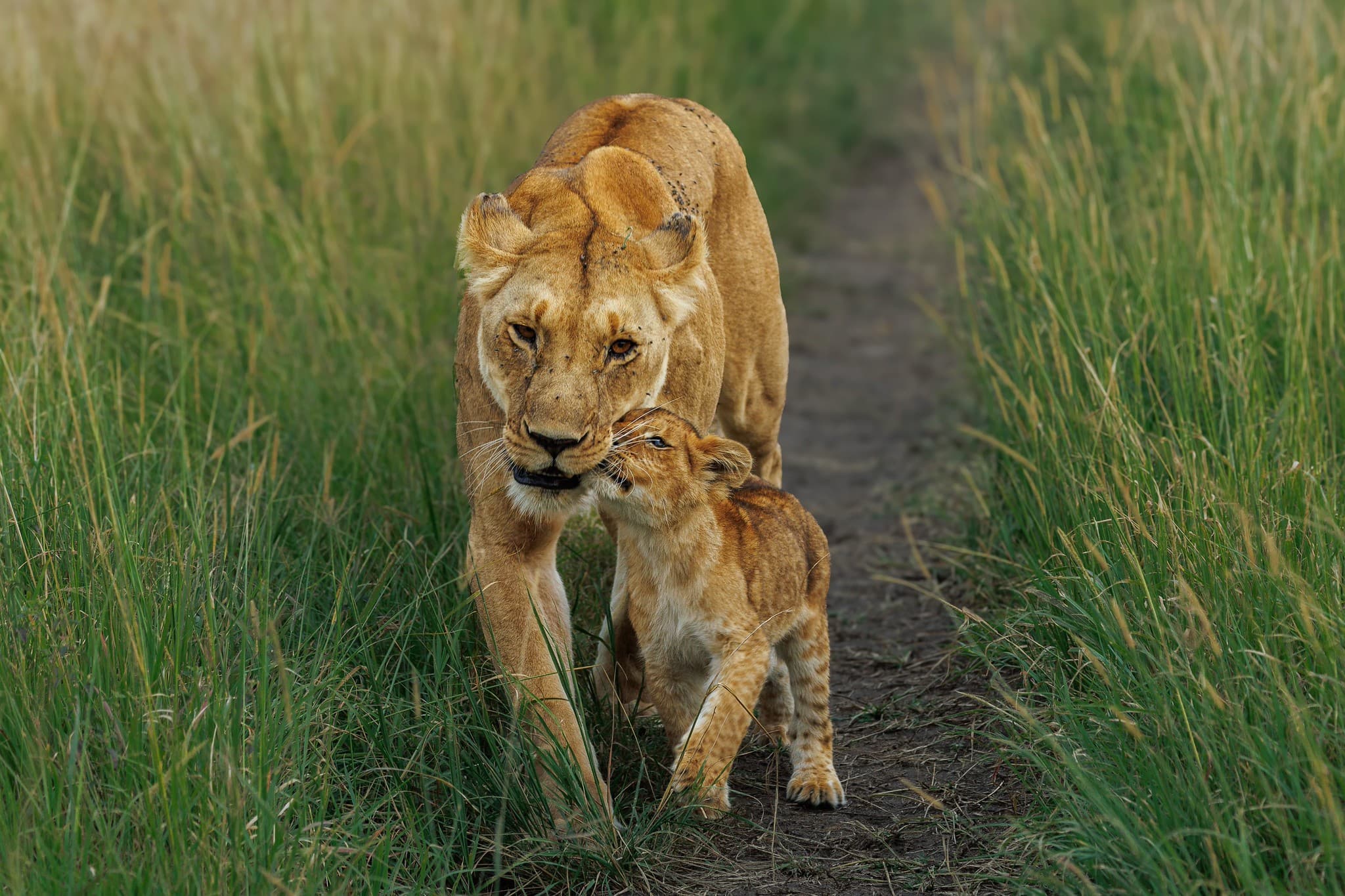
Closer than you expect. Safari vehicles in East Africa are not perceived as a threat by most wildlife. Animals grow up around them. A lion will walk past your vehicle at three metres without a glance. Elephants will browse on a bush beside you. A leopard draped across a branch may be close enough that you need to zoom out rather than in.
This proximity is thrilling and deeply humbling. It is also one of the reasons a 100–400mm zoom is more versatile than a prime telephoto — you will sometimes need the shorter end of that range.
The key rule: you stay in the vehicle. Always. The animals accept the vehicle as a familiar, harmless shape. The moment a human stands up or steps out, the dynamic changes. Your guide will manage every aspect of animal safety — trust them completely.
The Vehicle Setup
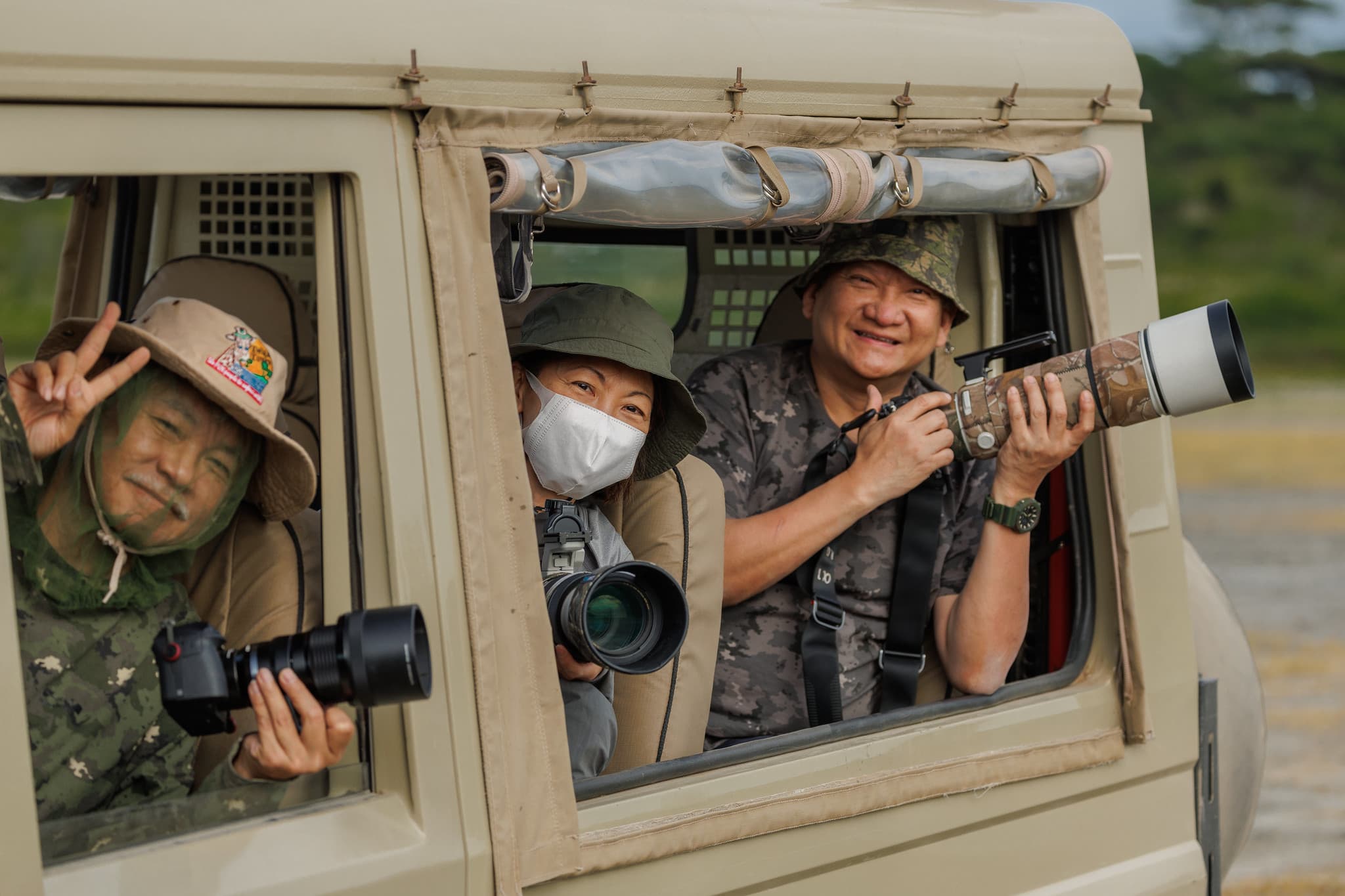
On a fototrails 365 tour, we use pop-top Land Cruisers with a maximum of four photographers per vehicle. This is deliberate. Six people in a vehicle means someone is always blocked. Four means everyone has a window position, freedom to move, and space for their gear.
The roof pops up so you can stand and shoot over the top of the vehicle — useful for elevated angles, especially with grazing herds and birds. Beanbags are provided for stabilisation. You will not need a tripod; in fact, a tripod is a liability in a moving vehicle.
What the Camps and Lodges Are Like
If you are imagining a tent with a sleeping bag on the ground, recalibrate. Mid-range and higher safari accommodation is genuinely comfortable. Expect a proper bed, hot running water, a flush toilet, and often a small veranda with a view. Some camps are luxurious — open-air showers, king-size beds, private decks overlooking the savanna.
The sounds at night are extraordinary. Hippos grunting. Hyenas calling. The low rumble of a lion that vibrates in your chest. You are separated from all of it by canvas or thin walls. It feels wild because it is wild — but it is also completely safe. Camp staff are trained and experienced, and the camps are designed with wildlife movement in mind.
The Food
This is the thing that surprises people most. Safari food is excellent. Camps employ skilled chefs who produce three-course meals from kitchens you would not believe could exist in the middle of the bush. Fresh bread, grilled meats, curries, salads, fruit — and bush breakfasts served on a blanket overlooking the plains while you review your morning images.
Dietary requirements are handled well. Vegetarian, vegan, gluten-free, halal — let us know in advance and it will be arranged without fuss.
The Guides
Your guide is, without exaggeration, the most important factor in the quality of your safari. A skilled guide reads the landscape the way you read a photograph — they see the story before it happens. They know that a twitching tail means a hunt is imminent, that a particular tree is a leopard's favourite resting spot, that the vultures circling to the north mean something has died.
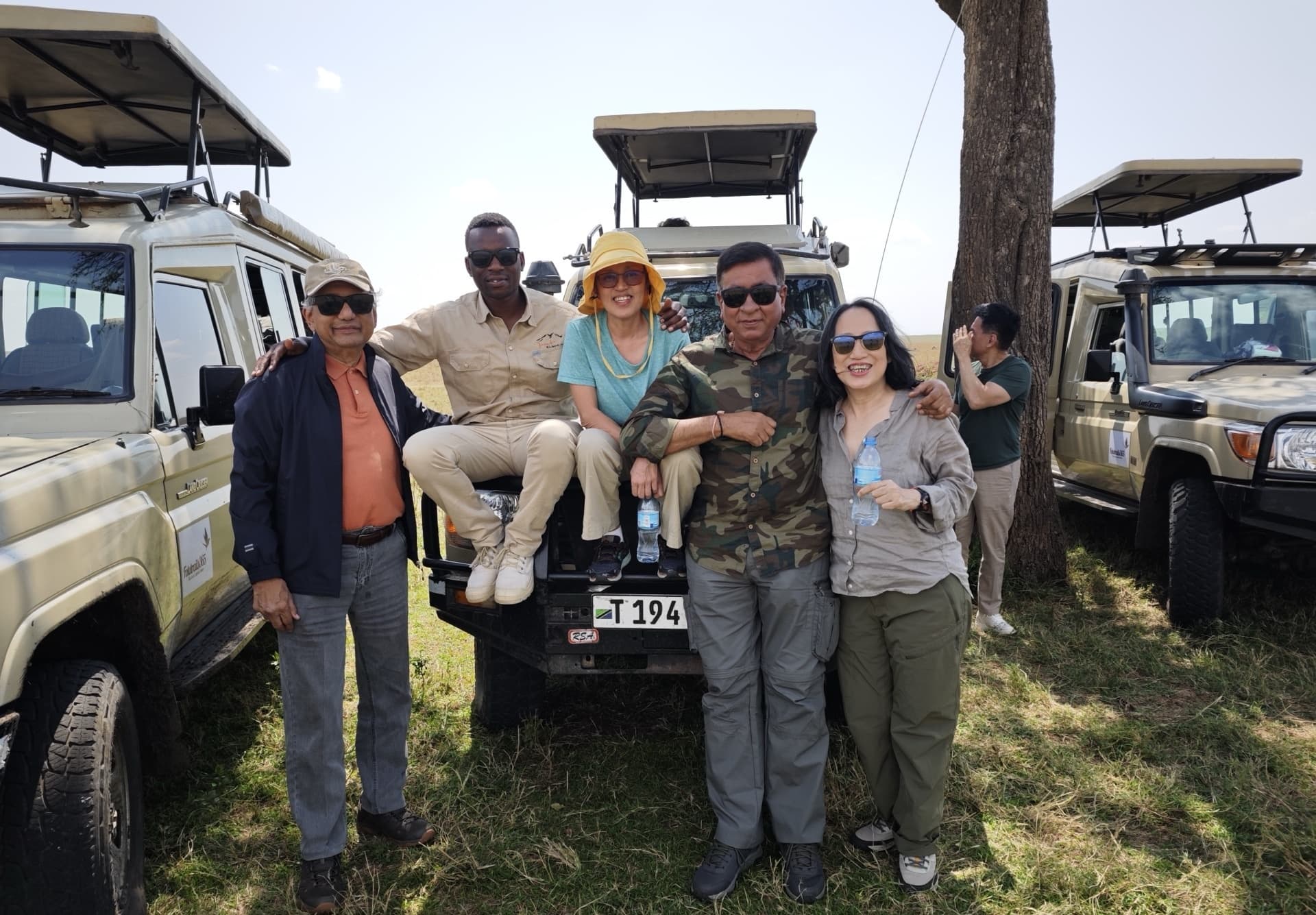
On a fototrails 365 tour, Nitin works alongside local guides who have decades of experience in their specific ecosystem. The combination of a photographer who understands light and composition with a guide who understands animal behaviour is what produces extraordinary photographic opportunities.
The Social Dynamic
A small group — usually 4 to 8 photographers — develops a particular kind of bond. You are sharing something intense and beautiful. By day two, strangers become collaborators. People help each other with settings, point out subjects the other missed, celebrate each other's images at dinner.
There is no hierarchy, no competition. The bush has a way of stripping all of that away. Some guests arrive solo; nobody leaves feeling like they were alone.
Managing Expectations
This is important, so I will be direct: not every game drive produces a spectacular sighting. Some drives are quiet. You may spend two hours watching a sleeping lion. You may not see a kill during your entire trip.
And that is not a failure — it is reality. Wildlife photography is not a vending machine. The bush rewards patience, not entitlement. But across a 5 or 6 day safari, the cumulative experience is almost always extraordinary. You will come home with images that make you proud and memories that redefine what you thought was possible.
The photographers who get the most from their safari are the ones who stay present to whatever is in front of them — even when it is "just" an impala at sunset.
Connectivity and WiFi
Most camps and lodges have WiFi, but it ranges from functional to barely usable. You can check email and send a few WhatsApp messages. You will not be streaming video. Some remote bush camps have no connectivity at all.
My advice: treat this as a gift. You are in one of the last wild places on Earth. The emails will wait. Let yourself be unreachable for a few days. Your brain will thank you, and your photography will improve because of it.
Health Considerations
Malaria
Most safari destinations in East Africa are in malaria zones. Consult your travel doctor at least 4–6 weeks before departure. Prophylaxis options include Malarone (atovaquone-proguanil) and doxycycline — both are well-tolerated by most people. Use insect repellent containing DEET in the evenings and sleep under a mosquito net (camps provide them).
The Masai Mara sits at moderate altitude and has a lower malaria risk than coastal or lowland areas, but prophylaxis is still recommended.
Altitude
Some East African destinations sit at 1,500–2,000 metres above sea level. Most people feel no effects at this altitude, but if you are coming from sea level, you may notice mild breathlessness during the first day. It passes quickly. The Ngorongoro Crater rim sits at over 2,200 metres — drink extra water on the day you arrive there.
General
Stay hydrated. The air is dry, especially during the dry season. Drink more water than you think you need. Sunscreen is essential — even on overcast days. A hat with a brim keeps the sun off your face during open-top vehicle drives.
Tipping Culture
Tipping is customary in East Africa and an important part of the income for guides, camp staff, and drivers. A general guideline:
- Safari guide/driver: USD $15–20 per person per day
- Camp staff (shared tip box): USD $10–15 per person per day
- Nitin / photography guide: At your discretion — not expected, always appreciated
Tips are given at the end of your stay, typically in US dollars. Small bills (5s and 10s) are most practical. Your guide and camp manager will advise if you have questions — there is no awkwardness, it is simply part of the culture.
The Emotional Impact
I saved this for last because it is the hardest to explain and the most important thing I can tell you.
Africa changes people. Not in a dramatic, cinematic way — in a quiet, permanent way. You will sit in a vehicle watching an elephant herd move across an open plain at sunset, and something in your chest will shift. You will hear a lion call at 3:00 AM and feel a connection to something ancient and enormous. You will photograph a mother cheetah teaching her cubs to hunt and realise you are witnessing something that has happened in this exact way for a hundred thousand years.
Many guests tell me the same thing on their last evening: "I did not expect to feel this much."
You will cry. Or you will go very quiet. Or you will laugh at the sheer improbability of being alive in this place at this moment. All of those responses are correct.
Come with an open heart. Bring your camera, your lenses, your settings knowledge — but leave space for the experience to reach you. That is what nobody tells you before your first safari: the photographs are extraordinary, but what stays with you longest is how it made you feel.