Wildlife Photography Tips for Beginners — Your First Safari
Your first wildlife photography safari doesn't require a bag full of expensive gear or years of experience. Here's everything Nitin wishes someone had told him before his first time in the field.
You Are More Ready Than You Think
If you are reading this with a camera you are not entirely sure how to use, sitting somewhere between excited and terrified about your first wildlife photography safari — welcome. That feeling is completely normal, and it does not go away with experience. What changes is that you learn to channel it into focus rather than panic.
I have taken thousands of people into the field over the years, from seasoned photographers with three camera bodies to complete beginners who picked up a DSLR two weeks before departure. The beginners almost always surprise themselves.
You Don't Need the Most Expensive Gear
Let me say this clearly: you do not need a $10,000 camera setup to come home with images you love. A decent camera body paired with a 70–300mm kit lens — the kind that comes bundled with many entry-level cameras — is genuinely capable of producing stunning wildlife photographs.
The gear that matters most is not your camera body. It is your patience, your positioning, and your understanding of light. A beginner with a mid-range zoom in perfect golden-hour light will consistently outperform a frustrated expert with prime glass in flat midday sun.
If you already own a camera, bring what you have. If you are considering a purchase before your trip, a camera that handles burst shooting well and a 70–300mm or 100–400mm zoom lens is all you need to start.
One practical note: rent before you buy. Many photographers rent a longer lens for their first safari trip rather than committing to a purchase. This is a smart approach.
Master These Three Settings First
Wildlife photography rewards photographers who understand three settings deeply rather than seven settings vaguely. Get these right and everything else follows.
Shutter Speed
Shutter speed is your most important control for wildlife. Blur is the enemy, and animals move more than you expect.
As a starting rule: use 1/500s as your minimum shutter speed for animals that are still or moving slowly. For anything active — a lion walking, a bird landing, a cheetah running — push to 1/1000s or faster. For explosive action like a river crossing or a bird in full flight, 1/1600s to 1/2500s will freeze motion cleanly.
The practical way to manage this: set your camera to Shutter Priority mode (Tv or S) and dial in your target shutter speed. Let the camera manage aperture and use Auto ISO.
Aperture
Aperture controls how much of your scene is in focus. Two numbers are worth memorising:
f/5.6 for individual animal portraits — this gives a beautiful soft background that separates your subject from the environment.
f/8 when you have a group — a pride of lions, an elephant family — and you want more of the scene to be sharp.
ISO
Do not fear high ISO. This is the single most common mistake I see from beginners. Modern cameras — even mid-range models — handle ISO 3200 to 6400 very well. An image with some digital grain taken at 1/1000s is infinitely better than a perfectly clean but blurred image at ISO 400 and 1/125s.
Set your camera to Auto ISO with a ceiling of 6400. In bright morning light the camera will use a low ISO automatically. As the light fades, it will climb. Let it. Chase sharpness first, noise later.
Composition Basics That Actually Help
Camera settings get you a sharp image. Composition gets you a compelling one. Four rules will carry you far.
Rule of thirds: Imagine your frame divided into a 3x3 grid. Place your subject on one of the four intersecting points — not in the dead centre. A lion's eye in the upper-left intersection, the horizon across the lower third. This simple shift makes images feel more dynamic immediately.
Leave space in the direction the animal is looking or moving. If a cheetah is facing right, put the cheetah on the left third of the frame and give it room to "look into." An animal pressed against the edge of the frame feels trapped. Give it space and the image breathes.
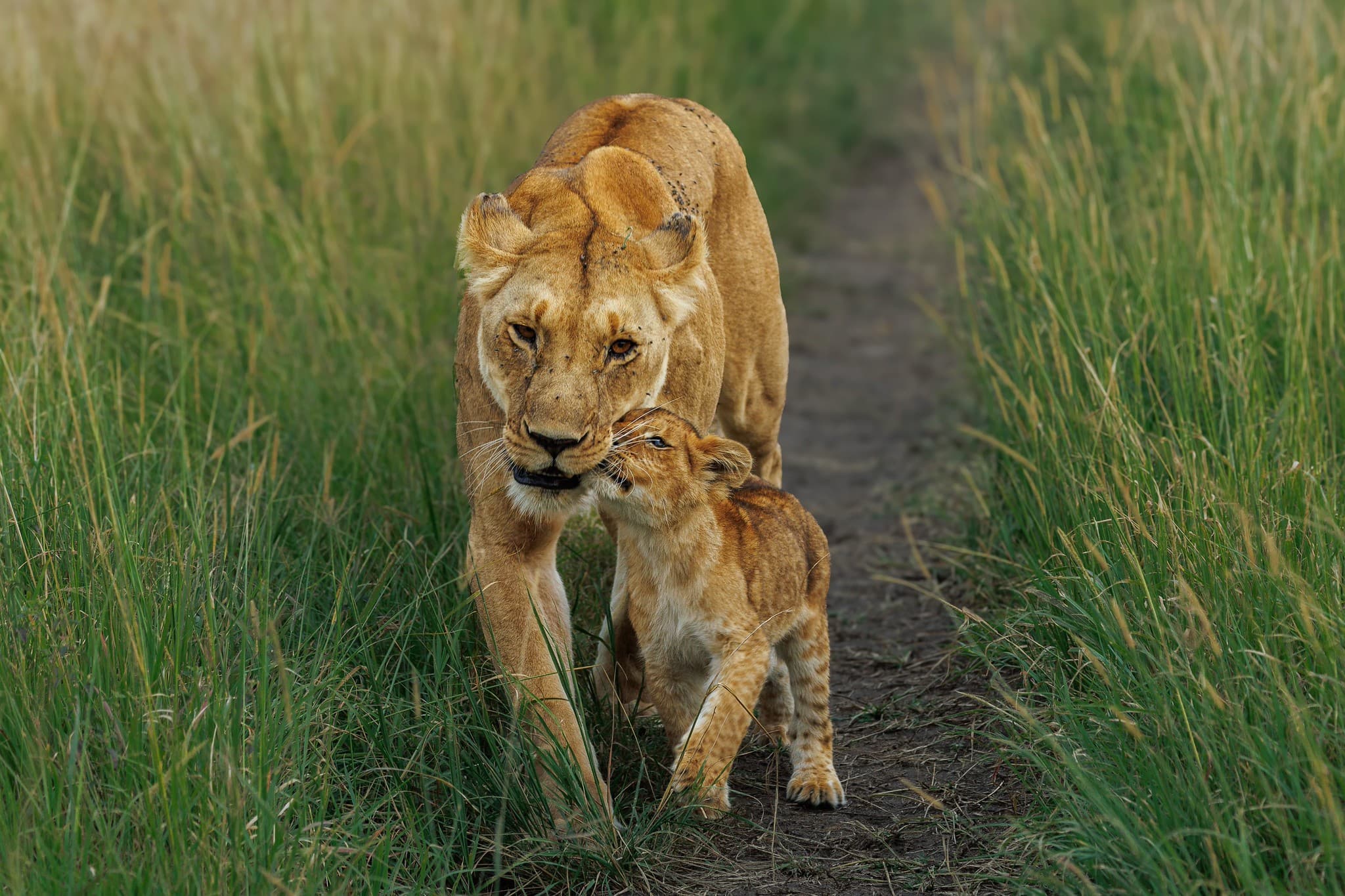
Eye-level framing. From an open safari vehicle, you are often naturally close to eye level with animals on the ground. Use this. Eye-level contact with a wildlife subject is one of the most powerful compositional tools available to you. Lower your camera to the window frame, use your beanbag, and shoot across rather than down.
Clean backgrounds. Before you press the shutter, glance at what is behind your subject. A branch cutting across a lion's face, a vehicle in the background, a bright patch of sky — these things distract. If the background is cluttered, try a wider aperture (f/4–f/5.6) to blur it, or ask your guide to reposition the vehicle by a few metres.
Patience Is Your Best Lens
Here is something that no gear guide will tell you: the photographers who come home with the best images are almost never the ones who took the most shots. They are the ones who waited the longest for the right moment.
Wildlife photography rewards patient observation over frantic shooting. When you find an interesting animal or scene, resist the urge to immediately fire burst after burst. Watch first. Understand what the animal is doing. Is it yawning, about to yawn, about to stretch?
Yawns and stretches are gold. A lion mid-yawn — teeth fully exposed, eyes squinting — is one of the most expressive shots in wildlife photography and it happens dozens of times a day. But if you spend that moment looking at your screen reviewing the last ten shots instead of watching the lion, you will miss it.
The practice of constantly reviewing images on your screen while in the field is called "chimping," and it is a habit worth breaking early. Review at camp. Watch in the field.
Light Is Everything
If there is a single idea to take from this guide and never forget, it is this: the quality of your light matters more than any other variable in photography.
The first and last 45 minutes of daylight — what photographers call the golden hour — produce warm, directional, low-contrast light that is flattering to every subject. A zebra in golden-hour light looks completely different from a zebra at noon.
Harsh midday light — from roughly 10am to 3pm — creates flat, unflattering illumination with hard shadows. This is rest time, observation time, and the period to review and eat. Fighting midday light is a losing battle.
Overcast days are underrated. Beginners often feel disappointed when the sky is grey. Do not be. Overcast conditions produce a giant, soft light source that eliminates harsh shadows and renders animal texture — fur, skin, feathers — with extraordinary detail. Overcast days are some of the best days for close-up animal portraits.
Common Beginner Mistakes (And How to Avoid Them)
Zooming in too tight. It is tempting to fill the frame with an animal's face every time. But some of the most powerful wildlife images include the environment — the wide Serengeti plain, the dust around a running elephant. Zoom out occasionally. Tell the story of where the animal is.
Chimping too much. Every moment your eye is on the LCD screen, it is not watching the animal in front of you. Animals do not wait.
Not backing up images. This is critical. Copy every day's images to at least one backup device before sleeping. Cards fail. Cameras are dropped. Bring a portable hard drive or a second set of memory cards.
Only shooting at eye level. Try different angles. A giraffe photographed from slightly below against the sky looks entirely different from one photographed straight on.
What to Pack in Your Camera Bag
You do not need much. Keep it simple.
- Memory cards: At minimum 128GB total — ideally two 64GB cards rather than one. Multiple cards reduce single-point-of-failure risk.
- Extra batteries: At least two fully charged batteries per camera body. Cold mornings and heavy burst shooting drain batteries fast.
- Lens cloth: Dust is constant on safari. A clean lens cloth in your shirt pocket — not buried in a bag — is used multiple times per drive.
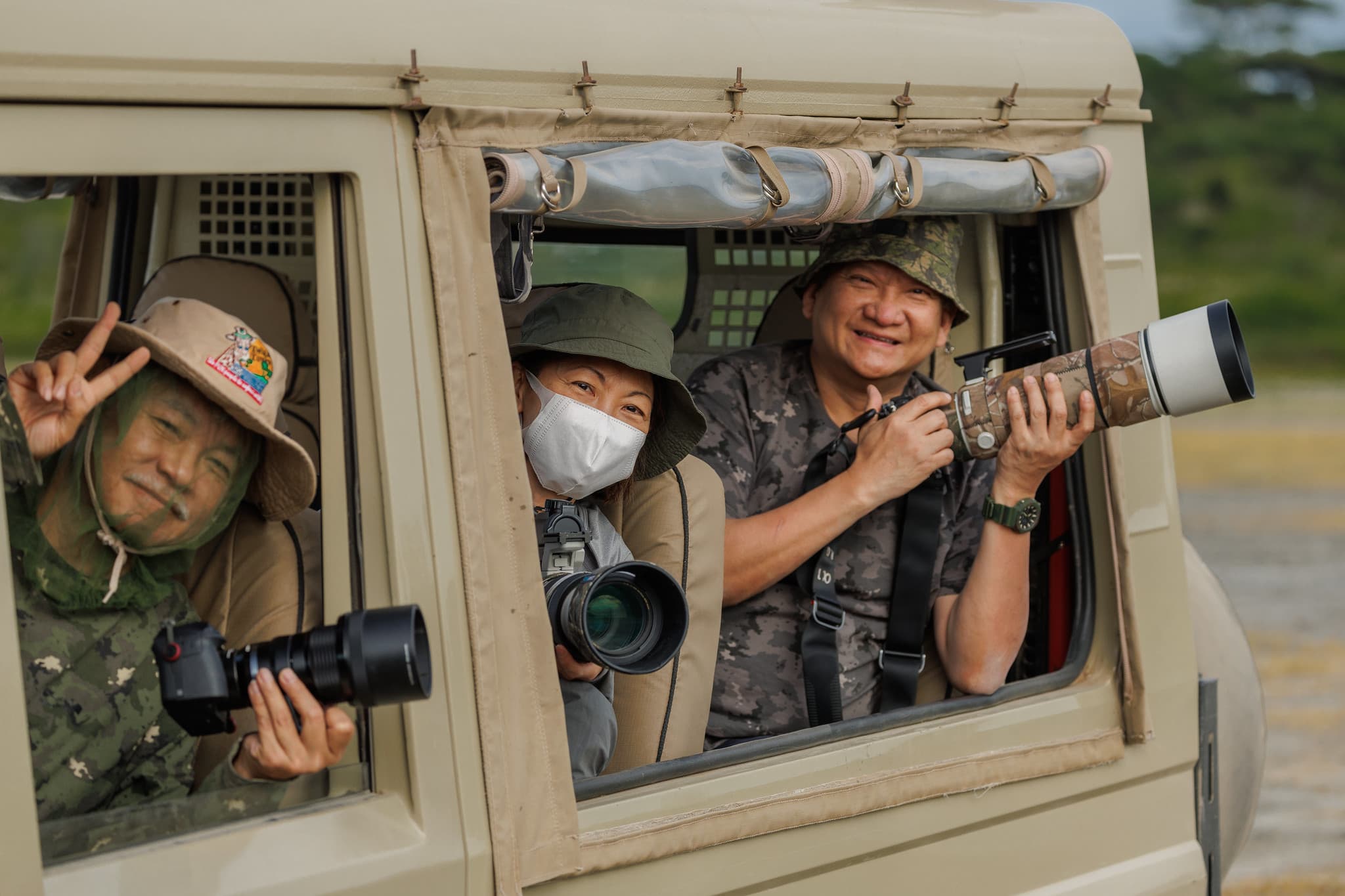
- Beanbag: A cloth beanbag filled with rice or lentils, draped over the vehicle window frame, is the most stable camera support for safari. On all fototrails 365 tours, beanbags are provided — but bring your own if you prefer.
- Rain cover: A simple plastic rain cover for your camera and lens. Afternoon showers are common.
Why a Guided Photography Tour Makes the Difference
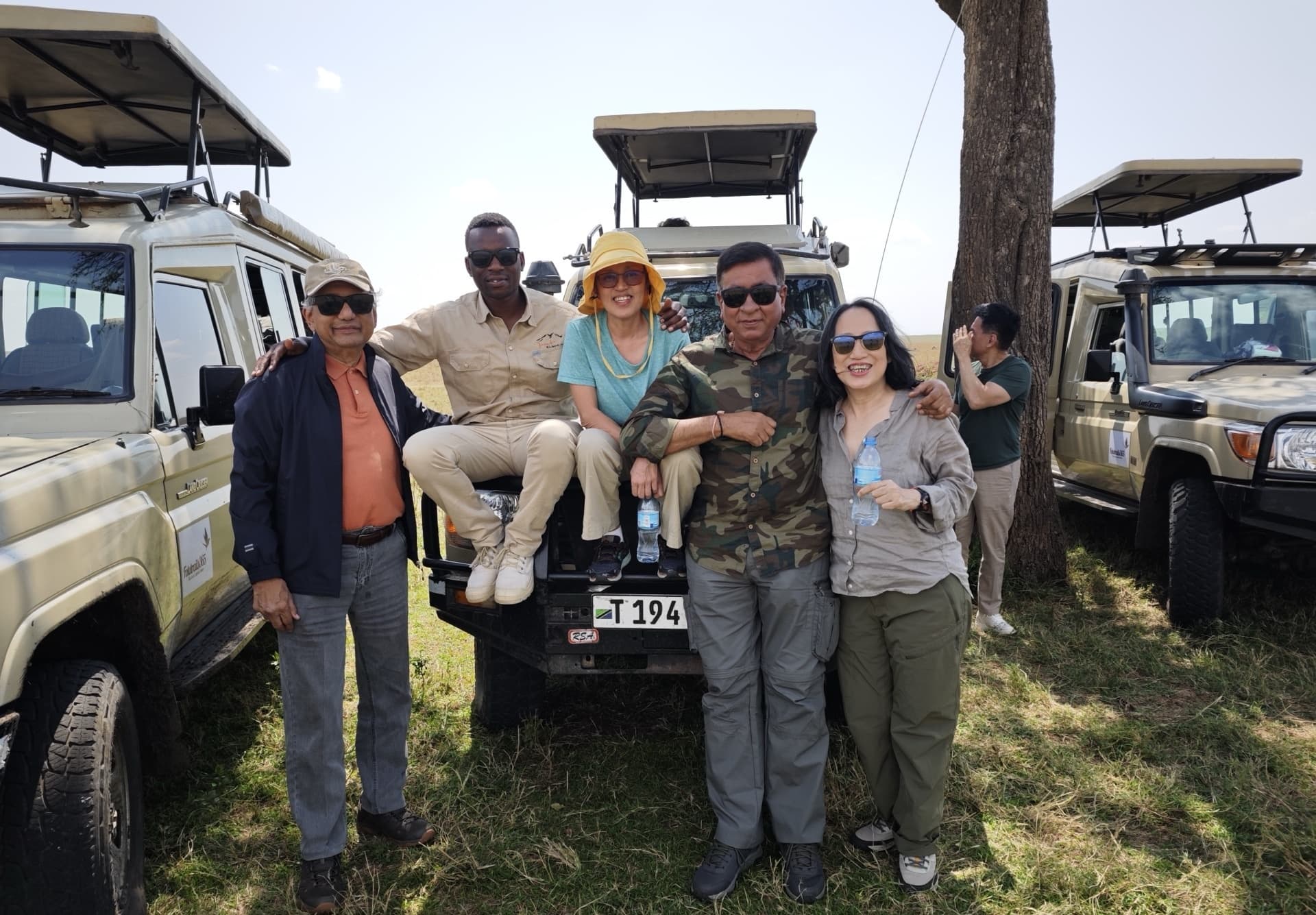
On a dedicated photography tour, your guide understands what you are trying to create photographically, not just what you are trying to see. The vehicle is positioned for the light angle, not just proximity. You stop at a scene before the action happens, not after it starts.
The guide becomes a photography teacher in the field. Not in a classroom with slides, but in the vehicle, in the moment, when a cheetah begins to stalk and your heart rate doubles and your hands forget every setting you just read about. That is when the teaching matters.
I started fototrails 365 because I believe that the most important thing you can bring to your first wildlife photography safari is not a better lens or a newer camera. It is the right person sitting next to you, pointing at the light and saying — not yet, wait, it is about to get better.
It almost always does.