The Complete Safari Photography Packing List: What to Pack for Your First Wildlife Trip
Camera gear is only half the equation. Here's everything you actually need to pack for a wildlife photography safari — from lenses and memory cards to clothing, health essentials, and the small things most guides forget to mention.
Before You Start Packing
I have led over 80 photography safaris across East Africa and India, and the single most common mistake I see is over-packing camera gear and under-packing everything else. You do not need five lenses. You do need sunscreen, a good dust cover, and more memory cards than you think.
This is the packing list I send to every guest before a fototrails 365 tour. It has been refined across hundreds of trips and every climate from the humid forests of Bwindi to the open plains of the Serengeti.
Camera Gear — The Essentials
Camera Bodies
Bring two bodies if you have them. On safari, lens changes cost you shots — dust gets in, and animals do not wait. Having a telephoto on one body and a mid-range zoom on the other means you are ready for anything.
If you only have one body, that is absolutely fine. Just bring a fast mid-range zoom (like a 70–200mm) as your primary lens and swap only when you need to.
Sensor cleaning kit — dust is inevitable. A blower and a few sensor swabs can save your trip.
Lenses
The two lenses that cover 90% of safari photography:
- 100–400mm or 200–600mm — your primary wildlife lens. This is what lives on your camera for most of the day.
- 70–200mm f/2.8 — for closer encounters, environmental portraits, vehicle-to-vehicle shots, and low light.
Optional but useful:
- Wide angle (16–35mm) — for landscapes, starry skies, and dramatic environmental shots from camp.
- 1.4x teleconverter — extends your reach when you need it. Much lighter than a second telephoto.
Memory and Power
Memory cards: Bring at least 3–4 cards of 128GB each. You will shoot 1,000–3,000 frames per day. Bring more than you think you need — buying cards in remote Africa is not an option.
Batteries: Three charged batteries minimum. Cold mornings and long game drives drain them fast. Charge every night without fail.
Portable hard drive or laptop — back up your images every single evening. Cards can fail. Drives can fail. Having copies on two devices is cheap insurance against heartbreak.
Support and Protection
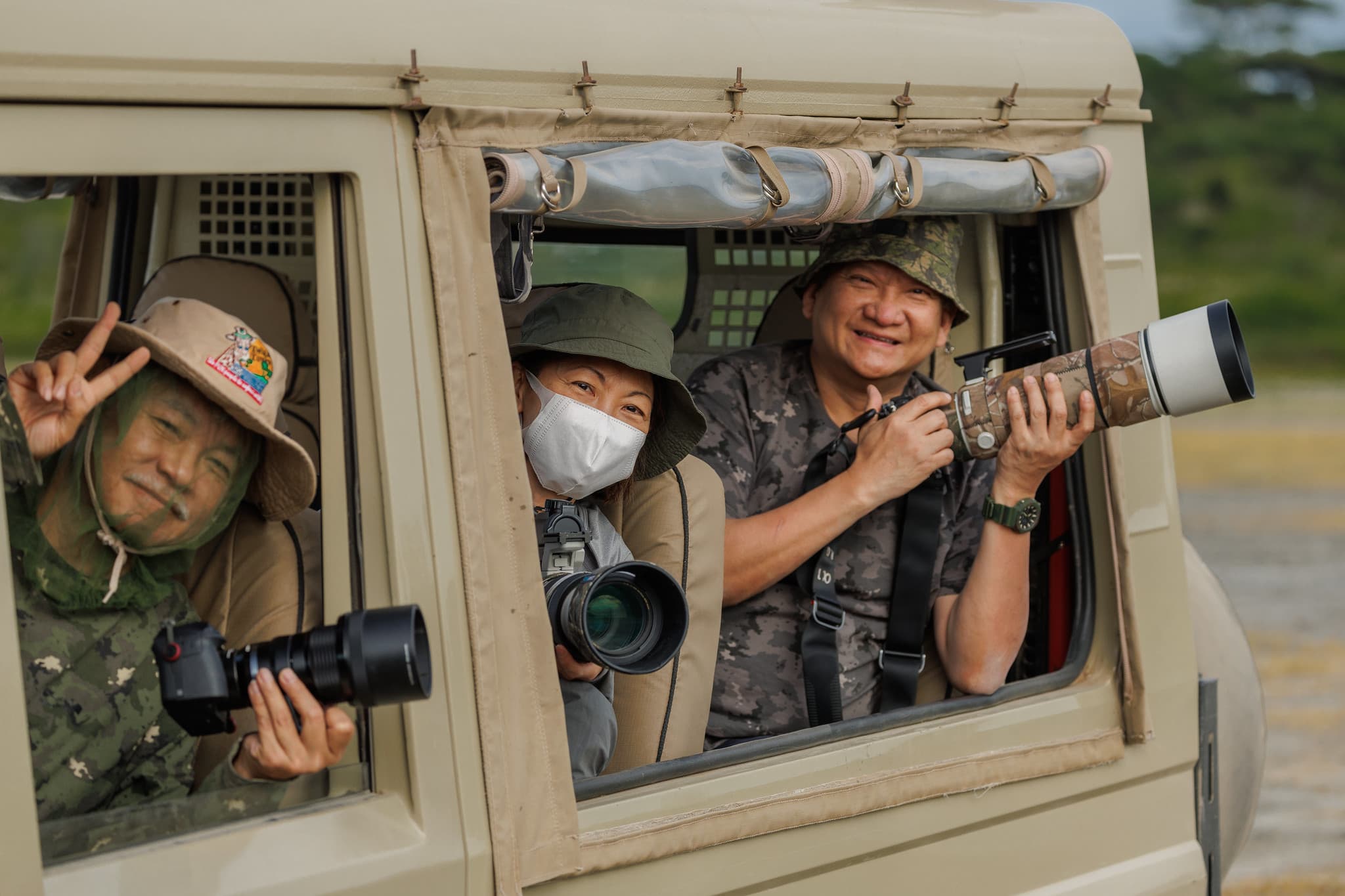
Beanbag — the single most important non-camera item in your bag. A beanbag draped over the vehicle door frame gives you steady, vibration-free support for long lenses. Bring an empty one and fill it with rice or beans when you arrive. Much lighter than a tripod, and far more practical from a vehicle.
Rain cover / dust sleeve — a simple nylon cover for your lens-and-body combo. East Africa's red dust is incredibly fine and gets into everything. A plastic bag and rubber band works in a pinch.
Lens cleaning cloths — bring 4–5 microfibre cloths. They get dirty fast.
Clothing — Less Is More
Safari clothing is about function, not fashion. You are in a vehicle for most of the day, stepping out only at camp.
What to Wear
- Neutral colours — khaki, olive, grey, brown. Avoid white (reflects and distracts animals), black (absorbs heat and attracts tsetse flies), and bright colours.
- Layers — mornings on the savanna are cold (5–10°C). By midday it can be 30°C+. A fleece or light down jacket is essential for dawn drives.
- Long sleeves and trousers — protection from sun, thorns, and mosquitoes. Lightweight, breathable fabrics that dry quickly.
- Comfortable walking shoes — you are not hiking, but you will walk around camp and lodges. Closed-toe shoes are safest.
- Wide-brimmed hat and polarised sunglasses — the equatorial sun is intense.
- Warm socks — your feet get cold on morning game drives. Sounds trivial. It is not.
Laundry Reality
Most camps offer same-day or next-day laundry. You do not need a fresh outfit for every day. Pack for 3–4 days and wash.
Health and Comfort
- Prescription medications — bring more than enough for the full trip plus a few extra days in case of delays.
- Antimalarials — required for most East African and Indian destinations. Consult your travel doctor at least 4 weeks before departure.
- Sunscreen SPF 50 — even on overcast days. Reapply. The UV at altitude and equatorial latitudes is fierce.
- Insect repellent with DEET — essential for dawn and dusk, when mosquitoes are most active.
- Basic first-aid kit — plasters, painkillers, antihistamines, rehydration salts. Camps have medical supplies, but having your own basics is wise.
- Hand sanitiser and wet wipes — bush toilets exist. Be prepared.
- Lip balm with SPF — the wind and sun will crack your lips within two days.
The Small Things That Make a Big Difference
Headlamp or small torch — camps run on generators that switch off at night. You will need to navigate between your tent and the dining area in the dark.
Power adapters — Kenya and Uganda use British Type G plugs (three rectangular pins). India uses Type C/D/M. Tanzania uses a mix. Bring a universal adapter.
Portable power bank — for charging your phone when the generator is off or on a bush flight with no power.
Binoculars — 8x42 or 10x42. Not for photography, but for finding and watching animals before you raise the camera. Many guests tell me their binoculars were the most valuable thing they packed after their camera.
Notebook and pen — for recording locations, species, and camera settings. Your future self will thank you when editing.
Zip-lock bags — large ones for keeping dust and rain away from electronics. Small ones for dirty laundry separation.
What NOT to Pack
- Tripod — almost never useful on a vehicle-based safari. A beanbag is better in every way. If you are doing gorilla trekking, a monopod is more practical in dense forest.
- Flash — not allowed in most parks and reserves. Animals are sensitive to artificial light. Leave it at home.
- Drone — prohibited in all East African national parks and reserves. Do not risk the fine and confiscation.
- More than 3 lenses — lens changes cost you shots. Two lenses on two bodies is the ideal. A third lens as backup is fine. More than that is dead weight.
- Formal clothing — even the most upscale safari lodges are relaxed. No one dresses up.
Bush Flights and Luggage Limits
If your itinerary includes bush flights (common in Kenya and Tanzania — for example, Nairobi to the Mara or Arusha to Serengeti), luggage limits are strict: 15–20 kg per person in a soft-sided bag. Hard suitcases are not accepted.
This means packing light is not optional — it is required. Ship your main suitcase ahead or leave it at the hotel in Nairobi or Arusha.
Camera gear does not count toward the luggage limit on most charter flights, but confirm with your operator. Keep your cameras and lenses in a carry-on bag that fits under the seat.
The Day-Before Checklist
The night before your first game drive, charge everything, format your cards, set your camera to burst mode, and lay out your beanbag, dust cover, and a warm jacket. The vehicle leaves at 6:00 AM, and the light is golden by 6:30. You want to be ready.
Every safari I lead begins with a gear check and a quick settings review. Come prepared and we will make sure you are ready to shoot from the very first drive.