What Lens Do You Need for a Wildlife Photography Safari?
The single most common question before an East Africa trip. Here's a practical, honest guide to what focal lengths actually serve you in the field.
The Honest Starting Point
You will see every recommendation from 100mm to 800mm in guides like this one. Most are technically correct but not practically useful. Here is a more honest framework based on what works in an actual safari vehicle.
The most used focal length range on any East Africa trip is 200–400mm. Everything else supplements it. If you only own one telephoto lens and you're deciding what to bring, bring whatever covers that range most effectively.
The Essential Telephoto: 100–400mm or 150–600mm
Best for: 90% of your wildlife photography.
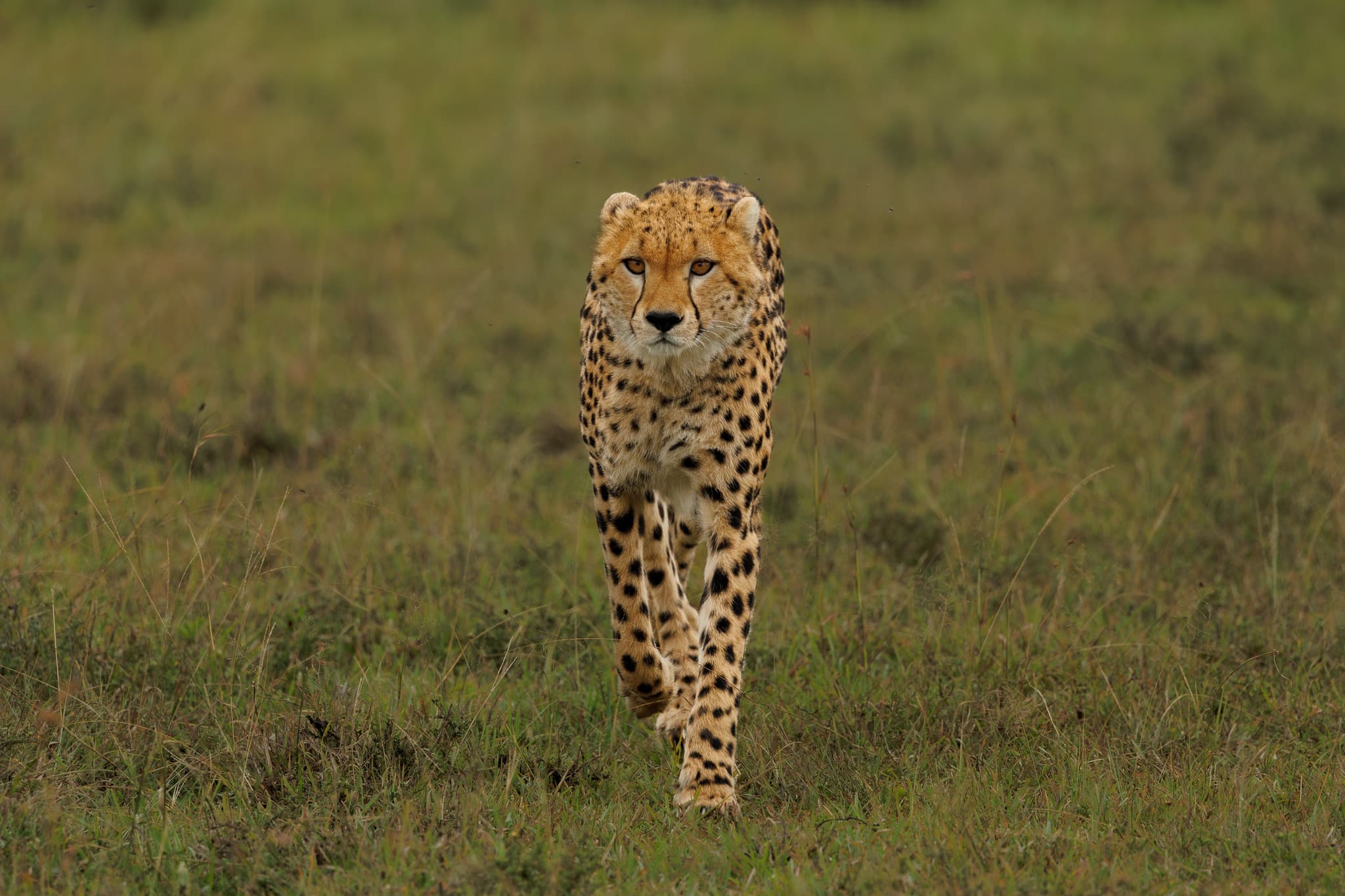
The variable aperture super-telephoto zoom is the standard tool for safari photography for good reason. It handles close encounters (a lion two metres from the vehicle), medium distances (a cheetah 50 metres away), and reasonable distances (a bird perched 100 metres out). The zoom flexibility is critical because you cannot move the vehicle to frame — you zoom.
Canon 100–400mm f/4.5–5.6 L IS II — the benchmark; superb autofocus, sharp throughout, manageable weight.
Sony 200–600mm f/5.6–6.3 G — outstanding value and sharpness; slightly heavier but the extra reach is often useful.
Sigma 150–600mm f/5–6.3 Contemporary — excellent third-party option for Canon/Nikon/Sony; lower cost with minimal quality compromise.
Tamron 150–600mm f/5–6.3 G2 — strong competitor to the Sigma; slightly better weather sealing.
The Supporting Medium Telephoto: 70–200mm f/2.8
Best for: Low-light photography, close encounters, environmental portraits with context.
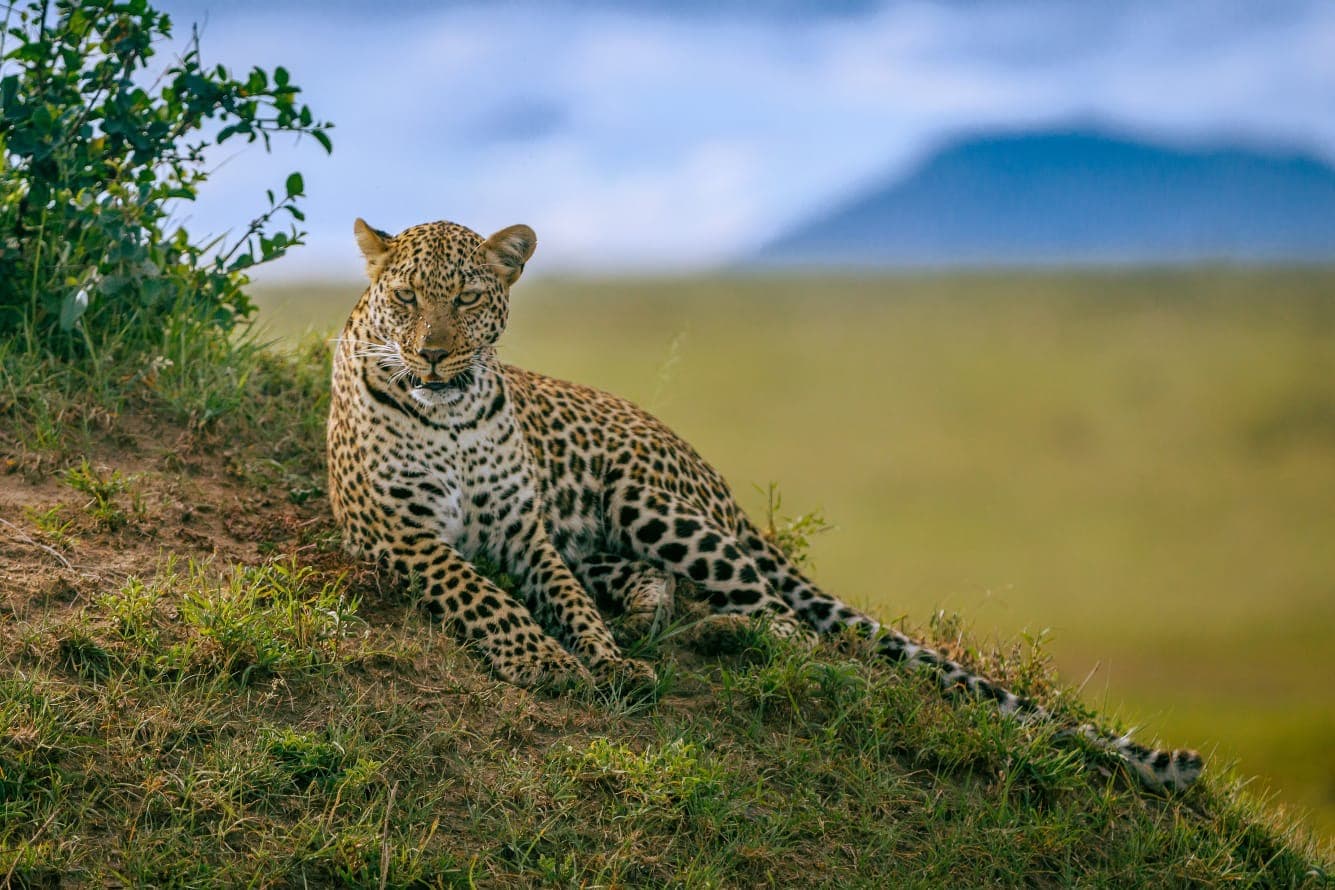
The f/2.8 aperture is the difference when shooting a leopard under a tree at dusk, or a lion family in the shade at midday. The extra two stops of light over a f/5.6 telephoto can mean the difference between a sharp image and a blurred one.
It is also the right lens for when wildlife is close — a lion pride ten metres from the vehicle, an elephant family right next to the track. At 200mm and f/2.8, you can achieve striking isolation and background separation even on large animals.
If weight and budget allow, this is the second lens to bring.
The Landscape Wide Angle: 16–35mm or 24–70mm
Best for: Herd scale shots, landscape context, environmental portraits.
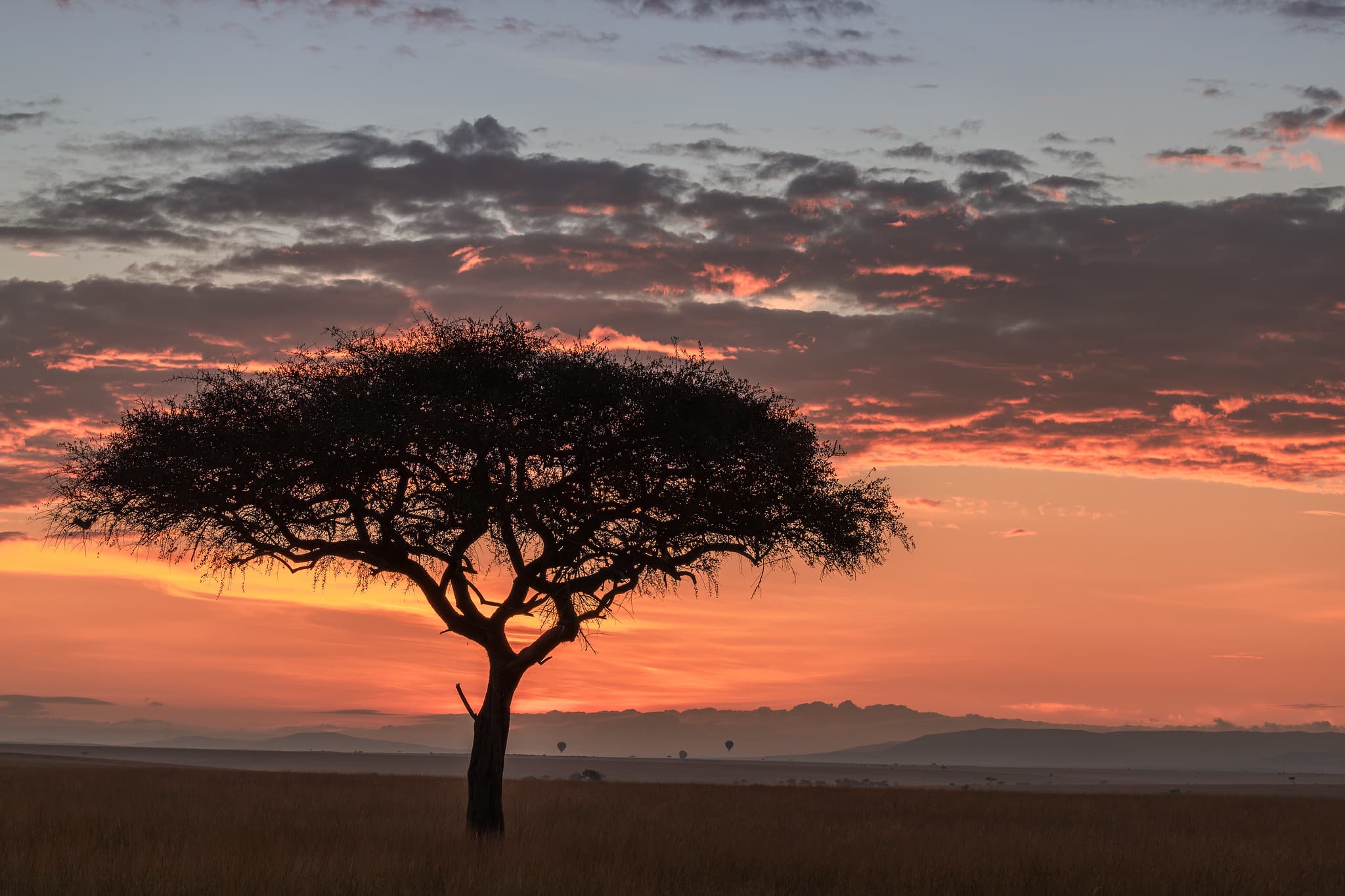
The vast plains of the Serengeti demand a wide lens. Showing 10,000 wildebeest stretching to the horizon requires 16–24mm. Showing an elephant in its landscape context — Amboseli's Kilimanjaro backdrop, the Mara River bending through the savanna — requires something wider than a telephoto can deliver.
The 24–70mm f/2.8 is a versatile option if you want one lens for non-wildlife shooting (landscapes, camp life, portraits). The 16–35mm is for pure landscape work.
What You Probably Don't Need
800mm prime: Unless you are shooting for a magazine or have a specific remote subject in mind, 800mm primes are heavy, expensive, and hard to handle in a moving vehicle. The reach advantage over a 600mm with a 1.4x teleconverter is minimal for most subjects.
Macro lens: There is some insect and flower photography to be done, but it's not what you're going for on a primary East Africa wildlife trip. Leave it at home.
A third or fourth zoom: Lens swaps in a dusty safari vehicle introduce sensor contamination. Two bodies with two lenses is the practical maximum; three lenses is the maximum you'll actually use.
Teleconverters: Worth It?
A 1.4x teleconverter on a 400mm becomes 560mm with one stop light loss. On a 600mm, it becomes 840mm. If your AF system supports the converter without degrading tracking performance (most modern systems do with 1.4x), it's a lightweight way to extend reach.
Avoid 2x teleconverters in most safari situations — two stops of light loss is significant, and AF performance degrades noticeably.
The Beanbag Is Not a Lens, But
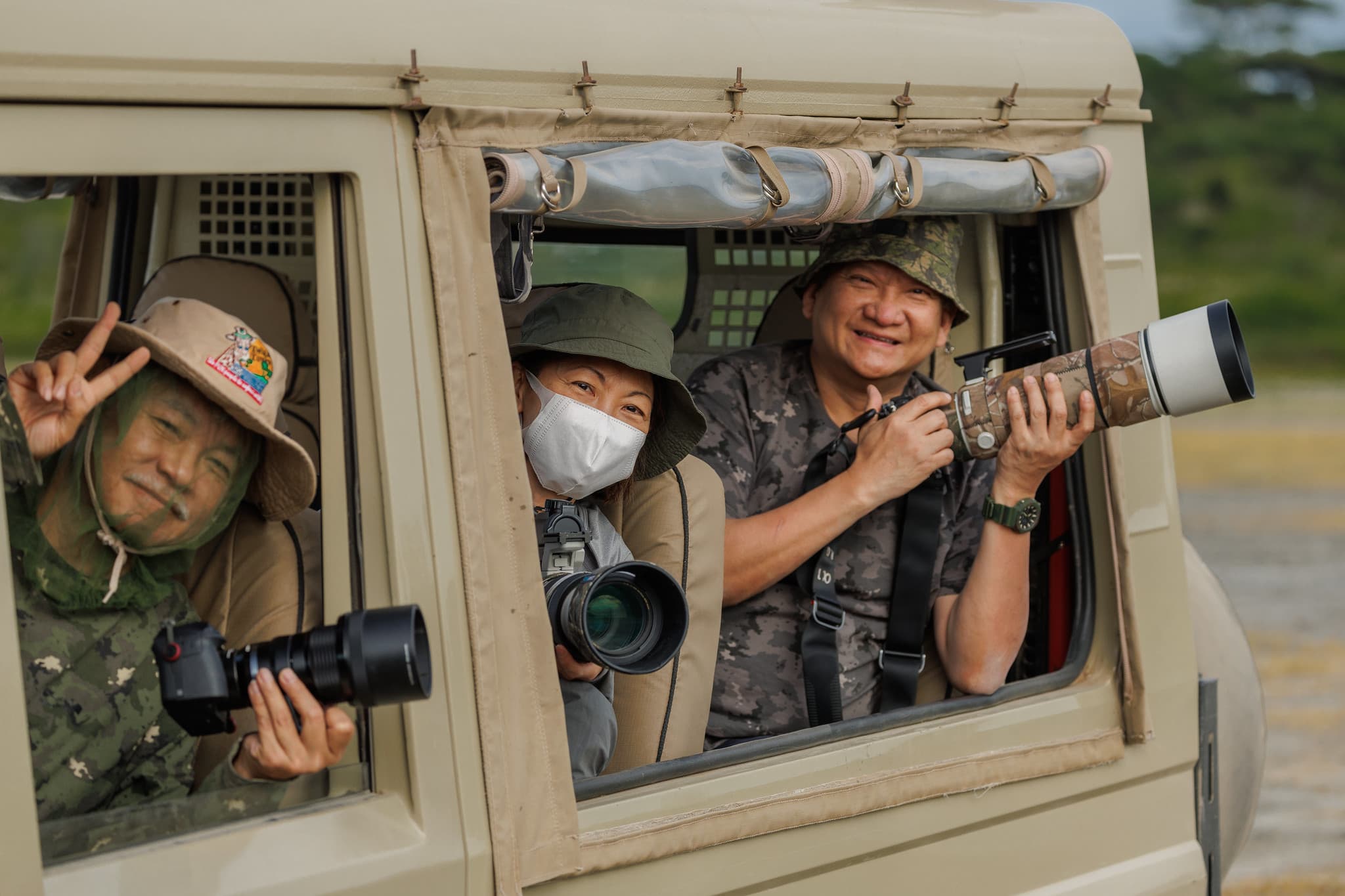
If there is one piece of equipment advice as important as focal length choice, it is this: bring a beanbag. A proper beanbag draped over the vehicle window frame is a more stable platform than most tripods, and infinitely more practical in a moving vehicle context. Fill it on arrival (rice, dried beans, lentils from a local market work perfectly). Return it empty. It adds almost nothing to your luggage weight and transforms the stability — and therefore the sharpness — of every image you take.
On all fototrails 365 tours, beanbags are provided in the vehicle. Bring your own if you have a preferred size.