Ethical Wildlife Photography: How to Shoot Responsibly on Safari
Great wildlife photography should never come at the animal's expense. Here's a practical guide to photographing ethically on safari — from vehicle distance and flash use to social media and the images you should never take.
Why Ethics Matter in Wildlife Photography
I have been a wildlife photographer for over 20 years, and in that time I have seen the industry grow enormously. More people than ever are visiting Africa and India to photograph wildlife, and that is overwhelmingly positive — it funds conservation, supports local communities, and creates ambassadors for the natural world.
But growth brings pressure. More vehicles around sightings. More drones in the sky. More photographers pushing limits for the perfect shot. The question every wildlife photographer must answer is simple: is this photograph worth more than the animal's wellbeing?
The answer is always no.
The Core Principle: The Animal Comes First
Every ethical decision in wildlife photography flows from one principle: the animal's welfare is more important than your image. This means accepting that sometimes you will not get the shot. Sometimes the light will be wrong, the animal will walk away, or the angle will be blocked. That is wildlife photography. The unpredictability is what makes it real.
A photograph obtained by stressing, baiting, or manipulating an animal is not a wildlife photograph. It is a record of human interference.
Vehicle Conduct on Safari
Distance
Most parks and reserves have minimum approach distances — typically 25–30 metres from large mammals. But legal minimums are not always ethical minimums. Watch the animal's body language:
- Ears pinned back, tail flicking, looking repeatedly at the vehicle — you are too close. Back off.
- Animal changes direction to avoid you — you are blocking its path. Move immediately.
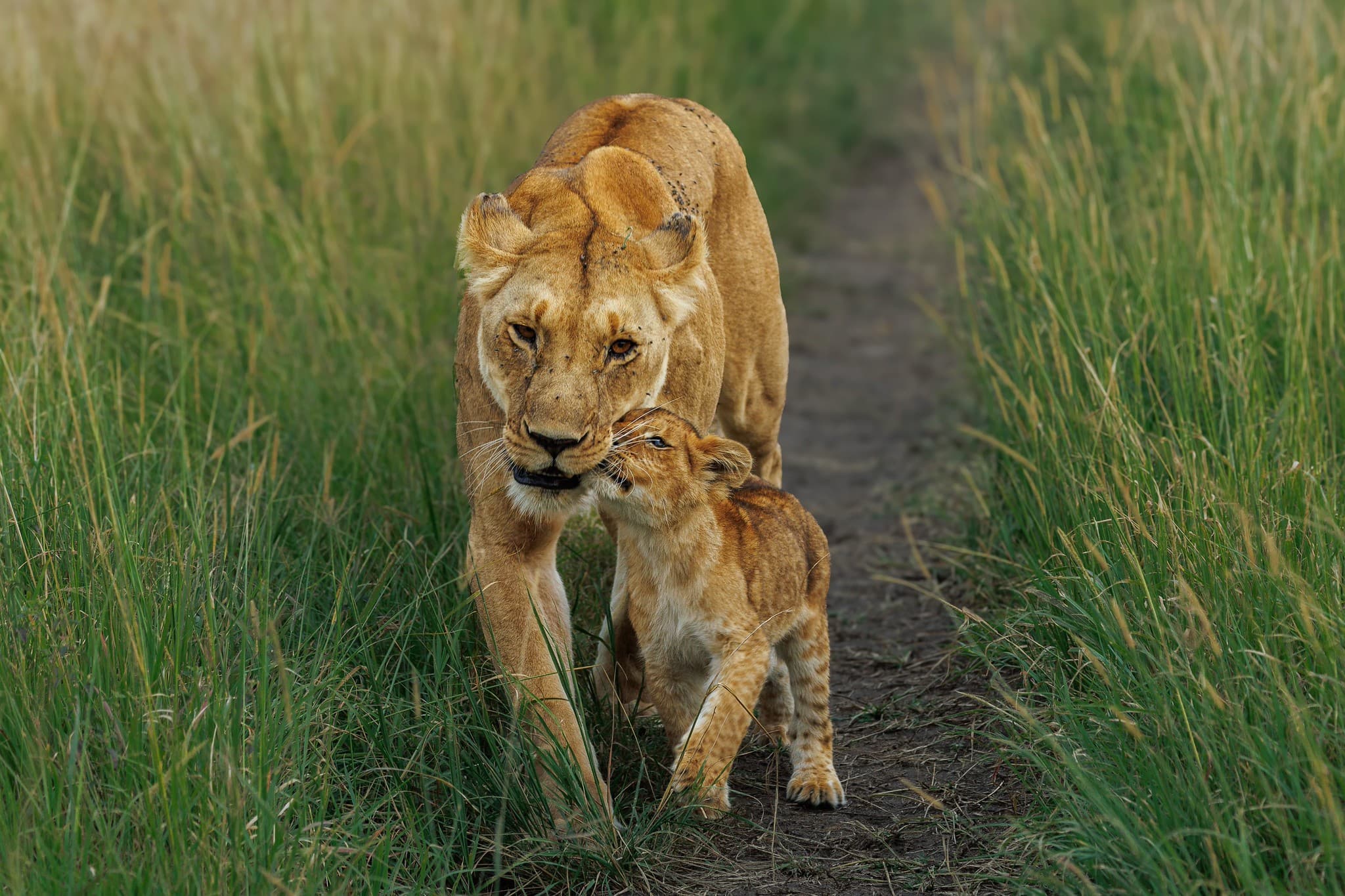
- Mother with young becomes alert or begins moving away — she perceives you as a threat. Give her space.
The best sightings happen when the animal is completely relaxed and behaving naturally. Paradoxically, the closer you push, the less natural the behaviour you witness — and the worse your photographs become.
Number of Vehicles
In popular reserves like the Masai Mara, big sightings can attract 15–20 vehicles. This is stressful for the animals and frustrating for photographers.
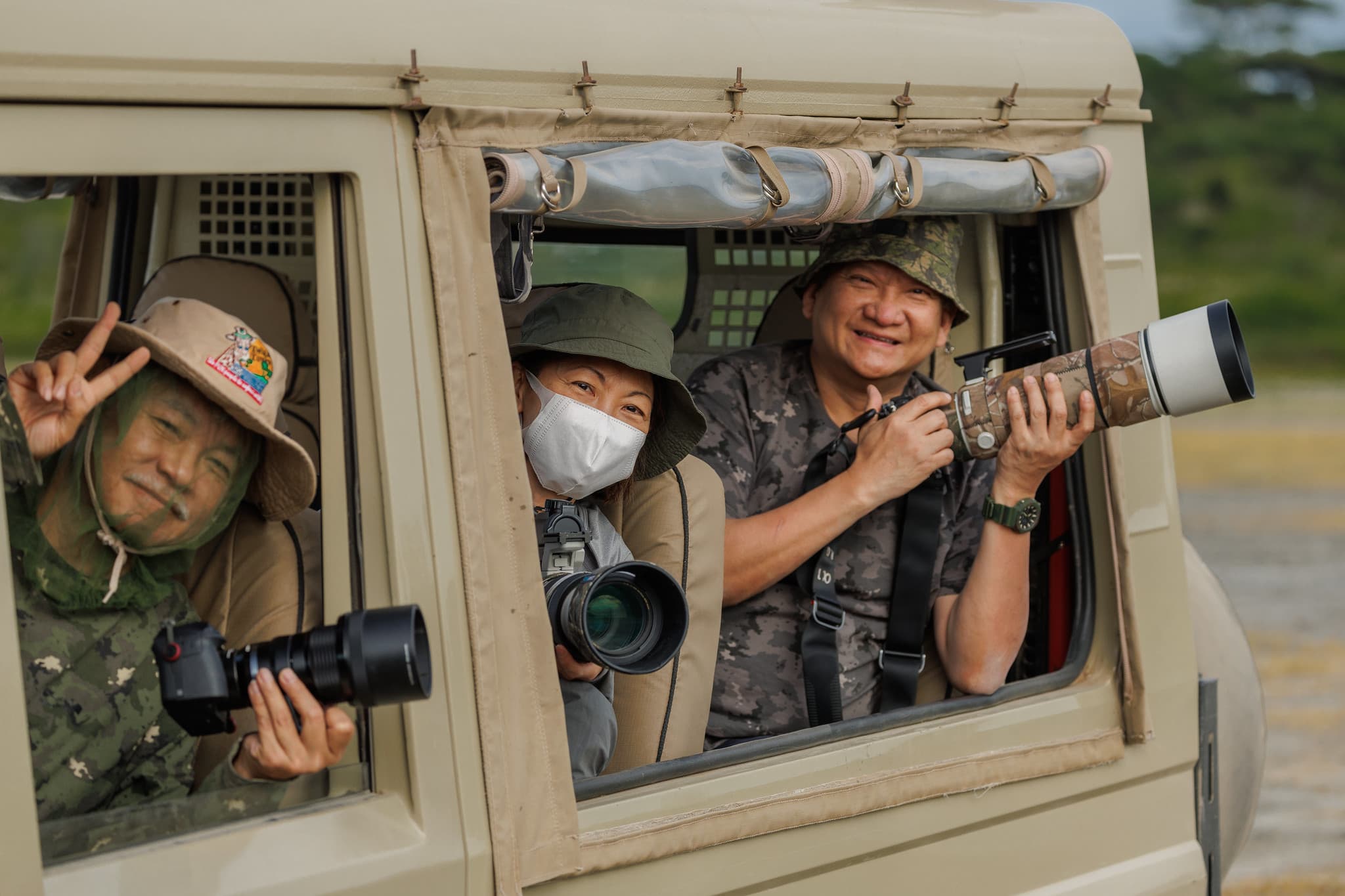
On fototrails 365 tours, we follow a simple guideline: if there are already 5 or more vehicles at a sighting, we do not add ours. We wait at a distance, or we move on to find our own sighting. The image you get from a relaxed animal with no other vehicles in frame is worth far more than a crowded shot with car rooftops in the background.
Engine Noise and Movement
Turn off the engine when you are settled at a sighting. The vibration and noise of a running engine disturbs animals and ruins your images (vibration = soft photos). If the animal is moving, follow at a respectful distance — do not race ahead to cut it off.
Flash, Artificial Light, and Sound
Flash: Do not use it. Period. Flash startles animals, disrupts nocturnal species, and interferes with natural behaviour. This includes fill flash, off-camera flash, and any form of artificial light aimed at wildlife.
Spotlights on night drives: Use only red-filtered spotlights, and only where permitted by the park. White light temporarily blinds nocturnal animals and affects their hunting ability.
Sound: Do not use animal calls, whistles, or any form of baiting to attract animals. Playback of bird calls is a particularly insidious problem — it draws territorial birds away from nests and can cause nest abandonment.
Gorilla and Primate Trekking Ethics
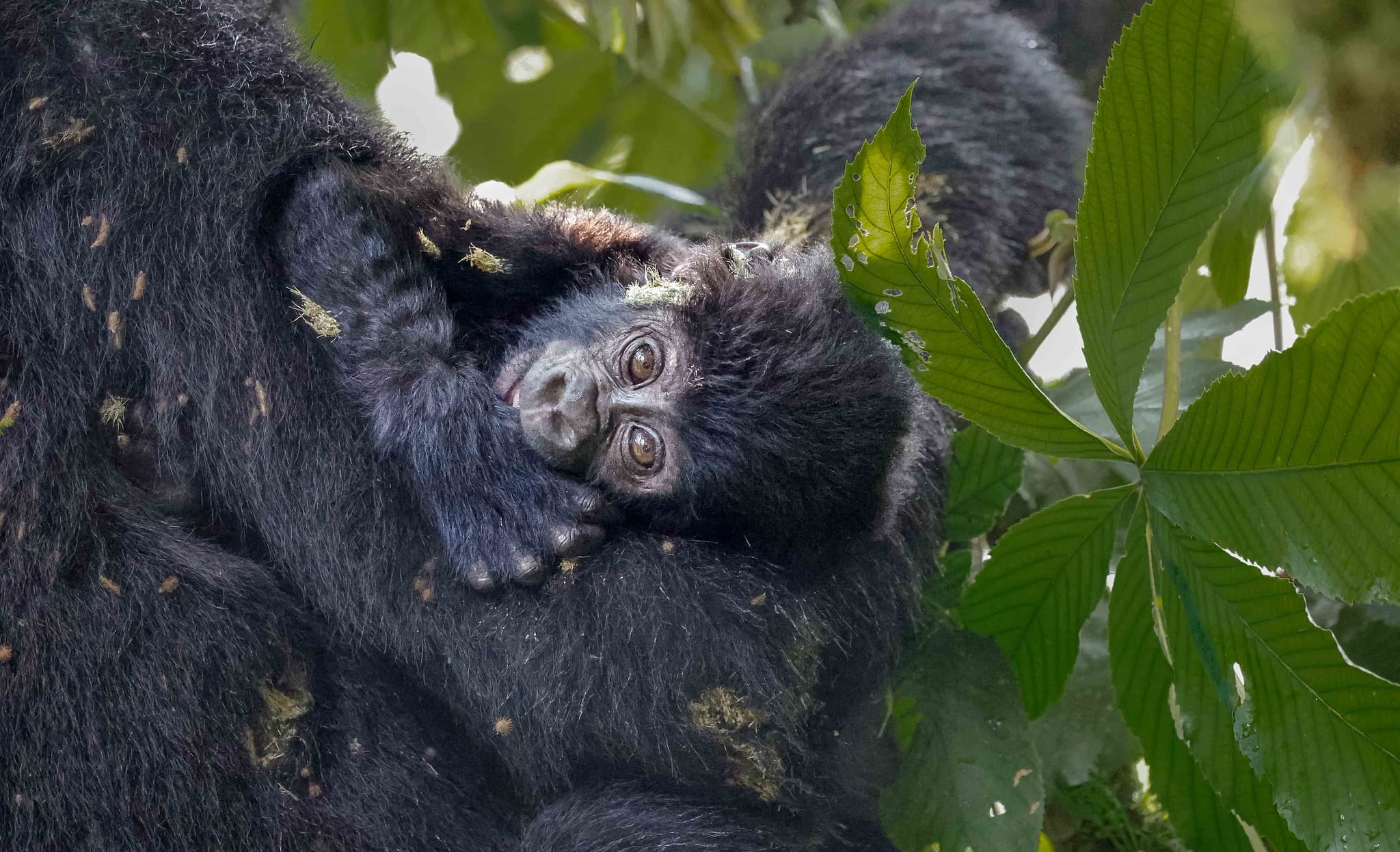
Primate trekking has its own set of strict ethical guidelines, and for good reason — gorillas and chimpanzees are susceptible to human diseases.
- 7-metre minimum distance from mountain gorillas. This is enforced by rangers and must be respected absolutely.
- Wear a face mask if you have any cold or respiratory symptoms. Better yet, do not trek if you are ill. A common cold that passes in a few days for you could be fatal for a gorilla.
- No flash photography. The forest is dark and the temptation is real. Resist it. Push your ISO to 6400 or higher. A grainy, authentic image of a silverback in his natural habitat is infinitely more valuable than a flash-lit portrait.
- Keep your voice low and movements slow. Gorillas are generally calm around habituated groups, but sudden noise or movement can provoke a charge.
- One hour maximum with the gorilla group. This limit exists for the animals' welfare. Do not pressure your guide to extend the visit.
The Images You Should Never Take
Some photographs are inherently unethical, regardless of how they are obtained:
- Nest shots that require disturbing vegetation — never move branches, leaves, or grass to get a clearer view of a nest. This exposes the nest to predators and can cause parents to abandon eggs or chicks.
- Images of stressed animals presented as "natural behaviour" — an elephant charging your vehicle is not a portfolio image. It is evidence that you were too close.
- Images from baited setups disguised as wild encounters — baiting a leopard with meat to get it into a specific position is not wildlife photography.
- Trophy hunting images presented as conservation — this is a personal line, but it is one I hold firmly.
Social Media Responsibility
When sharing wildlife images online, consider:
- Do not geotagging exact locations of sensitive species — snow leopard dens, rhino sightings, nesting sites of rare birds. Poachers and unethical operators use social media to locate vulnerable animals.
- Be honest about context — if an image was taken in a sanctuary, rehabilitation centre, or controlled environment, say so. Presenting captive animals as wild encounters is dishonest.
- Do not over-edit to make an image more dramatic than reality. This creates unrealistic expectations for other photographers, who then push harder to get a "better" shot in the field.
Conservation Through Photography
The most powerful thing a wildlife photograph can do is make someone care. An image of a silverback gorilla making eye contact through the mist can do more for gorilla conservation than a hundred reports and studies. A photograph of an elephant family walking toward Kilimanjaro at sunset can inspire someone to donate, to volunteer, to choose ethical tourism.
That is the purpose of wildlife photography. Not likes, not awards, not ego. The animals give us extraordinary access to their lives. Our job is to use that access responsibly and to give something back — through conservation support, through honest storytelling, and through images that inspire protection.
On every fototrails 365 tour, we discuss ethics before the first game drive. It is as important as camera settings. The way you photograph an animal reveals the kind of photographer you are — and the kind of images you will create.