Gorilla Trekking Photography in Uganda — Bwindi & Kibale Guide
Mountain gorillas in Bwindi Impenetrable Forest are among the rarest and most powerful photographic subjects on earth. Here's how to prepare your gear, settings, and mindset for one hour that changes everything.
Why Uganda is the Gorilla Photographer's Destination
There are fewer than 1,100 mountain gorillas left on earth. All of them live in a narrow band of montane forest spanning Uganda, Rwanda, and the Democratic Republic of Congo. Uganda holds the largest share — and Bwindi Impenetrable National Park, a UNESCO World Heritage Site in the country's southwest, is where I bring photographers who want the most immersive, least commercialised experience available.
Bwindi is not polished. The forest is genuinely dense, the terrain genuinely steep, and the gorillas genuinely wild. That rawness is exactly what makes the photography extraordinary. When you find yourself three metres from a 200-kilogram silverback who has decided you are not worth his attention, and the light is filtering through the canopy in shafts, and a juvenile is pulling leaves three feet from your lens — there is no photograph on earth quite like it.
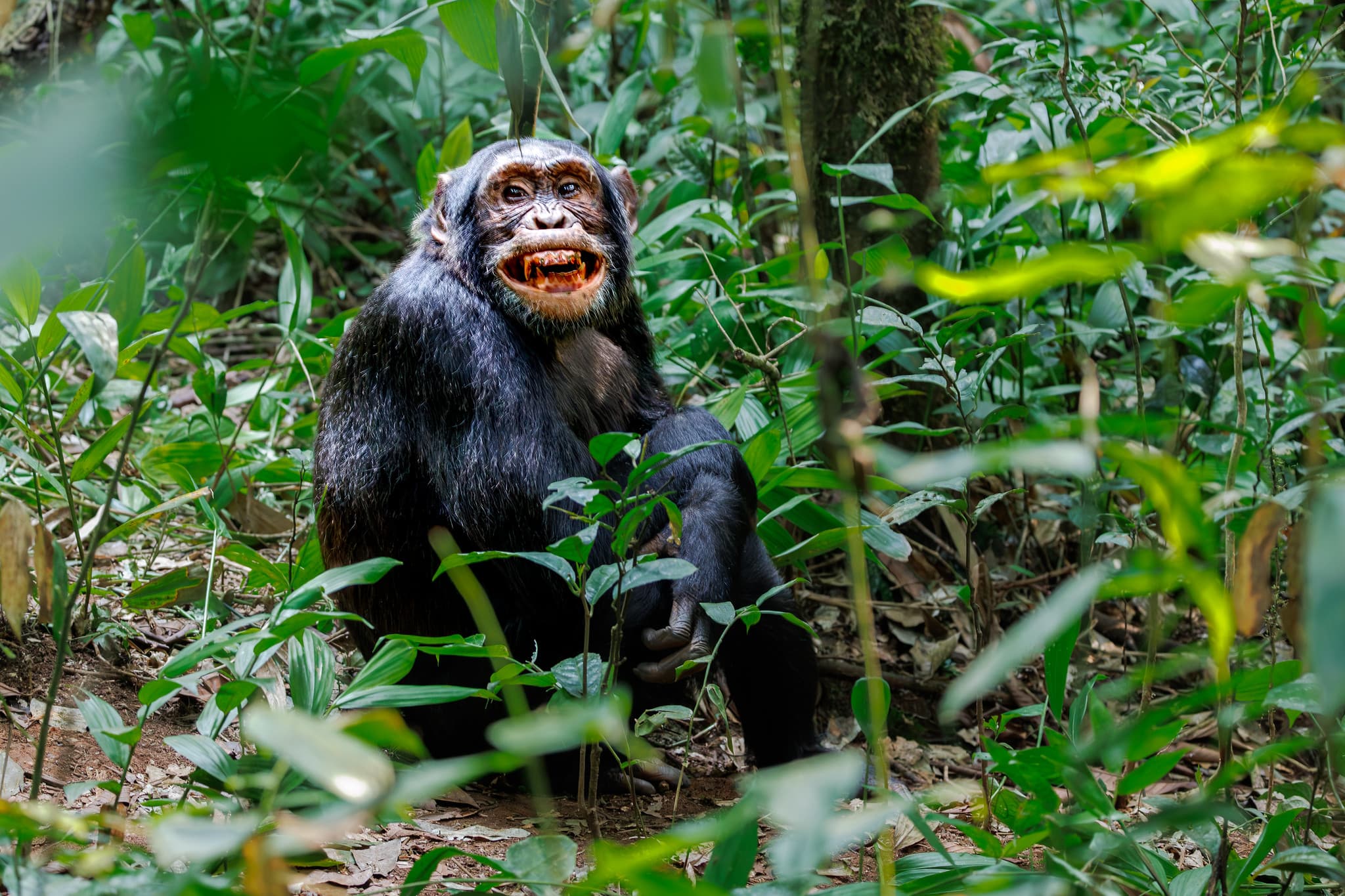
Kibale National Park, four hours north of Bwindi, adds a second primate chapter to any Uganda photography tour. Kibale has the world's highest density of chimpanzees, and the chimp trekking there is as rewarding — in its own faster, noisier, more chaotic way — as the gorilla experience at Bwindi.
Together, the two parks make Uganda the definitive primate photography destination.
Permits, Logistics, and the One-Hour Rule
This is the non-negotiable reality of gorilla photography: you get one hour with the gorillas. Not one hour of walking — one hour in the presence of the habituated gorilla family, once your ranger tracker locates them. The permit system enforces this strictly, and for good reason. Limiting human exposure protects both the gorillas and the quality of the encounter.
Uganda gorilla permits currently cost $700 USD per person per trek. Rwanda charges $1,500. Uganda is not cheap, but it is the most accessible and most affordable of the three countries where mountain gorilla trekking is permitted.
Book 3–6 months in advance. Uganda Wildlife Authority releases a limited number of permits per habituated family group per day — typically eight visitors per family. In peak season (June–September, December–February), permits sell out months ahead. I handle permit booking for all fototrails 365 gorilla itineraries, but you need to commit early.
Bwindi has multiple gorilla families available for trekking, spread across four sectors: Buhoma, Ruhija, Rushaga, and Nkuringo. Each sector has a distinct character. Nkuringo sits on a ridge at around 2,400 metres and tends to involve the longest treks — but the forest is spectacular and the family is outstanding for photography.
Camera Settings for Dark Forest Conditions
The forest is dark. Not dim — dark. The triple canopy of Bwindi filters out most direct light, and the gorillas often rest or move in areas with no direct sun at all. This is the single biggest technical challenge of gorilla photography, and the reason your camera settings here are completely different from open-savanna safari work.
Core Exposure Settings
ISO: 3200–12800. Accept high ISO. Modern full-frame sensors produce usable images at ISO 6400 and clean images at ISO 3200. On the darkest days or in the deepest shade, ISO 12800 is not unusual. Shoot RAW — high-ISO noise is manageable in post; a blurred image from too-slow a shutter is not recoverable.
Aperture: f/2.8–f/4. You want maximum light gathering. If you have an f/2.8 lens, use it wide open. The shallow depth of field becomes an asset — it separates the gorilla from the cluttered forest background that would otherwise compete for attention.
Shutter speed: 1/250s minimum; 1/400s preferred. Gorillas are deceptively quick when they move, and even when resting, they shift and turn constantly. 1/250s is the minimum to avoid motion blur from subject movement. In extremely dark conditions you may need to compromise to 1/160s with a very steady position — but recognise that some frames will be soft.
Flash is prohibited. Absolutely and completely. No exceptions. Flash disturbs the gorillas, stresses the animals, and will end your hour immediately. If your camera fires a pre-flash for autofocus assistance, disable it before you enter the forest.
AF mode: Continuous (AF-C / AI Servo) with face or animal detection if your camera has it. The gorillas' black faces against dark forest backgrounds can confuse AF systems. Pre-focus on the eyes when you have a clear view, then use continuous tracking as they move.
Essential Gear for Gorilla Trekking
Lenses
24–70mm f/2.8: This is your primary gorilla lens. In the dense forest, gorillas can be remarkably close — three to ten metres — and a long telephoto will put you too close to focus. The 24–70mm at f/2.8 gives you the wide aperture, the flexible focal range, and the ability to photograph close encounters.
70–200mm f/2.8: Useful when the gorillas are at medium distance — a silverback 15–20 metres away, or a family group spread across a clearing. The f/2.8 aperture earns its place here, giving you the light you need while still separating subjects from the forest chaos behind them.
Leave your 400mm and 600mm telephotos at the vehicle. You will not use them, and the weight will punish you on a steep five-hour trek.
Moisture and Mud Protection
Bwindi earns the "Impenetrable" in its name. Even in dry season, the forest holds moisture. The trail involves pushing through dense vegetation, ducking under branches, crossing streams on stones. Your gear will get wet.
Pack each lens in a sealed plastic bag when not shooting. Use a camera rain cover or a simple shower cap during the walk between gorilla sightings. Silica gel packets inside your camera bag control humidity. A microfibre cloth in an accessible pocket handles lens elements constantly.
Composition: What to Look For in the Hour
One hour sounds long. In the forest, with the light failing and the gorillas moving and the tracker hissing at you to move left, it passes in about fifteen minutes of subjective time. Know what you are looking for before you arrive.
Eye Contact and the Silverback Portrait
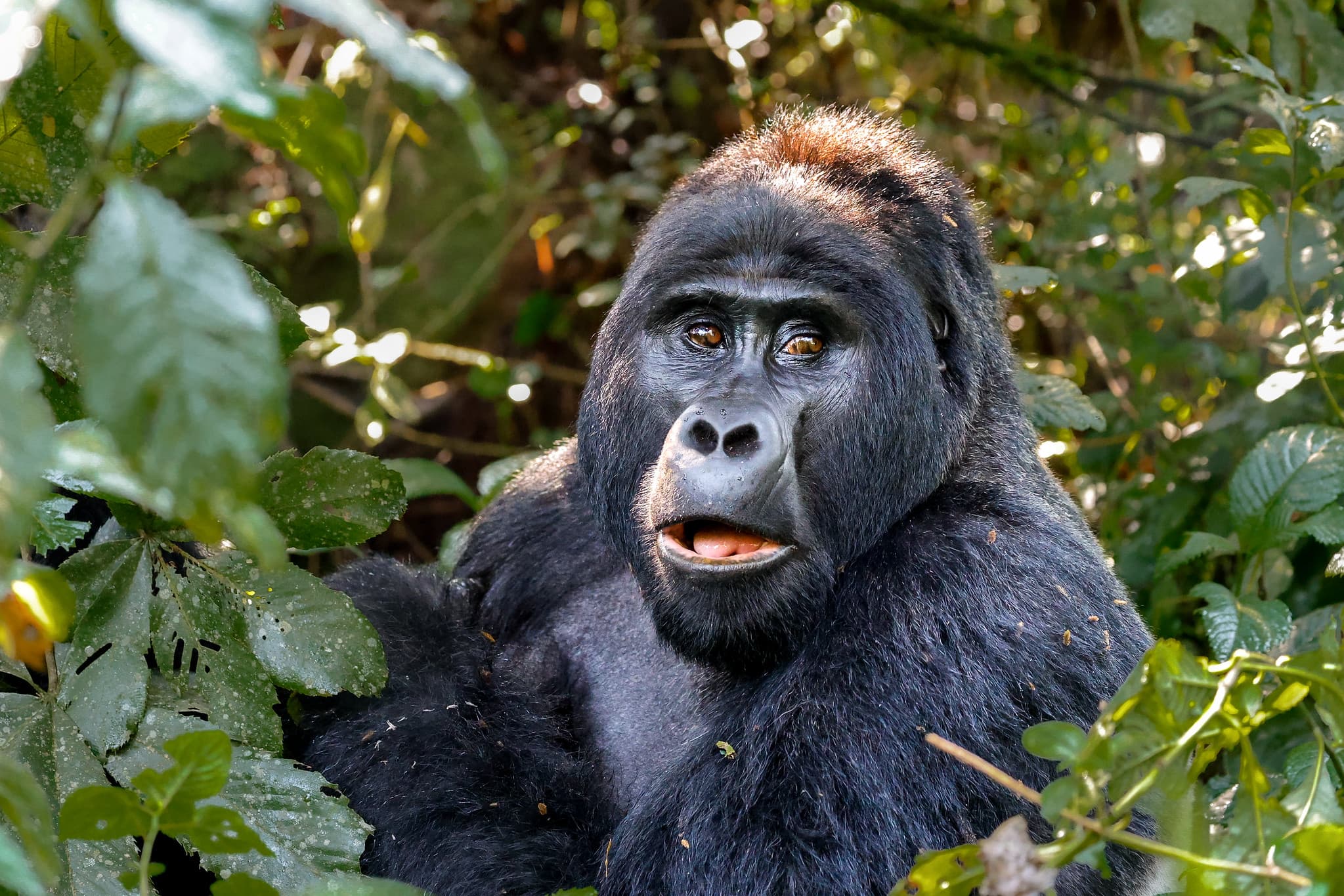
The silverback is your primary subject. Eye contact with a silverback — that ancient, calculating gaze looking directly into your lens — is one of the most powerful compositions in wildlife photography. Wait for it. Do not spray and pray. Watch the silverback, anticipate when he will turn his face toward you, and be ready with the shutter half-depressed when that moment comes.
Baby Interactions and Family Dynamics
Juvenile gorillas are playful, fast, and irresistible. Watch for mother-infant bonding — nursing, grooming, infants clinging to mothers' backs. These images carry an emotional register that the silverback portrait does not. Watch the dynamics between family members — disputes over food, play between juveniles. Those behavioural moments are often more compelling than simple portraits.
Environmental Shots
Do not spend the entire hour in tight telephoto mode. Step back — literally and figuratively — and make some wider images that show the gorillas in their forest context. A silverback resting against a mossy trunk, surrounded by green, framed by the tangled vegetation of the impenetrable forest.
Physical Preparation for the Trek
Gorilla trekking is a hike. The distance varies by family location — trackers radio ahead — but plan for 2 to 8 hours of walking through steep, muddy, heavily vegetated terrain. The altitude range across Bwindi's sectors is approximately 1,500–2,600 metres above sea level.
You do not need to be an athlete, but you need to be physically capable. Cardio fitness helps significantly at altitude. Walking poles are recommended — the Uganda Wildlife Authority provides porters who also carry your bag, and a porter is worth every dollar both practically and in terms of supporting the local community.
Rain gear is essential even in dry season. The forest creates its own weather. Wear long sleeves and trousers for the stinging nettles, biting insects, and thorned vegetation that lines the trail.
Ethical Photography With Gorillas
The rules exist to protect the gorillas and to ensure the survival of the trekking programme that funds their conservation. Follow them without exception.
Maintain a 7-metre distance from all gorillas at all times. Rangers enforce this. If a gorilla approaches you — and they sometimes do, particularly juveniles — do not move toward them. Stay still, avoid direct eye contact with the silverback, and let the ranger manage the situation.
Do not eat or drink in the presence of the gorillas. Human food can transmit disease to animals with no immunity to human pathogens.
What to Expect on a fototrails 365 Uganda Gorilla Tour
I have led gorilla trekking photography tours in Bwindi since the early days of the programme. Fototrails 365 handles every permit, every transfer, every lodge booking. We position you in the sector of Bwindi with the gorilla family I believe offers the strongest photography at that time of year. We carry your bags via porter so your hands are free for the camera from the moment we leave the trailhead.
I walk the trek with you and stay with the group during the hour with the gorillas. I will suggest positions, anticipate behaviours, and tell you when to wait and when to shoot. The one hour is not time for a camera settings tutorial — we cover all of that in a pre-trek briefing the evening before.
Nothing I say will prepare you for the experience of being in the presence of a mountain gorilla family in their forest. You will forget your settings. You will forget your compositions. You will, for a moment, simply stand and stare. That is exactly right. Let it happen. Then pick up the camera.
Explore These Destinations