How to Photograph Wildlife From a Safari Vehicle: A Field-Tested Guide
Bean bags, roof hatches, vehicle positioning, dust management, and the one habit that separates prepared photographers from the rest — never put your camera in the bag between sightings.
The Vehicle Is Your Tripod, Your Blind, and Your Limitation
On an African safari, the vehicle is everything. It is your hide — animals in the Masai Mara, Serengeti, and most East African parks are habituated to vehicles, not people. It is your camera platform — you cannot step out and set up a tripod. And it is your constraint — you shoot from where the vehicle stops, at the height the vehicle places you, dealing with whatever vibration the engine produces.
Understanding how to work within and around these realities is the difference between sharp, well-composed wildlife images and a card full of near-misses.
Vehicle Types and What They Mean for Photography
Pop-Top Land Cruisers
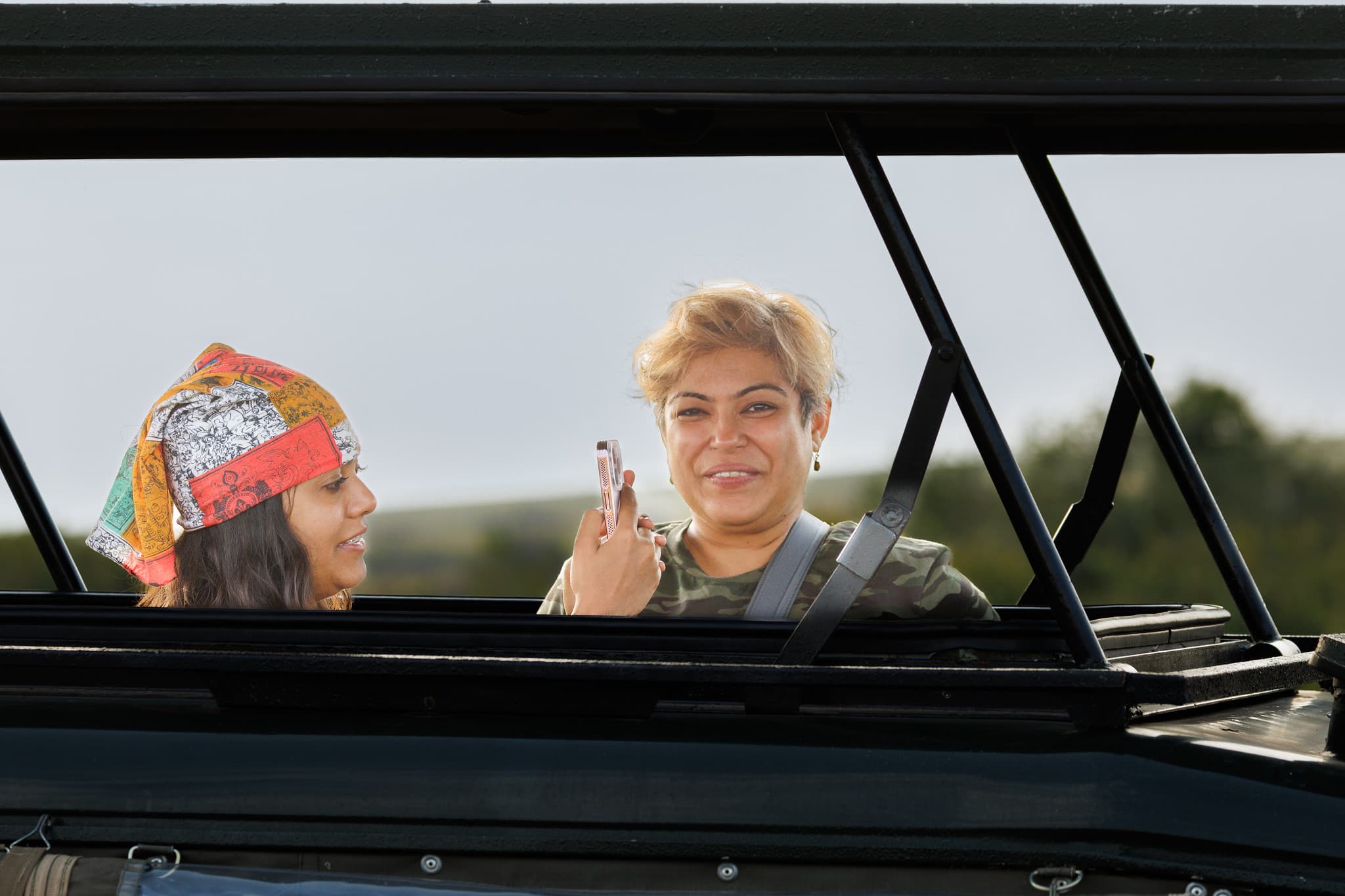
The most common safari vehicle in Kenya and Tanzania is the Toyota Land Cruiser with a pop-up roof. The roof lifts to create an elevated shooting position, and you stand on the seat to shoot over the roofline. This gives you an elevated perspective — useful for subjects in grass — and 360-degree shooting access. The downsides: the roof opening is shared space, so in a full vehicle of six guests, you are competing for position. The vehicle body blocks low-angle shots entirely.
Open-Sided Vehicles
In private conservancies and some South African reserves, open-sided Land Rovers or Land Cruisers are used. These have no doors or fixed roof — just a canvas canopy. The advantage for photography is significant: you can shoot at a much lower angle, closer to the animal's eye level, which produces more intimate and engaging images. The trade-off is less weather protection and more dust exposure.
On fototrails 365 tours, Nitin selects vehicle types based on the destination and the photography goals of the trip. Where open-sided vehicles are available and appropriate, they are the first choice.
Bean Bags: The Most Important Piece of Gear You Do Not Own Yet
If you take one thing from this guide, let it be this: a bean bag is the single most effective camera support in a safari vehicle. More useful than a monopod. More practical than any clamp system. And far better than hand-holding a 600mm lens for six hours.
How to Use a Bean Bag
Drape the bean bag over the vehicle's window frame, roof edge, or door frame. Press your lens into the bag so it moulds around the barrel, creating a stable cradle. The key is letting the bag absorb the lens weight — do not grip the lens tightly against the bag. Let gravity do the work. Your left hand guides composition; the bag handles stability.
Filling Your Bean Bag
Bring the bean bag shell empty in your luggage. Fill it on arrival with rice, dried lentils, or dried beans — available at any local market near your lodge or camp. A bag about two-thirds full is ideal. Too full and it will not mould around your lens; too empty and it provides no support. Aim for roughly 1.5–2 kg of fill.
Every fototrails 365 vehicle carries bean bags, but bringing your own shell means you have a backup and can customise the size to suit your lens.
Why Not a Tripod?
Tripods are virtually useless in a safari vehicle. The legs cannot spread properly on the vehicle floor. They create contact points that transmit engine vibration directly to the camera. They take time to set up when a leopard appears for 30 seconds. And they restrict you to one shooting position — you cannot swivel to follow a cheetah running past the vehicle. Leave the tripod at the lodge.
Window Mounts and Clamp Systems
Window mounts — metal clamps that grip the vehicle door or window frame — are a step up from hand-holding and can work well on open-sided vehicles with solid door frames. The best designs allow a ball head to be attached, giving you smooth panning. The limitation is that they fix you to one side of the vehicle, and switching sides takes 30 seconds you may not have.
If you use a window mount, ensure it fits the specific vehicle type before the game drive. Not all clamps fit all door frames, and a clamp that slips is worse than no support at all.
Monopods: A Compromise That Works in Some Situations
A monopod can be useful when shooting from the roof hatch of a pop-top vehicle. Plant the base on the vehicle floor, extend it to your shooting height, and use it as a vertical stabiliser. It is not as stable as a bean bag, but it allows you to pan smoothly for tracking shots and provides more support than hand-holding. For seated shooting from the side window, a monopod is awkward — the bean bag wins every time.
Shooting From the Roof Hatch
When the pop-top is raised, you gain an elevated perspective and the ability to shoot in any direction. This is where most of your shooting happens in a Land Cruiser. A few techniques make this position more effective:
Use the roof edge as your support. Drape your bean bag over the edge and rest your lens on it. This turns the vehicle roof into a stable shooting platform.
Stand on the seat, not the floor. Standing on the vehicle floor puts the roof edge at chest or chin height — too high for comfortable shooting. Standing on the seat raises you so the roof edge is at elbow height, which is the most stable and ergonomic shooting position.
Watch your elbows. Keep your elbows close to your body or braced against the roof frame. Elbows floating in air transmit every heartbeat and breath into the lens.
Managing Engine Vibration
A running diesel engine produces a low-frequency vibration that travels through the vehicle body and directly into your lens via any contact point. At 400mm and above, this vibration produces visible softness in images — even at fast shutter speeds.
The Solution Is Simple: Ask the Driver to Kill the Engine
On fototrails 365 tours, Nitin instructs the driver to switch off the engine at every significant sighting. This eliminates vibration entirely and also removes engine noise, which can disturb sensitive animals. Most professional safari drivers know this practice, but do not assume — communicate clearly. A polite "engine off, please" at the start of your trip establishes the habit for the entire safari.
If the engine must stay running (certain park rules, or the vehicle needs to be ready to move), increase your shutter speed to at least 1/1000s even for stationary subjects, and minimise contact between your body and the vehicle seat — vibration transfers through you as well.
Positioning Yourself in the Vehicle
Where you sit in the vehicle matters more than most photographers realise before their first safari.
Front seat: Best for shooting through the windshield at subjects directly ahead. Worst for side-on shooting — the door frame blocks your arc.
Middle row: The most versatile position. Good access to both sides and the roof hatch. This is where Nitin typically positions guests who are serious about photography.
Back row: In a full vehicle, the back row offers the most room but the highest vibration (you are furthest from the axles). Good for shooting behind the vehicle as it drives away from a sighting.
The golden rule: Sit on the side of the vehicle closest to the predicted action. If the driver spots a lion on the left, the left-side seats are the money seats. Be ready to shift.
Communicating With Your Driver and Guide
Your driver-guide is the most important factor in your photography, after the light. They control where the vehicle stops, what angle you get, and how close you approach. Good communication makes this relationship productive:
- Before the drive: Tell your guide what you are hoping to photograph that day. "I would like to focus on big cats today" is more useful than "let us see everything."
- During the approach: Ask for the angle you need. "Can we come around to the other side for front light?" or "Can we move forward five metres?" are normal, professional requests.
- At the sighting: "Engine off, please" and "Can we stay here for 15 minutes?" set expectations clearly.
- Thank your guide. A guide who feels appreciated will work harder to find and position for the next sighting.
On a fototrails 365 tour, Nitin handles all driver communication and vehicle positioning based on years of experience at each destination. This is one of the core advantages of travelling with a professional wildlife photographer.
The Small Group Advantage
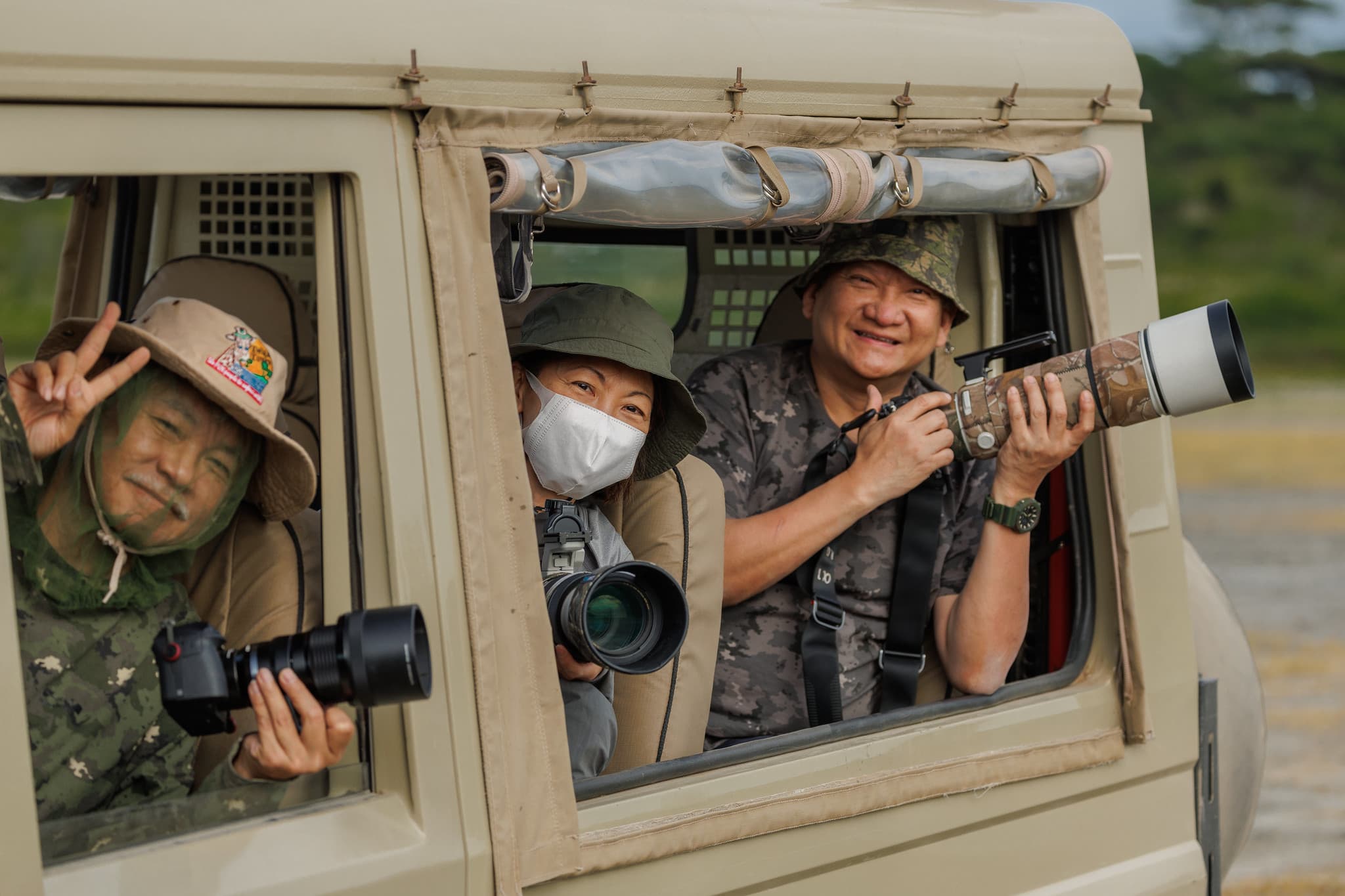
A vehicle carrying three photographers instead of six has three immediate advantages:
More space. Each person can spread across two seat positions, move freely between sides, and access the roof hatch without elbowing a neighbour.
Less vibration. Fewer people shifting weight means the vehicle stays more stable during critical moments.
Faster repositioning. The driver can reposition quickly because everyone is on the same page — fewer competing requests, faster agreement on angles.
This is why fototrails 365 tours cap vehicle occupancy at 3–4 photographers per vehicle. The difference in image quality and shooting comfort is substantial.
Dealing With Dust on Your Gear
Dust is unavoidable on safari. Vehicles travel on unpaved roads, often following other vehicles that throw up clouds of fine, red laterite dust. This dust gets into lens barrels, onto sensor filters, into bag zippers, and onto every exposed surface.
Practical dust management:
- Keep a microfibre cloth accessible at all times — in your lap, not in your bag.
- When driving between sightings, cover your camera and lens with a lightweight cloth or scarf. A simple cotton wrap is faster than a camera bag.
- Avoid changing lenses in dusty conditions if possible. Carry two bodies with different lenses mounted — a 100–400mm on one body and a 70–200mm on the other — so you never need to change lenses in the field.
- At the end of each day, use a rocket blower (not compressed air) to blow dust off the lens front element, camera body, and lens mount before bringing gear into your room.
- Clean your sensor every 2–3 days on a long safari. Bring a sensor cleaning kit or ask your lodge — many safari lodges in Kenya and Tanzania stock basic cleaning supplies.
The Camera-Ready Habit
This is the single most common mistake Nitin sees among first-time safari photographers: putting the camera away in a bag between sightings.
Do not do this.
Wildlife appears without warning. A leopard in a tree. A cheetah crossing the road. An elephant charging from the bush. You have 5–15 seconds to raise, compose, and fire. If your camera is in a bag, zipped, with the lens cap on, those seconds are spent fumbling instead of shooting.
Between sightings, keep your camera in your lap or on the seat beside you, lens cap off, camera switched on, settings ready for action (1/1000s, f/5.6, Auto ISO). Cover it with a cloth for dust protection if needed, but keep it ready. The photographer who is always camera-ready will capture moments that the photographer who packs away between sightings will miss entirely.
Quick Settings Checklist Before Every Game Drive
Before the vehicle moves each morning and afternoon, run through this 30-second checklist:
- Memory card: Formatted or with sufficient space
- Battery: Full charge in camera, spare in pocket (not in bag)
- Shutter speed: 1/1000s minimum as your starting point
- AF mode: Continuous tracking with animal detection enabled
- Drive mode: High-speed burst
- ISO: Auto, capped at 6400 or 12800 depending on your camera body
- Image quality: RAW
- Lens cloth: In your lap or shirt pocket
- Bean bag: Positioned on the vehicle edge, ready
This routine takes seconds and ensures you are ready for whatever the bush delivers. On a fototrails 365 tour, Nitin runs through this with every guest at the start of every drive — because preparation, not reaction, produces the best wildlife photographs.