Mastering Backlit Wildlife Photography on Safari
Shooting into the light breaks every rule — and produces the most dramatic images. Here's how to use rim light, silhouettes, and golden-hour backlight to create safari photographs that stand apart.
Why Shooting Into the Light Works
Most photographers spend their entire safari keeping the sun behind them. It is sound advice for sharp, evenly lit images — and it produces predictable results. The moment you turn around and shoot into the light, everything changes. Edges catch fire. Dust becomes gold. Water spray turns into diamonds. The animal becomes a shape defined by light rather than by detail, and the image shifts from documentary to emotional.
Backlit wildlife photography is not a gimmick. It is a deliberate creative technique used by virtually every published wildlife photographer, and it is responsible for some of the most iconic safari images ever made. The difference between a snapshot and a backlit masterpiece is understanding when to use it, how to expose for it, and what to do with the file afterward.
When Backlight Works Best
Golden Hour: The Non-Negotiable Window
Backlighting only works when the sun is low. At midday, the sun is overhead and there is no angle to shoot into — you get blown-out sky and a dark, contrasty mess. The golden hour — the first 40 minutes after sunrise and the last 40 minutes before sunset — is when backlighting becomes possible and extraordinary.
During golden hour, the light is warm, soft, and directional. When the sun sits just above the horizon behind your subject, it wraps around the animal's outline and creates that signature rim of golden light. This is the window. Miss it and no amount of post-processing will recreate it.
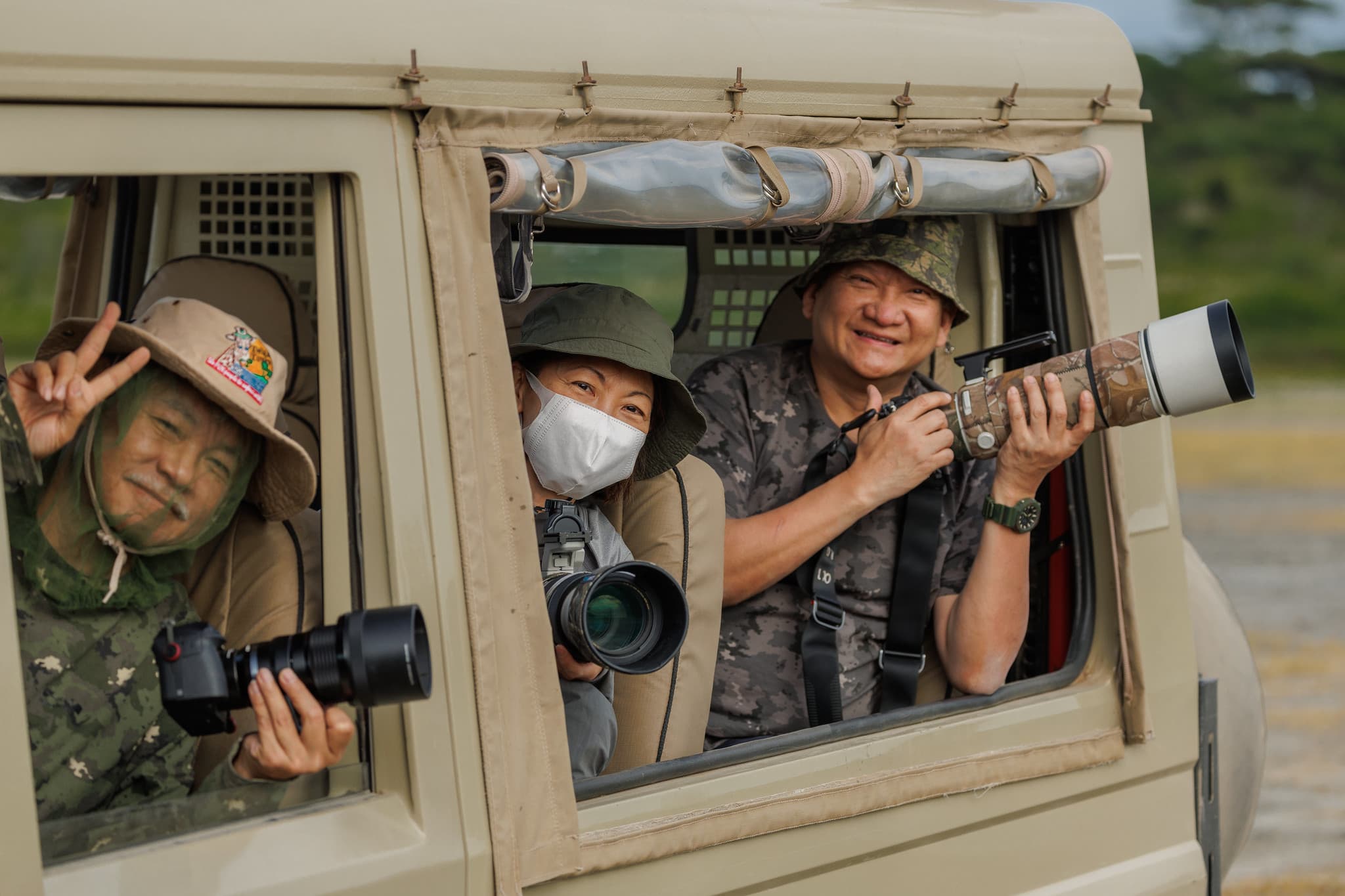
On every fototrails 365 safari, Nitin plans the afternoon drive so you are positioned with the sun at your back initially, then — as it drops — rotates to face into the light for the final 30 minutes. That rotation is a deliberate creative decision, and it changes the character of every image you take.
Dust Clouds: The Backlit Bonus
When elephants move across dry ground in the Mara or Amboseli, their feet throw up clouds of fine dust. Lit from behind, this dust becomes a glowing amber haze that envelops the animal, softens the background, and adds an atmosphere that simply does not exist in front-lit conditions. A herd of elephants walking toward camera in evening backlight, trailing clouds of golden dust, is one of the most powerful compositions available on any East Africa safari.
Wait for movement. When the herd shifts or a bull shakes his head, the dust intensifies. That is your moment.
Water Spray and River Light
At river crossings, swamps, and waterholes, backlit water spray creates an entirely different effect. Each droplet catches the sun individually, turning a splash into a constellation of light points. Elephants spraying water at Enkongo Narok swamp in Amboseli, wildebeest crashing through the Mara River at a crossing, or a fish eagle hitting the surface — all are transformed by backlighting.
Birds in particular benefit enormously. A cormorant shaking its wings dry in backlit spray produces an image that frontlit photography simply cannot match.
Camera Settings for Backlit Wildlife
Expose for the Highlights
This is the single most important technical point. When shooting into the light, your camera's meter will try to expose for the dark animal in front of the bright sky. If you let it, you will get a correctly exposed animal and a completely blown-out, white sky with no atmosphere at all. The magic of backlighting is in the light itself — you must preserve it.
Exposure compensation: -1 to -2 stops from what your meter suggests. Start at -1 and check the histogram. The animal will be dark — that is intentional. You will recover shadow detail in post-processing. What you cannot recover is blown highlights. Once the golden sky is pure white, it is gone.
Metering Mode
Switch to spot metering or centre-weighted metering. Evaluative (matrix) metering averages the entire scene and will be fooled by the bright background. Spot metering lets you meter on the brightest area of sky just beside the animal, set your exposure, and lock it.
Alternatively, use manual exposure: set your aperture for the desired depth of field, then adjust shutter speed until the bright background reads about +1 stop on the meter. The animal will be underexposed by 2-3 stops — exactly what you want.
Shutter Speed and Aperture
Shutter speed: 1/1000s minimum for any moving animal. Backlit conditions often mean you are shooting at lower ISO or with exposure compensation dialled down, which gives you fast shutter speeds even at moderate apertures.
Aperture: f/5.6 to f/8 works well. Wider apertures (f/4 or f/2.8) can create beautiful bokeh in the backlit background, but you risk losing the rim-light definition on the animal's outline. f/5.6 is a good starting point.
ISO: Keep it as low as the shutter speed allows. Backlit scenes have high contrast, and higher ISO amplifies noise in the shadow areas you will later try to recover. ISO 400-800 is typical for golden-hour backlight.
Managing Lens Flare
When you point your lens directly toward the sun, lens flare is inevitable. Modern multi-coated lenses handle flare well, but it is still a factor. Here is how to manage it:
Use your lens hood. Always. It blocks stray light from hitting the front element at oblique angles and reduces flare significantly.
Position the animal between you and the sun. When the animal's body blocks the direct sun, you get rim light without direct flare. This is the cleanest backlit composition — the sun is there, its effect is visible, but it is not in the frame.
Embrace intentional flare. Sometimes flare adds to the image. A warm wash of golden light across the lower corner of the frame, or a starburst of sun peeking around the animal's silhouette, can enhance the atmosphere rather than detract from it. The key is intent — if the flare serves the image, keep it.
Clean your front element. Dust and fingerprints on the lens cause diffuse, ugly flare that degrades the whole image. A quick wipe before you turn into the light makes a genuine difference.
The Silhouette: Pure Shape
The silhouette is backlighting taken to its logical extreme. You expose entirely for the sky and let the animal go completely black. No detail in the subject at all — just shape.
This technique works best with animals that have a strong, recognisable outline. A giraffe against a sunset sky is unmistakable. A lion's mane creates a halo of backlit hair. An acacia tree with a bird perched on top is pure graphic design.
How to Shoot a Clean Silhouette
1. Meter on the sky away from the sun — the brightest area that is not the sun itself.
2. Lock exposure (AE-L or manual mode).
3. Compose with the subject against the brightest part of the sky. Avoid placing the animal against a dark cloud or the horizon — contrast is everything.
4. Shoot at -1 to -2 stops from the sky reading to deepen the colours and ensure the subject is truly black.
5. Focus carefully. Your AF system may struggle against a dark subject on a bright background. Use a single AF point on the animal's outline where there is contrast — the edge where dark meets light.
The most effective silhouettes are simple. One animal, one tree, a clean horizon. Complexity kills the silhouette — if the viewer cannot instantly read the shape, the image loses its power.
The Rim-Light Portrait
Between the fully detailed frontlit image and the pure silhouette lies the rim-light portrait — and this is where backlit wildlife photography reaches its peak. The animal is underexposed by 1-2 stops, dark but with visible detail in the fur, skin, or feathers. The edge of the animal — mane, ear tips, whiskers, feather edges — is lit by a thin line of brilliant golden light.
Lions at Sunset
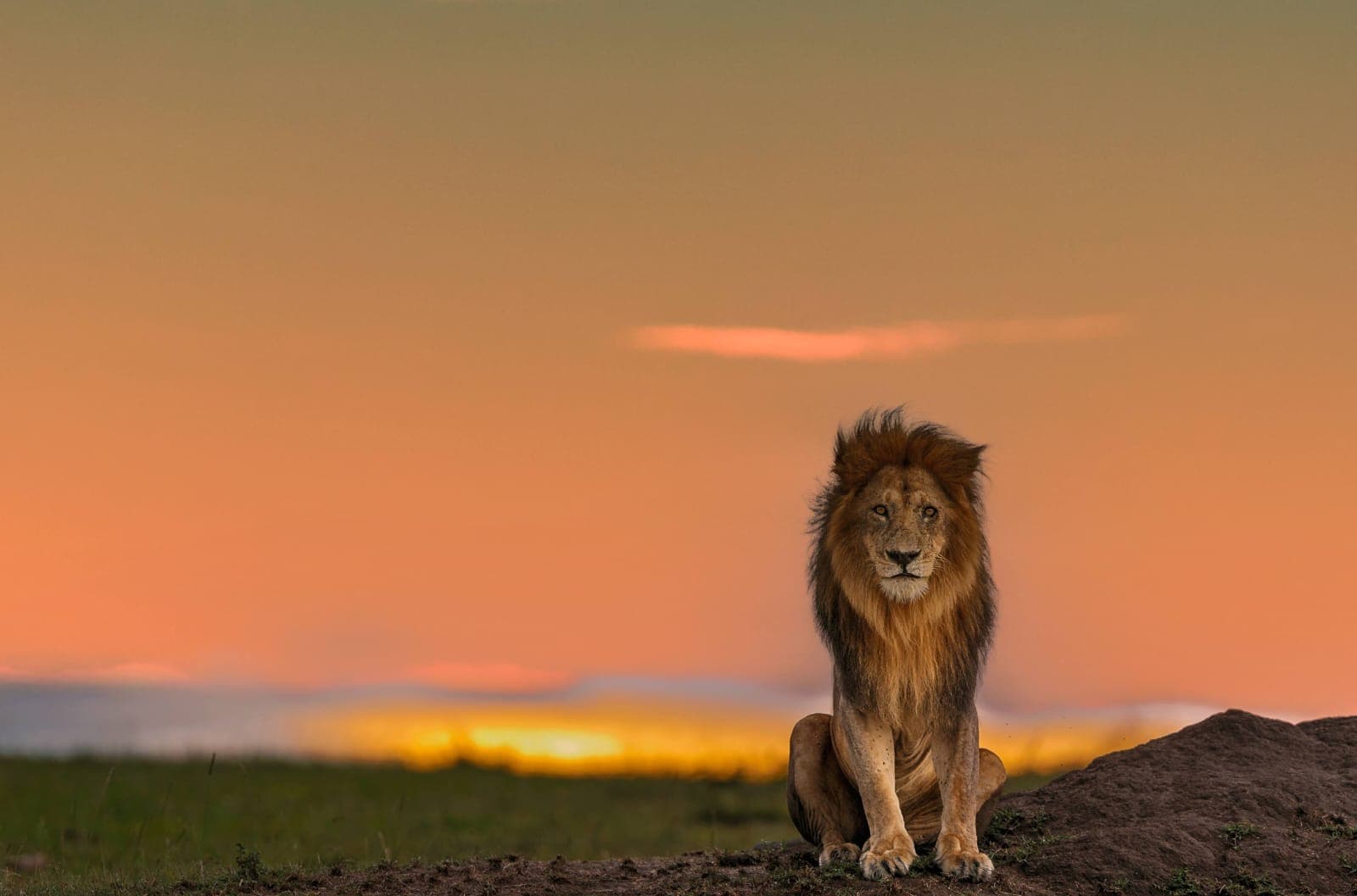
A male lion facing you in late afternoon backlight, with his mane lit from behind in a corona of golden fire, is one of the most sought-after images in African wildlife photography. The dark face shows the eyes, the nose, the expression. The mane becomes a ring of light. The separation between subject and background is absolute.
To capture this: position yourself so the sun is directly behind the lion's head. Expose -1.5 stops from what the meter suggests. Use continuous AF on the eyes. Wait for the moment the lion lifts his head or turns slightly — the rim light shifts and intensifies with the angle.
Elephants in Dust
A backlit elephant is defined by its outline — the enormous ears, the curve of the trunk, the bulk of the body. When dust is present, the rim light extends outward into the dust cloud, creating a glow around the entire animal. This is best captured at f/5.6 to f/8, with the sun just above and behind the elephant, and the exposure pulled down to preserve the golden tones in the dust.
Birds in Spray
Herons, egrets, and fish eagles near water produce extraordinary backlit images. The spray of a fish eagle strike, backlit by low sun, creates a fan of light around the bird. The feather edges glow. Use a fast shutter speed (1/2000s+) to freeze the water droplets and preserve each individual point of light.
Post-Processing Backlit Images
Backlit wildlife images require more post-processing than frontlit work. You are deliberately underexposing the subject, which means shadow recovery is essential.
Shadow Recovery
In Lightroom or Camera Raw, lift the Shadows slider to +40 to +70. This brings detail back into the animal's body without affecting the highlights. Go too far and you introduce noise and a flat, HDR look — the image should still feel underexposed and moody, not evenly lit.
Contrast Management
Backlit images are inherently high-contrast. After lifting shadows, you may need to reduce the Contrast slider slightly (-10 to -20) and then add localised contrast back using the Clarity or Texture sliders. This maintains the atmosphere while adding definition to the subject.
Colour Temperature
Golden-hour backlight is warm — 3500K to 4500K. Your camera's auto white balance may try to neutralise this warmth. In post, push the white balance slightly warmer (toward 5500-6000K) to preserve the golden character of the light. This is the mood of the image — do not neutralise it.
Dehaze
A gentle application of the Dehaze slider (+10 to +20) can cut through the atmospheric haze that backlight creates without destroying the mood. Use it sparingly — too much dehaze turns a dreamy golden atmosphere into a harsh, over-processed scene.
The Mindset Shift
Frontlit wildlife photography is about detail, sharpness, and accuracy. Backlit wildlife photography is about mood, shape, and emotion. Both are valid. Both belong in a strong portfolio. But the backlit images are the ones that stop people scrolling. They are the ones that get framed, shared, and remembered.
On a fototrails 365 safari, Nitin actively coaches backlit technique during the golden hour. The instinct to keep the sun behind you is strong — it takes guidance and practice to trust the opposite approach. But once you see your first rim-lit lion on the camera screen, the instinct reverses permanently. You will spend the rest of the trip chasing the light from the front.