How Much Does a Photography Safari Cost? An Honest Breakdown
A transparent, no-fluff guide to what a wildlife photography safari actually costs — from park fees and accommodation tiers to guide fees, tipping, and the hidden extras nobody mentions.
The Short Answer (and Why It's Not Enough)
A photography-focused wildlife safari typically costs between $400 and $900 per person per day in East Africa, and INR 15,000–25,000 per person per day (roughly $180–$300) in India. That range is wide because the variables are real: accommodation tier, season, group size, destination, and whether you are on a photography-specific tour or a standard game drive.
This post breaks down every component so you can budget accurately — no surprises, no hidden costs.
The Big Cost Components
1. Accommodation — The Largest Variable
Accommodation is the single biggest factor in your daily rate. In East Africa, the gap between a comfortable mid-range tented camp and a luxury lodge can be $200–$400 per person per night.
Kenya (Masai Mara):
- Mid-range (3-star tented camps like Olikenyei): $600/day pp in off-season (Jan–Jun), $700/day pp in peak season (Jul–Dec)
- High-end (luxury lodges and conservancies): $800/day pp off-season, $900/day pp peak season
Tanzania (Serengeti & Ngorongoro):
- Mid-range: $650–$700/day pp (Jan–Jun), $800–$900/day pp (Jul–Dec)
- Tanzania is generally 10–15% more expensive than Kenya due to higher park fees and more complex logistics
Uganda:
- Mid-range: $500/day pp, High-end: $800–$900/day pp (Jul–Sep best season)
- Plus gorilla trekking permits (see below)
India (Ranthambore, Kaziranga, Tadoba, Jim Corbett):
- INR 15,000–25,000/day pp (approximately $180–$300), including accommodation, safari drives, and park fees
- India offers outstanding value compared to East Africa — the wildlife is world-class and the costs are significantly lower
These per-day rates on fototrails365 tours typically include accommodation, all meals, game drives, park fees, and photography guiding. They are not room-only prices.
2. Park and Conservation Fees
Park fees are built into most tour pricing, but it helps to understand what they are:
- Masai Mara National Reserve: $80/day for non-residents
- Serengeti National Park: $82/day for non-residents (Tanzania's park fees are among the highest in Africa)
- Ngorongoro Crater: $82/day park fee plus a separate crater descent fee
- Uganda national parks: $40–$50/day for non-residents
- Indian national parks: INR 2,000–5,000 per safari entry (significantly lower than Africa)
On a photography tour, these are almost always included in the quoted price. If a quote does not include park fees, ask — it changes the comparison significantly.
3. Gorilla and Chimpanzee Permits
This is a major additional cost for Uganda and Rwanda itineraries:
- Uganda gorilla trekking permit: $800 per person (one trek, one hour with a habituated family)
- Rwanda gorilla permit: $1,500 per person
- Uganda chimpanzee habituation: $250 per person
These are non-negotiable, government-controlled prices. They are almost never included in the per-day tour rate. Budget for them separately.
4. International Flights
Flights are always excluded from safari pricing, and they vary enormously based on where you are flying from, when you book, and the season.
Rough return flight estimates:
- India to Nairobi (Kenya): $500–$800 (direct flights available from Mumbai)
- India to Kilimanjaro (Tanzania): $600–$1,000
- India to Entebbe (Uganda): $500–$900
- Europe to East Africa: $600–$1,200
- North America to East Africa: $900–$1,800
- Domestic flights within India (for safari destinations): INR 5,000–15,000
Book 3–6 months in advance for the best fares. Peak migration season (July–October) commands higher airfares to Kenya and Tanzania.
5. Internal Transfers and Bush Flights
In East Africa, getting from the international airport to the safari destination often involves a second flight or a long drive.
- Nairobi to Masai Mara (bush flight): $150–$250 one way — included in fototrails365 Kenya itineraries
- Arusha to Serengeti (bush flight): $250–$400 one way — included in fototrails365 Tanzania itineraries
- Nairobi to Amboseli (road transfer): 4–5 hour drive, typically included
These internal transfers are included in most photography tour pricing. On standard (non-photography) safaris, check carefully — some quote the safari price without the flight to the park, which is misleading.
6. Visas
- Kenya e-Visa: $35 per person
- Tanzania visa: $50 per person (single entry, available online or on arrival)
- Uganda visa: $50 per person (single entry)
- India e-Visa (for foreign nationals): $25–$80 depending on duration
Always excluded from tour pricing. Apply online before departure.
7. Travel Insurance
Mandatory on every reputable safari — and genuinely important. Medical evacuation from a remote bush camp to Nairobi can cost $10,000–$50,000 without insurance.
Budget: $100–$300 per person for a 7–14 day trip, depending on age and coverage level. Ensure the policy covers emergency medical evacuation and trip cancellation.
For high-altitude destinations like Ladakh (3,500m+), ensure your policy specifically covers altitude sickness and helicopter evacuation.
8. Gratuities and Tipping
Tipping is expected in East Africa and is a meaningful part of safari staff income. It is always excluded from tour pricing.
Standard guidelines:
- Safari driver/guide: $15–$20 per guest per day
- Camp/lodge staff (pooled): $10–$15 per guest per day
- Specialist trackers (gorilla, chimpanzee): $10–$20 per guest per trek
For a 6-day Kenya safari: budget approximately $200 per person in tips — this matches the excluded cost listed on fototrails365 Kenya itineraries.
What a Complete Safari Actually Costs: Real Examples
Here are total per-person budgets based on actual fototrails365 itineraries, including everything:
Kenya — Masai Mara & Lake Nakuru (6 days)
- Tour cost (mid-range, group of 4): $2,800
- International flight (from India): ~$650
- Kenya e-Visa: $35
- Travel insurance: ~$150
- Tips: ~$200
- Total: approximately $3,835 per person
Tanzania — Serengeti Migration (8 days)
- Tour cost: $3,800
- International flight (from India): ~$800
- Tanzania visa: $50
- Travel insurance: ~$200
- Tips: ~$250
- Total: approximately $5,100 per person
Uganda — Gorilla Trekking Safari (multi-park)
- Tour cost (mid-range, per day): $500/day (e.g., 7 days = $3,500)
- Gorilla permit: $800
- International flight (from India): ~$700
- Uganda visa: $50
- Travel insurance: ~$200
- Tips: ~$200
- Total: approximately $5,450 per person (7-day example)
India — Ranthambore Tiger Safari (5 days)
- Tour cost: INR 15,000–20,000/day pp (5 days = INR 75,000–100,000 / ~$900–$1,200)
- Domestic flight: INR 8,000–12,000 (~$100–$150)
- Tips: INR 3,000–5,000
- Total: approximately INR 90,000–120,000 per person ($1,080–$1,440)
What Drives the Price Up (and Down)
Season
Peak season (July–October in East Africa) commands the highest rates. The Masai Mara jumps from $600/day to $700/day per person at mid-range level. Accommodation availability tightens and flights cost more. The wildlife is extraordinary during this period — the migration is the reason — but so are the prices.
Off-season and green season (November–June, excluding December holidays) can reduce your total cost by 15–25%. The wildlife is still excellent — resident predators do not migrate — and the landscape is lush and green. Fewer vehicles, too.
Group Size
Photography tours operate in small groups for good reason — vehicle positioning, guide attention, and the ability to wait at a sighting without being outvoted by non-photographers. But smaller groups mean higher per-person costs because fixed expenses (vehicle, guide, fuel, park fees) are divided among fewer people.
A group of 2 pays more per person than a group of 4 or 6. On fototrails365 tours, vehicles carry a maximum of 4 adults to ensure every seat has an unobstructed shooting position — a critical difference from standard safaris that pack 6–8 guests per vehicle.
Accommodation Tier
The difference between a clean, comfortable 3-star tented camp and a luxury lodge with plunge pools and private decks can be $200–$400 per night per person. Both put you in front of the same wildlife. The luxury tier is genuinely wonderful — but the photography is identical. Choose based on what matters to you outside the vehicle, not inside it.
Single Supplement
Solo travellers pay a single-room supplement — typically 30–50% above the twin-sharing rate. This is an industry standard, not a penalty.
Why Photography-Specific Tours Cost More Than Standard Safaris
A standard game-drive safari in Kenya might cost $300–$400 per person per day. A photography-focused tour runs $600–$900. The difference is not arbitrary. Here is what it pays for:
Fewer guests per vehicle. Standard safaris seat 6–8 guests in a minivan or Land Cruiser. Photography tours limit to 4 guests maximum, ensuring window seats and beanbag positions for everyone. That means more vehicles per group, which costs more.
More time in the field. Standard safaris run 3–4 hour game drives with fixed return times. Photography tours run dawn-to-dusk schedules — out before sunrise, back after sunset, with packed breakfasts and lunches eaten in the bush. More fuel, more driver hours, more meals in the field.
Photography-trained guides. A standard safari guide identifies animals and shares facts. A photography guide reads animal behaviour to predict action, positions the vehicle for optimal light angle and background, and coaches you on settings and composition in real time. Nitin Vyas has guided photographers across East Africa and India for years — that expertise is built into every fototrails365 itinerary.
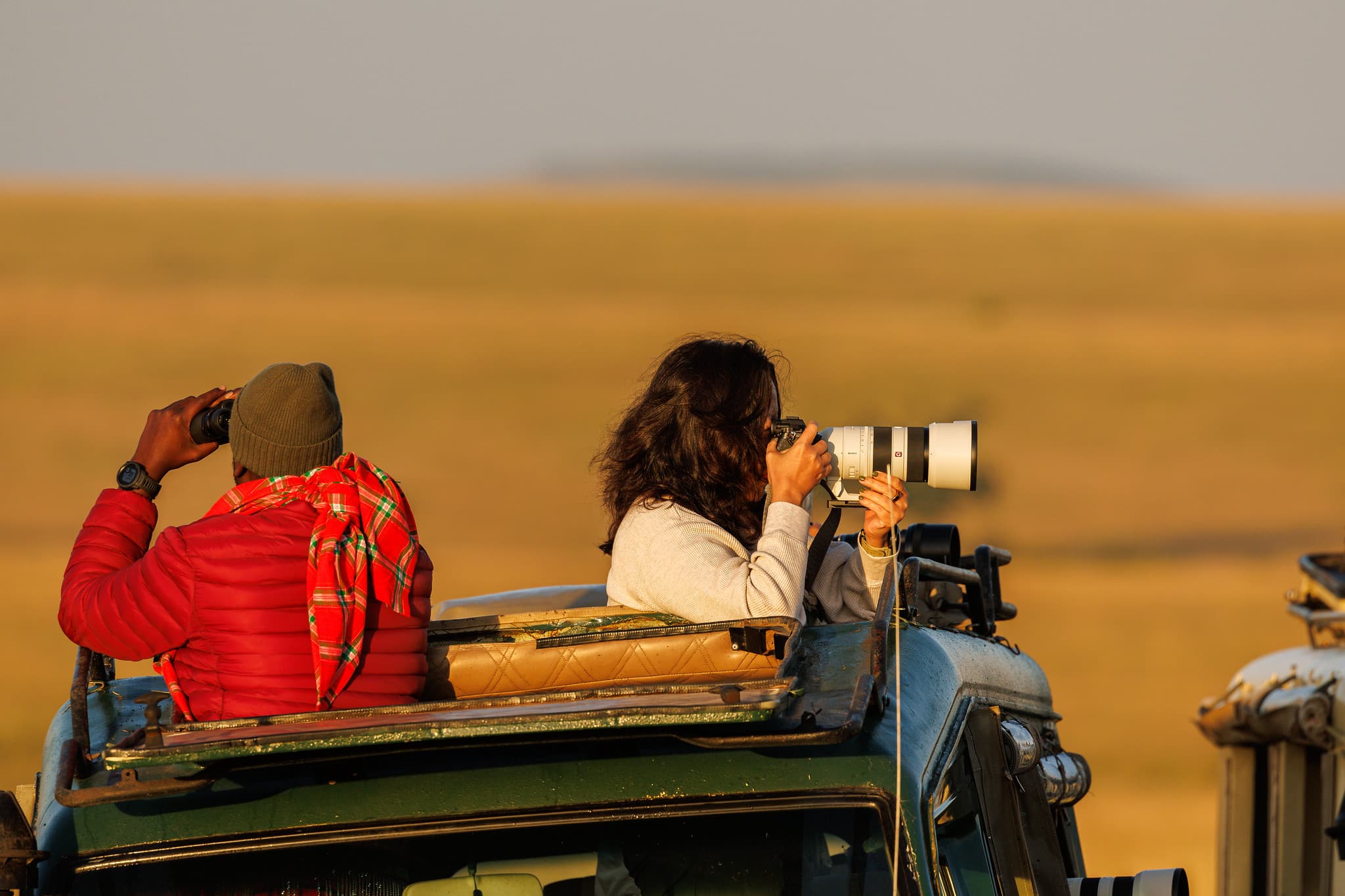
Vehicle modifications. Pop-up roof hatches, beanbag mounts, dust-sealed storage for equipment, charging points for batteries — photography vehicles are purpose-configured. Standard safari vehicles are not.
Flexibility. If a leopard is descending a tree and the light is perfect, a photography tour stays. A standard safari has a schedule. That flexibility — the willingness to spend two hours at a single sighting — is what produces the images that made you want to go on safari in the first place.
The Bottom Line
A well-run photography safari is not cheap. But when you break down what you are paying for — expert guiding, small groups, purpose-built vehicles, maximum time in the field, and access to the world's most extraordinary wildlife — the value is real. You are not paying for a holiday with animals in the background. You are paying for a structured, guided opportunity to come home with images that genuinely matter to you.
If budget is a concern, India offers remarkable wildlife photography at a fraction of East African prices. A 5-day tiger safari at Ranthambore or Tadoba with a dedicated photography guide costs roughly a third of an equivalent-length Kenya safari — and the tiger encounters can be extraordinary.
Whatever your budget, the key is transparency. Know what is included, what is excluded, and what the total cost will be before you commit. That is what this guide is for — and it is how fototrails365 quotes every trip.