Going on an African Photography Safari Solo: The Honest Guide
Thinking about joining a photography safari in Africa on your own? Here's what solo travel on a wildlife photography tour actually looks like — from group dynamics to single supplements to making lifelong friends.
The Question Every Solo Traveller Asks
You have been wanting to photograph African wildlife for years. You have the camera, the lenses, the time off work. But nobody in your circle shares the obsession — or they cannot travel when you can. So the question becomes: do you go alone?
The short answer is yes. Absolutely yes. And not reluctantly, not as a compromise, but because a photography-focused group safari may actually be the best way to experience Africa as a solo traveller. This guide covers the practical realities — safety, cost, group dynamics, and why you will probably come home with better images than if you had gone privately.
Is It Safe to Travel Solo in Africa?
Safety is the first concern, and it deserves a direct answer. On an organised photography safari with a reputable operator, solo travel in East and Southern Africa is extremely safe. You are not backpacking through unfamiliar cities or navigating public transport. You are collected at the airport, driven to your lodge or camp, accompanied by experienced guides in national parks, and looked after at every step.
The wildlife areas — Masai Mara, Serengeti, Amboseli, Samburu, South Luangwa, Chobe — are well-established tourism destinations with decades of infrastructure supporting international visitors. Your guides are trained, licensed, and deeply familiar with their terrain.
On a fototrails 365 tour, Nitin handles all logistics: airport transfers, domestic flights, park entry fees, accommodation, vehicle allocation, and daily game drive schedules. As a solo traveller, you do not need to coordinate anything beyond getting yourself to the arrival airport.
A Note for Solo Female Travellers
Solo female travellers are a significant and growing part of our guest list, and for good reason. A small-group photography safari is one of the most comfortable ways for women to travel solo in Africa. You are never alone in an unfamiliar setting — you are with a group of like-minded photographers, accompanied by professional guides, staying at reputable lodges and tented camps.
Practical tips: most safari lodges have single-occupancy tents or rooms available. You will share a vehicle during game drives (typically 3–4 guests per vehicle), but you have your own accommodation. If you have any specific concerns — room location, dietary needs, early morning wake-up preferences — communicate these ahead of time, and they will be handled.
The photography community tends to be welcoming and egalitarian. What matters on a game drive is your enthusiasm and your willingness to be patient at a sighting, not your gender or where you come from.
The Single Supplement Question
This is the practical hurdle most solo travellers encounter. Safari lodges price per room, and a room occupied by one person costs the lodge nearly as much as a room occupied by two. The single supplement — an additional fee for sole occupancy — exists because of this.
On a fototrails 365 tour, the single supplement is clearly stated upfront during the booking process. There are no hidden charges. Nitin also offers the option of being matched with another solo traveller of the same gender to share accommodation and split the supplement. This matching is entirely optional — if you prefer your own space, you pay the supplement and that is that.
Is the single supplement worth it? For most solo travellers, yes. Having your own tent or room after a long day of game drives — a quiet place to review your images, charge your batteries, and sleep on your own schedule — is genuinely valuable. Safari days start before dawn and the ability to rest without coordinating with a roommate matters.
Why a Group Photography Safari Beats a Private Safari for Solo Travellers
This may sound counterintuitive. A private safari gives you a vehicle to yourself, a guide to yourself, and total control over your schedule. Why would a group be better?
You Get Photography Companions
A private safari as a solo traveller means spending 10–14 days with your guide and nobody else. Guides are excellent company, but they are working. You have no peers to share the experience with — nobody to debrief a sighting with over dinner, nobody to show your images to who understands what it took to get the shot, nobody who gasps when a leopard descends a tree at last light.
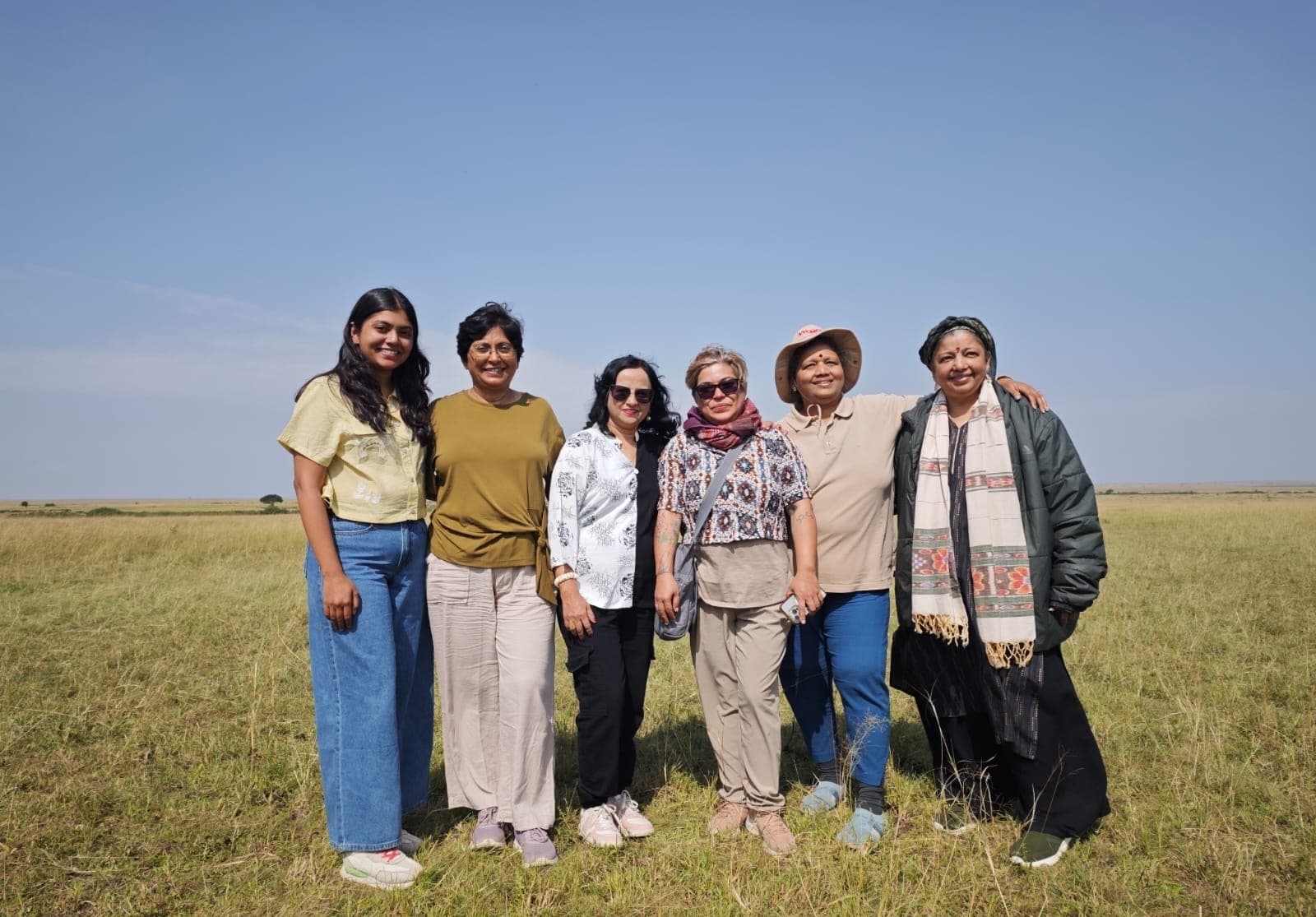
On a small-group photography safari, you are surrounded by people who chose to spend their holiday doing exactly what you are doing. The conversations at dinner are about focal lengths and composition and that moment the cheetah turned its head. These connections are genuine, and many of our guests stay in touch for years after the trip.
You Get Nitin's Guidance
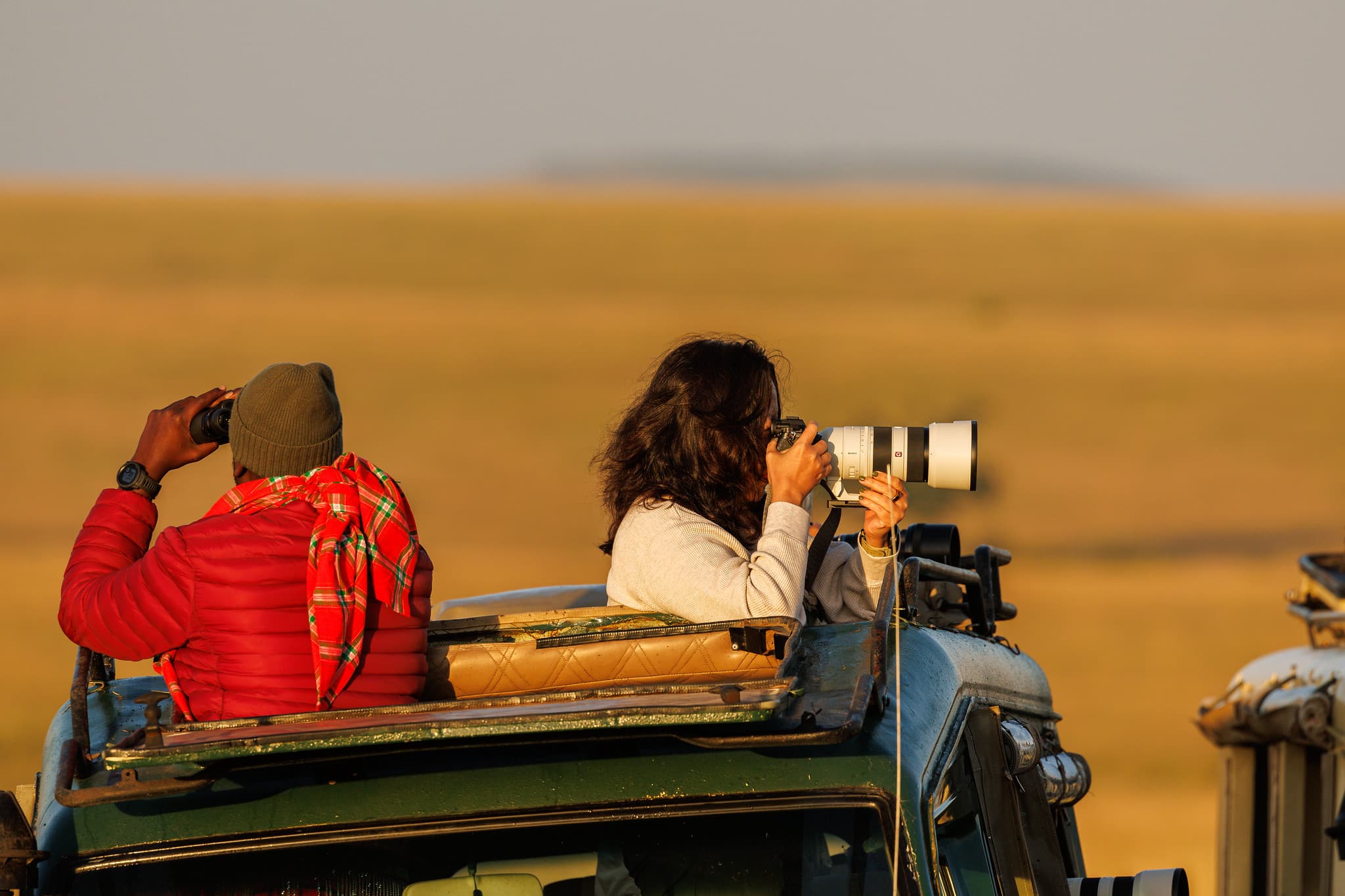
On a private safari, your guide is a wildlife expert — but rarely a photographer. On a fototrails 365 tour, Nitin is in the field with you. He understands light, composition, animal behaviour as it relates to image-making, and the specific technical challenges of shooting from a vehicle. He can look at your setup and suggest a different angle, a slower shutter speed for motion blur, or a wider lens to include the environment.
This real-time photographic mentorship is something you simply cannot replicate on a private safari, regardless of budget.
Group Energy at Key Moments
There is something about shared excitement that elevates an experience. When a leopard makes a kill in front of your vehicle and four people simultaneously react, the collective energy is part of the memory. Solo travel does not mean you need to experience everything alone.
How Group Dynamics Actually Work
If you are worried about being the odd one out, or about clashing with other guests, here is what actually happens on a small-group photography safari.
Vehicle Allocation
Fototrails 365 tours use a maximum of 4 guests per vehicle. This is non-negotiable — it ensures everyone has a window seat and enough space to operate a long lens without bumping elbows. If the group has 8 guests, there are 2 vehicles. If 12, there are 3.
You will spend most of your time with the same 3 people in your vehicle. By day two, you will have established a rhythm — who prefers the left side, who shoots wider, who likes to stay longer at predator sightings. It works itself out naturally.
Pace and Patience
On a photography-first safari, the pace is different from a general tourism safari. You do not tick off a checklist of species. If the light on a lion pride is extraordinary, you stay. If a bird is hunting from a perch with a clean background, you stay. The group understands this because everyone is there for the same reason.
Solo travellers sometimes worry that they will hold the group up or be held up by others. In practice, a group of photographers is remarkably aligned in what they want — time, patience, and good light.
Mealtimes and Downtime
Meals at safari lodges and camps are communal. You sit together, eat together, talk about the day. For solo travellers, this is a benefit, not an obligation. There is no pressure to perform socially — the shared experience of the day gives you natural conversation material.
Downtime between drives (typically 11am to 3pm) is yours. Rest, edit images, read, swim if the lodge has a pool. Nobody expects you to socialise during rest hours.
Making Friends on Safari
It happens without effort. The shared intensity of early mornings, extraordinary wildlife encounters, and golden-hour photography creates bonds quickly. You are spending 6–10 hours a day in a vehicle with people who share your passion — that is more quality time than most friendships get in a year.
Many solo travellers on fototrails 365 tours have returned for a second or third trip. Some come back with friends they met on a previous safari. The photography community Nitin has built around these tours is one of the most rewarding aspects of the experience, and it started because someone decided to book solo.
Practical Tips for Solo Safari Travellers
Pack a power bank. You will not always have a charging point at the right time, and camera batteries, phone, and a tablet for image review all compete for sockets.
Bring a small photo book or tablet with your work. Sharing your non-safari photography with the group is a great icebreaker on the first evening.
Communicate your preferences early. If you are a morning person who wants to be first out of camp, say so. If you prefer to photograph birds rather than big cats during a quiet spell, mention it. Small groups are flexible.
Do not over-plan your social expectations. Some groups click immediately and become inseparable. Others are friendly but more independent. Both are fine. You are there to photograph Africa, and everything else is a bonus.
Consider extending your trip. Many solo travellers add a day or two in Nairobi or Arusha before or after the safari to explore at their own pace. A city day on either end gives you a buffer for jet lag and a chance to ease into the trip.
The Bottom Line
Going on an African photography safari solo is not a compromise — it is a choice. You are joining a small group of people who share your specific interest, guided by a photographer who has spent years in these landscapes, with every logistical detail handled. You get the social warmth of shared experience without sacrificing independence.
The solo travellers on fototrails 365 tours consistently report the same thing: they came for the photography and left with friendships. That combination is hard to find anywhere else.