How to Combine Kenya and Tanzania Into One Photography Safari
The Masai Mara and the Serengeti are two halves of the same ecosystem. Here's how to photograph both in a single trip — the logical route, optimal timing, border logistics, and sample itineraries from 10 to 14 days.
Why Combine Kenya and Tanzania?
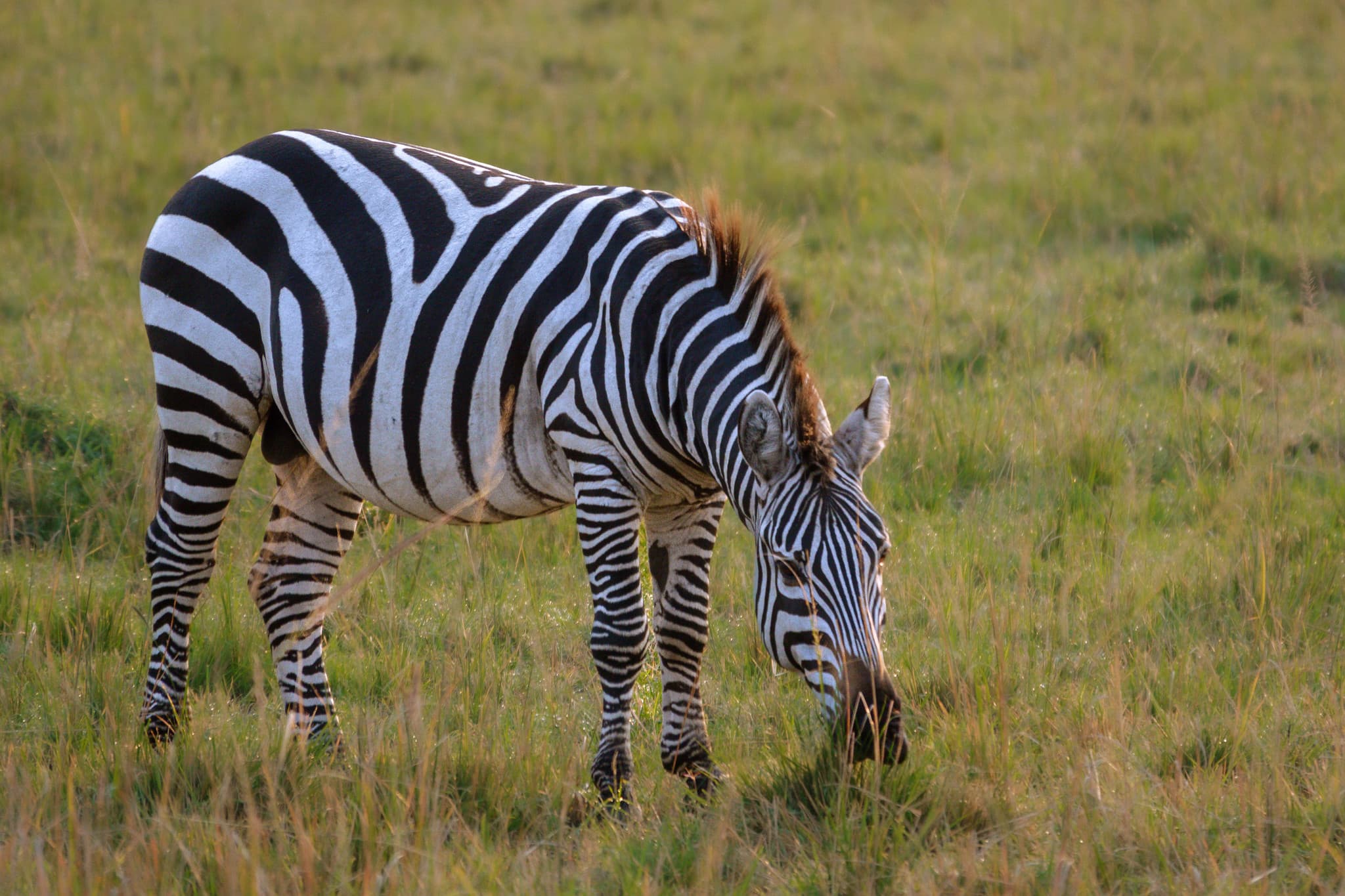
The Masai Mara and the Serengeti are not two separate ecosystems. They are one continuous savanna bisected by a political border — and the wildlife does not recognise that border. The wildebeest, zebra, and gazelle that graze the Serengeti's southern plains in February are the same animals that cross the Mara River in August. The lions that hunt the northern Serengeti in June are cousins of the prides that dominate the Mara Triangle in October.
Photographing only one side gives you half the story. A combined Kenya-Tanzania photography safari gives you the full migration circuit, two distinct ecosystems, and a photographic range that no single-country itinerary can match.
I have led combined safaris across both countries for years, and the guests who do both consistently tell me it was the best decision they made. Here is how to plan it.
The Logical Route
There are two practical routes for a combined safari. Both work well; the choice depends on your international flight routing and which country you want to finish in.
Route A: Nairobi to Arusha (South-Bound)
This is the route I recommend most often because it follows the migration's natural rhythm during peak season.
Nairobi (arrive, overnight) → Masai Mara (3–4 nights, fly or drive) → Isebania/Sirari border crossing (overland transfer) → Serengeti (3–4 nights) → Ngorongoro Crater (1–2 nights) → Arusha (depart)
The advantage here is that you begin with the Mara's concentrated big cat action and river crossings, then cross into Tanzania for the Serengeti's vast open plains and the Ngorongoro Crater — a completely different photographic environment. The itinerary builds from intensity to scale.
Route B: Arusha to Nairobi (North-Bound)
Arusha (arrive) → Ngorongoro Crater (1–2 nights) → Serengeti (3–4 nights) → Cross border at Isebania/Sirari → Masai Mara (3–4 nights) → Nairobi (depart)
This route works well for guests flying into Kilimanjaro International Airport and departing from Nairobi. It follows the migration northward — starting where the herds have been and ending where they are heading. During July and August, this can mean you arrive in the Mara just as the crossings intensify.
Both routes use the Isebania (Kenya) / Sirari (Tanzania) border crossing, which is the most practical overland crossing point between the two parks. The crossing itself takes 1–3 hours depending on queue length, and your guide handles all paperwork.
Timing: When the Herds Cross the Border
The migration's border crossing is the single most important timing consideration for a combined itinerary. The herds move between countries roughly as follows:
January – March: Herds are in the southern Serengeti (Ndutu area) for calving season. This is Tanzania-only territory.
April – June: Herds move northward through the central and western Serengeti, crossing the Grumeti River. Still largely in Tanzania.
July – October: The herds cross into Kenya's Masai Mara, with the famous Mara River crossings reaching peak frequency in August and September. This is the prime window for a combined itinerary — the animals are actively moving between the two countries.
November – December: Herds begin the southward return through the eastern Serengeti toward the Ndutu calving grounds.
The ideal months for a combined Kenya-Tanzania photography safari are July through October, when the migration is straddling the border. You can photograph the herds on the Serengeti side in the early part of the window, then follow them north into the Mara for the river crossings.
A January-to-March combined trip also works beautifully — but the photographic focus shifts from crossings to calving (Serengeti) and resident big cats (Mara).
How Many Days Do You Need?
Minimum: 10 Days
A 10-day combined itinerary is tight but workable. It typically looks like this:
- Day 1: Arrive Nairobi
- Days 2–4: Masai Mara (3 nights, full game drives)
- Day 5: Border crossing and transfer to Serengeti
- Days 6–8: Serengeti (3 nights)
- Day 9: Ngorongoro Crater (day trip or overnight)
- Day 10: Transfer to Arusha, depart
At 10 days, you get a solid taste of both ecosystems but limited flexibility. If weather or animal movement is unfavourable on a particular day, you have no buffer. I recommend this duration for experienced safari photographers who work efficiently and prioritise specific subjects.
Ideal: 14 Days
With 14 days, the trip transforms from coverage to depth.
- Day 1: Arrive Nairobi
- Days 2–5: Masai Mara (4 nights — enough time for multiple river crossing attempts and thorough big cat coverage)
- Day 6: Border crossing, afternoon drive in northern Serengeti
- Days 7–10: Serengeti (4 nights — explore the central kopjes, Seronera Valley, and follow the herds)
- Days 11–12: Ngorongoro Crater (2 nights — full crater descent plus crater rim at golden hour)
- Day 13: Transfer to Arusha, optional Tarangire or Lake Manyara visit
- Day 14: Depart Arusha
At 14 days, you can afford to spend a full morning waiting at a crossing point, dedicate a day to leopard tracking in the Seronera Valley, or revisit the Ngorongoro Crater floor when the light is better. This is the duration I build most combined itineraries around.
Extended: 16–18 Days
For photographers who want completeness, adding Amboseli (Kenya) at the start or Tarangire and Lake Manyara (Tanzania) at the end extends the photographic range significantly. Amboseli's elephants with the Kilimanjaro backdrop and Tarangire's baobab-studded elephant landscape are subjects you cannot replicate in either the Mara or the Serengeti.
What Kenya Offers That Tanzania Doesn't
Mara River crossings. The most dramatic wildebeest crossings happen on the Kenyan side, where the river banks are higher and the crocodile concentrations are greatest. The Grumeti crossings in Tanzania are worthwhile, but smaller in scale.
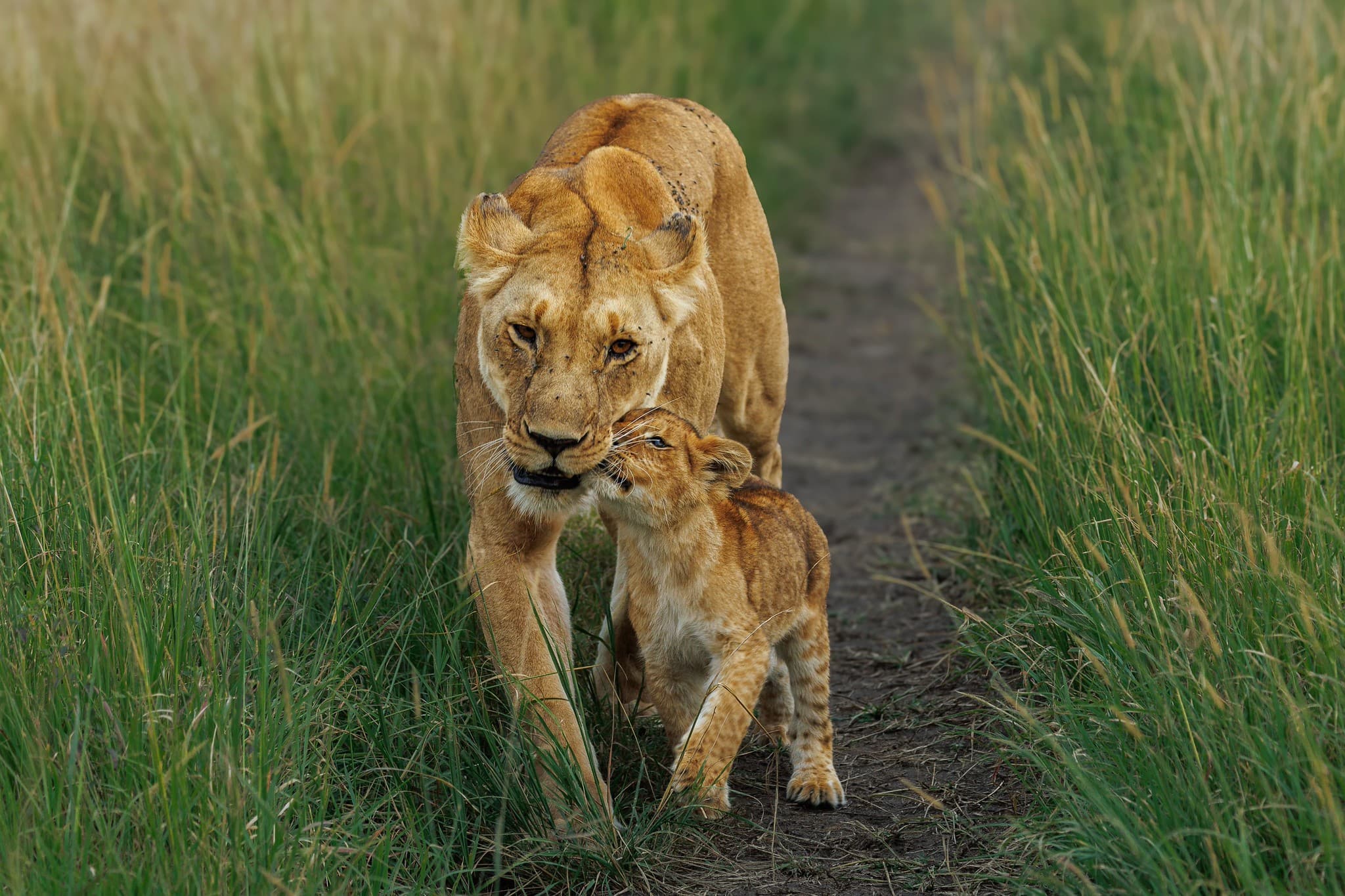
Concentrated big cat density. The Masai Mara's shorter grass and smaller reserve area mean that predator encounters are frequent and often close. On a good day in the Mara, you can photograph lions, leopards, and cheetahs in a single morning drive.
Lake Nakuru flamingos and rhino. Lake Nakuru National Park, a short detour from the Mara, offers vast flamingo flocks, white and black rhino, and Rothschild's giraffe — none of which are reliably found in the main Serengeti circuit.
Infrastructure and ease. The Mara is well-served by daily flights from Nairobi, good road networks within the reserve, and a wide range of accommodation tiers. Logistics are straightforward.
What Tanzania Offers That Kenya Doesn't
Scale. The Serengeti is nearly ten times the size of the Masai Mara. That scale translates into vast, uncrowded landscapes, remote wildlife encounters, and a sense of genuine wilderness that the busier Mara cannot always match.
Kopje photography. The Serengeti's rocky kopjes — ancient granite outcrops scattered across the plains — are unique to Tanzania. Lions rest on their summits, leopards shelter in their crevices, and the compositions they offer — a predator on a rock against an endless sky — do not exist in Kenya.
Calving season. The great wildebeest calving takes place exclusively on the Serengeti's southern plains. If you visit January through March, the Serengeti delivers something the Mara cannot.
Ngorongoro Crater. The world's largest intact volcanic caldera is a self-contained ecosystem with extraordinary wildlife density. Black rhino, lion prides, elephant, hippo, and flamingo-lined lakes — all within a single day's photography. There is nothing comparable in Kenya.
Fewer vehicles at sightings. The Serengeti's size disperses traffic naturally. In remote areas like the western corridor or the northern Loliondo sector, you may be the only vehicle at a sighting.
Border Crossing Logistics
The Isebania-Sirari border crossing is the standard route for overland combined safaris. Here is what to expect:
Documents required: Valid passport with at least six months' validity, Kenya e-Visa (if arriving in Kenya first), Tanzania visa (available on arrival at the border or pre-arranged online for approximately USD 50). Yellow fever vaccination certificate is required for entry into Tanzania from Kenya.
Crossing time: Allow 2–3 hours for the full process including vehicle clearance, immigration on both sides, and any queue. Your guide handles the vehicle paperwork; you handle your own passport and visa.
Vehicle change: In most cases, you will change vehicles and guides at the border. Kenyan tour operators are licensed in Kenya; Tanzanian operators in Tanzania. Your bags are transferred between vehicles. On fototrails 365 combined tours, I coordinate both sides so the transition is seamless — a Tanzanian vehicle and guide meet you at the border gate.
Road condition: The drive from the Masai Mara to the Isebania border takes approximately 5–6 hours on mixed tarmac and dirt roads. From the border to the northern Serengeti (Kogatende area), it is another 3–4 hours on park roads. The transfer day is long — plan for a full travel day with limited photography, though the landscapes en route are worth a few stops.
Cost Considerations
A combined itinerary costs more than a single-country trip, but the per-day value is often comparable. The main additional costs are:
Tanzania visa: Approximately USD 50 per person (single entry).
Dual park fees: You pay park entry fees in both countries. Serengeti National Park fees are approximately USD 70–80 per person per day; the Masai Mara reserve fees are approximately USD 80 per person per day. Ngorongoro Crater has a separate conservation fee of approximately USD 70 per person plus a vehicle fee.
Two sets of guides and vehicles: Because operators are country-specific, you pay for a Kenyan guide and vehicle plus a Tanzanian guide and vehicle. This is the single largest cost increase in a combined itinerary.
Bush flights: Internal flights (Nairobi to Mara, or Serengeti to Arusha) add USD 200–400 per person per leg but save full days of driving.
Rough budget guidance: A 10-day combined safari with mid-range accommodation runs approximately USD 5,500–7,000 per person (based on a group of 4). A 14-day itinerary with quality lodges and camps runs approximately USD 8,000–11,000 per person. These figures include accommodation, all meals on safari, park fees, guides, vehicles, and internal transfers — but exclude international flights, visas, travel insurance, and gratuities.
The Photographic Advantage of Doing Both
The real argument for a combined safari is not logistical. It is photographic.
The Masai Mara and the Serengeti produce fundamentally different images. The Mara gives you intimate, concentrated encounters — a cheetah three metres from the vehicle, a leopard in a fig tree at eye level, a river crossing so close you feel the spray. The Serengeti gives you scale — a million wildebeest stretching to the horizon, a lone lion on a kopje against an infinite sky, a landscape so vast it redefines your sense of space.
Together, they tell the complete story of the greatest wildlife spectacle on earth. Separately, each is extraordinary. Combined, they are unmatched.
How Fototrails 365 Builds Combined Itineraries
Every combined Kenya-Tanzania tour I build is structured around two priorities: the migration's current position and the light. I track herd movements in real time through contacts on both sides of the border and adjust the itinerary to put you where the animals are. If the herds are late crossing into Kenya, we spend an extra day in the northern Serengeti. If the crossings are happening daily, we extend the Mara leg.
The border day is planned to minimise lost photography time — early departure, efficient crossing, and an afternoon game drive on the other side. No day is wasted.
If you are considering a combined itinerary and want to discuss timing, duration, or specific photographic goals, reach out. This is the trip I most enjoy building, because it is the trip that delivers the most complete East Africa experience a photographer can have.