Samburu Photography Guide: Kenya's Northern Frontier for Rare Wildlife
Samburu National Reserve offers species you won't find anywhere else in Kenya — Grevy's zebra, reticulated giraffe, gerenuk, and Somali ostrich. Here's how to photograph them.
Why Samburu Is Different
Samburu National Reserve sits in Kenya's arid north — a landscape of red earth, doum palms, and the Ewaso Ng'iro River cutting through dry savanna. It is strikingly different from the Masai Mara's green rolling plains, and it is home to species found nowhere else in Kenya's popular safari circuit.
The "Samburu Special Five" are the headline: Grevy's zebra, reticulated giraffe, gerenuk, Beisa oryx, and Somali ostrich. These species are endemic to northern Kenya and neighbouring regions. For a wildlife photographer, they represent genuinely unique subjects — images your viewers will not have seen before.
The Samburu Special Five
Reticulated Giraffe
The most visually striking of all giraffe subspecies. Their coat pattern is a network of sharp, geometric lines — deep brown polygons separated by bright white borders. Unlike the blotchy patterns of Masai giraffe, the reticulated pattern is clean, graphic, and extremely photogenic.
Photography tip: Shoot at golden hour when the warm light intensifies the orange-brown of the coat. Use a longer lens (200–400mm) to fill the frame with the pattern detail. Include the doum palms in wider compositions for a distinctly Samburu feel.
Grevy's Zebra
The largest and most endangered zebra species. Grevy's have narrower, more closely spaced stripes than plains zebra, and their large, rounded ears are unmistakable. They are increasingly rare — estimated at fewer than 3,000 in the wild — and Samburu is one of the best places to photograph them.
Gerenuk
The "giraffe gazelle" — a slender antelope that stands on its hind legs to browse acacia bushes. This behaviour is completely unique and creates extraordinary photographs. A gerenuk balanced on its back legs, neck fully extended, reaching into a thorny bush is one of Africa's most remarkable wildlife images.
Photography tip: Gerenuks are shy and will bolt if you approach too aggressively. Stop the vehicle at a distance and let them settle. Use 400mm+ and shoot through the heat haze of the bush. The standing-browsing behaviour usually lasts 30–60 seconds before they drop back down.
Beisa Oryx
A powerful, striking antelope with long, straight horns and a distinctive black-and-white face mask. They are adapted to Samburu's arid conditions and are most often seen in small groups on open ground. The contrast of their pale body against the red Samburu earth creates strong compositions.
Somali Ostrich
The blue-necked relative of the common ostrich. The vivid blue-grey skin of the male's neck and legs is unique to this species and immediately distinguishes it in photographs.
Beyond the Special Five
Samburu is also excellent for predators:
Leopards
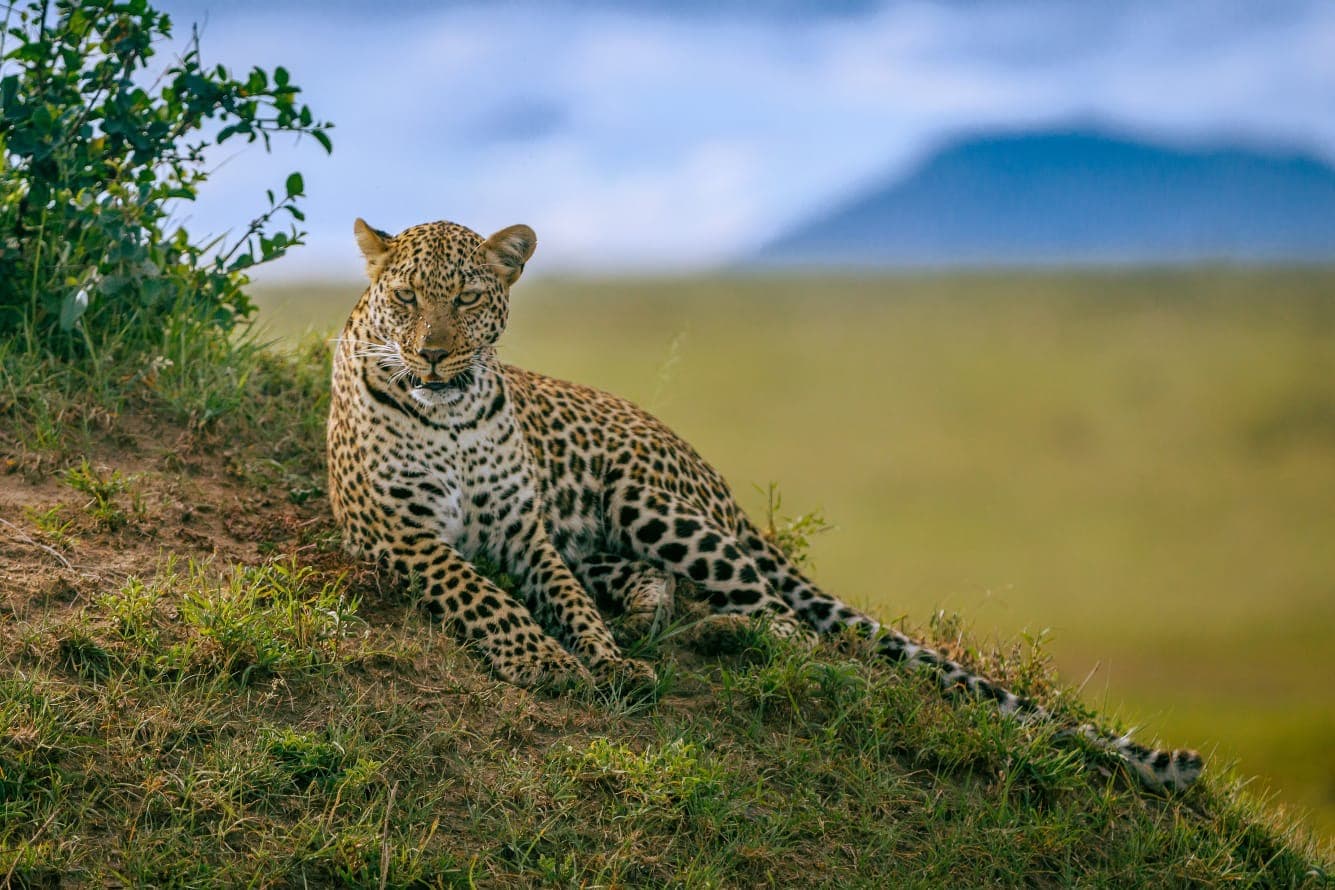
The riverine forest along the Ewaso Ng'iro is prime leopard habitat. Samburu's leopards are well-habituated and frequently seen resting in trees or hunting along the riverbank at dusk.
Lions
Samburu's lion prides are smaller than the Mara's, but the dry landscape produces dramatic images — a lion walking across red earth, framed by sparse bush, has a completely different aesthetic from the green savanna shots of southern Kenya.
African Wild Dogs
Samburu occasionally hosts wild dog packs moving through the region. Sightings are not guaranteed, but when they occur, the pack dynamics and hunting behaviour are extraordinary to photograph.
Elephants
The Ewaso Ng'iro River draws large elephant herds. Samburu elephants are famous for their relaxed temperament and close approach tolerance. Bulls bathing in the river or herds crossing at sunset are signature Samburu images.
Best Time to Visit
Dry Season (June – October)
Animals concentrate along the river. Visibility is excellent across the arid landscape. Morning and evening light is warm and golden against the red earth. This is the prime photography window.
Short Rains (November – December)
The landscape greens up slightly. Migratory birds arrive. Fewer tourists. Good photography conditions but some tracks may become muddy.
Long Rains (March – May)
The wettest period. Some roads become impassable. Most photographers avoid this window, but the green landscape and dramatic skies can produce unique images.
Camera Settings for Samburu
The arid landscape creates specific challenges:
Heat haze: The shimmering air above hot ground softens distant subjects. Shoot earlier and later in the day when haze is reduced. Avoid subjects more than 100 metres away during midday.
Contrast: The bright sky and red earth create extreme contrast. Use a graduated filter or expose for the subject and recover highlights in post-processing.
Dust: Samburu is dusty. Keep a lens cloth accessible and clean your front element regularly. Store cameras in sealed bags between drives.
Starting settings:
- Shutter: 1/1000s for walking animals, 1/2000s for running
- Aperture: f/5.6 for individual subjects, f/8 for groups
- ISO: 200–800 in open terrain (the light is strong)
Combining Samburu with Other Parks
Samburu pairs well with the Masai Mara — the contrast between the two landscapes gives your portfolio extraordinary range. On a fototrails 365 itinerary, we typically spend 2–3 days in Samburu followed by 4–5 days in the Mara, connected by a bush flight.
The journey north from Nairobi to Samburu (5–6 hours by road, or 1 hour by charter flight) passes through dramatically changing landscapes — from the green highlands through the arid Laikipia Plateau and into the red-earth Samburu country.
Explore This Destination