Why a Small Group Photography Safari Changes Everything
The difference between a 30-person bus tour and a max-12 photography safari is not just comfort — it is the difference between seeing wildlife and photographing it properly. Here is what small group actually means.
What "Small Group" Actually Means
The term "small group safari" is used liberally in the travel industry. Some operators call 20 people a small group. Others stretch it to 24. On a standard safari minibus in East Africa, you might find yourself in a pop-top van with 8 passengers, all jockeying for position at the roof hatch whenever a lion appears.
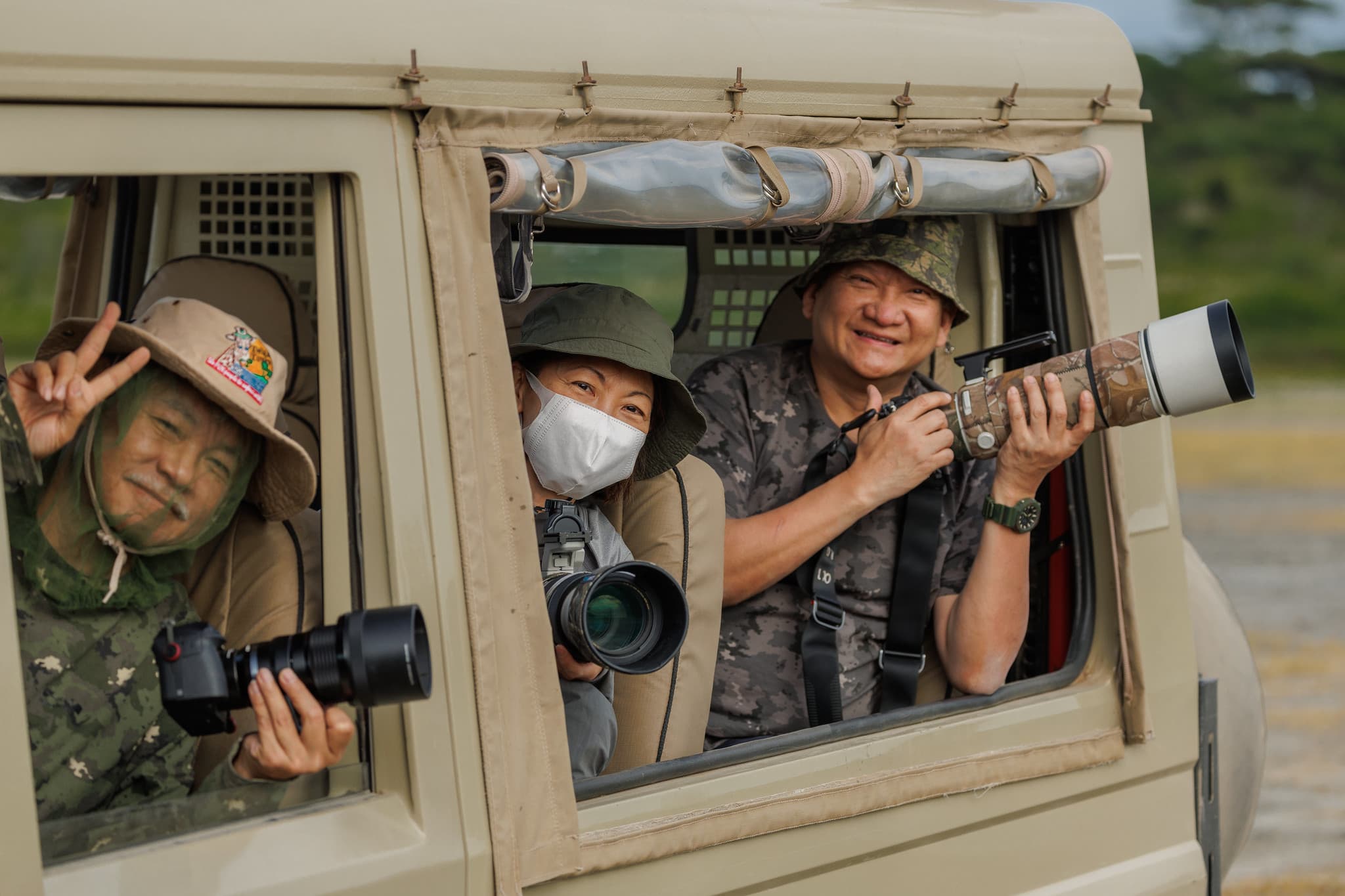
On a fototrails 365 photography safari, small group means a maximum of 12 guests across the entire tour — and a maximum of 4 guests per vehicle. These are not arbitrary numbers. They are the result of years of experience in the field, determined by what actually works for wildlife photography.
This article explains why those numbers matter and what they mean for your images.
Vehicle Space: The Foundation of Everything
The single most important factor in safari photography is your position in the vehicle. It determines your angle to the subject, your background, your ability to stabilise your lens, and whether you can even see the animal at all.
The 4-Per-Vehicle Rule
With a maximum of 4 photographers per safari vehicle, every guest has a window seat. There is no middle seat. There is no fighting for position. You set up your beanbag on the window frame, mount your lens, and shoot. If the animal moves, the guide repositions the vehicle — and you are ready immediately because you were never blocked by another passenger.
Compare this to a standard safari minibus with 6–8 guests. Two or three people share the pop-top roof hatch, passing cameras over each other's shoulders, waiting for the person in front to finish shooting before they can get their angle. The person on the wrong side of the vehicle for a particular sighting has to lean across or wait for the guide to turn around — if there is space to turn.
On a photography-first vehicle with 4 guests, this problem does not exist. Period.
Lens Space
Long telephoto lenses — 200–600mm, 100–400mm, or a 600mm prime — need physical room. You need to swing the lens smoothly to track a moving subject. You need to angle it down for a close animal or up for a bird in a tree. With only 4 people in a vehicle designed for 7, you have the elbow room to operate your gear properly.
This sounds like a minor comfort detail. It is not. The difference between getting the shot and missing it is often the two seconds it takes to reposition a long lens past someone else's head.
Guide Attention: The Multiplier
A safari guide's job is to find wildlife and position the vehicle for the best possible viewing. On a photography safari, the job expands: find wildlife, read the behaviour, predict the next movement, position the vehicle for the best light angle, and hold that position as long as the photography requires.
Reading the Scene for Photographers
A general safari guide positions the vehicle so everyone can see the animal. A photography-focused guide positions it so the light falls correctly on the subject, the background is uncluttered, and the angle reveals the animal's expression or behaviour.
This distinction is significant. "Everyone can see the lion" and "the lion is front-lit with a clean savanna background at f/5.6" are two entirely different positions. On a fototrails 365 tour, Nitin works with the guides to achieve the second outcome, every time.
With only 4 guests to consider rather than 8 or 12 in a single vehicle, the guide can make micro-adjustments. Move forward two metres. Angle left by ten degrees. Kill the engine so the vibration does not affect the shot. These small decisions accumulate across a week of game drives into a dramatically better portfolio of images.
Communicating Your Needs
In a small group, you can tell the guide what you need. "Can we get lower?" "Can we move so the tree is not behind the head?" "Can we wait for it to turn?" In a larger group, these requests compete with each other and the guide defaults to a compromise position that satisfies nobody fully.
With 4 people who are all serious about photography, the requests tend to align. Everyone benefits when the vehicle is repositioned for better light.
Positioning Flexibility: Staying, Moving, and Waiting
Staying at a Sighting
On a large group tour, the schedule is king. You have a set route, a set return time for breakfast, and a list of things the operator wants to show you. When a leopard is resting in a tree, you might get 10 minutes before the driver announces it is time to move on.
On a photography-first small group safari, you stay as long as the light and the animal cooperate. If a leopard is in a tree and the morning light is filtering through the leaves, you stay. If the animal shifts position and the background improves, you keep shooting. If it begins to descend, you wait for the moment its body stretches along the branch — and you get the shot because you did not leave 20 minutes ago.
This patience is the single biggest advantage of a photography-focused itinerary. Great wildlife images are made by photographers who were in the right place and refused to leave too early.
Moving Between Sightings
Conversely, a small group can move efficiently. If a sighting is not producing good images — harsh midday light, animal sleeping in thick bush, too many other vehicles crowding the scene — the guide can leave immediately. There is no committee decision, no waiting for the couple in the back to finish their phone video. The group reads the situation, the guide moves, and you are at the next opportunity five minutes later.
Waiting for Something to Happen
Some of the best wildlife photography happens when you commit to a location and wait. A river crossing point where wildebeest are gathering on the far bank. A termite mound where a cheetah was seen yesterday. A waterhole at dusk where elephants are expected.
Large group tours cannot afford to wait. Their schedule has stops to make and a return time to honour. A small photography group can commit to a position for an hour — or two — because the itinerary is built around photographic opportunity, not a checklist.
Like-Minded Companions: The Underrated Advantage
On a general safari, your fellow guests might include families with young children, honeymooners, birdwatchers, and people primarily interested in a luxury holiday with wildlife as a backdrop. These are all valid reasons to visit Africa, but they create conflicting priorities in a shared vehicle.
On a photography safari, every guest has chosen to spend significant money and time on a trip organised specifically around making images. The baseline level of interest, patience, and willingness to sit quietly at a sighting is completely different.
Learning From Each Other
A group of 8–12 photographers at varying skill levels creates a natural learning environment. Someone in the group shoots mirrorless; someone else shoots DSLR. One person is experimenting with slow shutter panning; another is perfecting back-button focus technique. Over dinner and during image review sessions, techniques and ideas flow freely.
This peer learning supplements the structured guidance Nitin provides. You see someone else's composition of a scene you also shot and it opens a new way of seeing. You learn a post-processing trick over breakfast. You discover a lens you had never considered.
The accumulated knowledge in a group of enthusiastic photographers is remarkable, and it is available to you simply by being present and open.
The Social Dynamic
Photography safaris attract a specific kind of person — patient, observant, willing to wake at 5am, comfortable with silence during a stakeout, and enthusiastic about sharing the results. This self-selection means the social dynamic on a photography tour tends to be easy and natural.
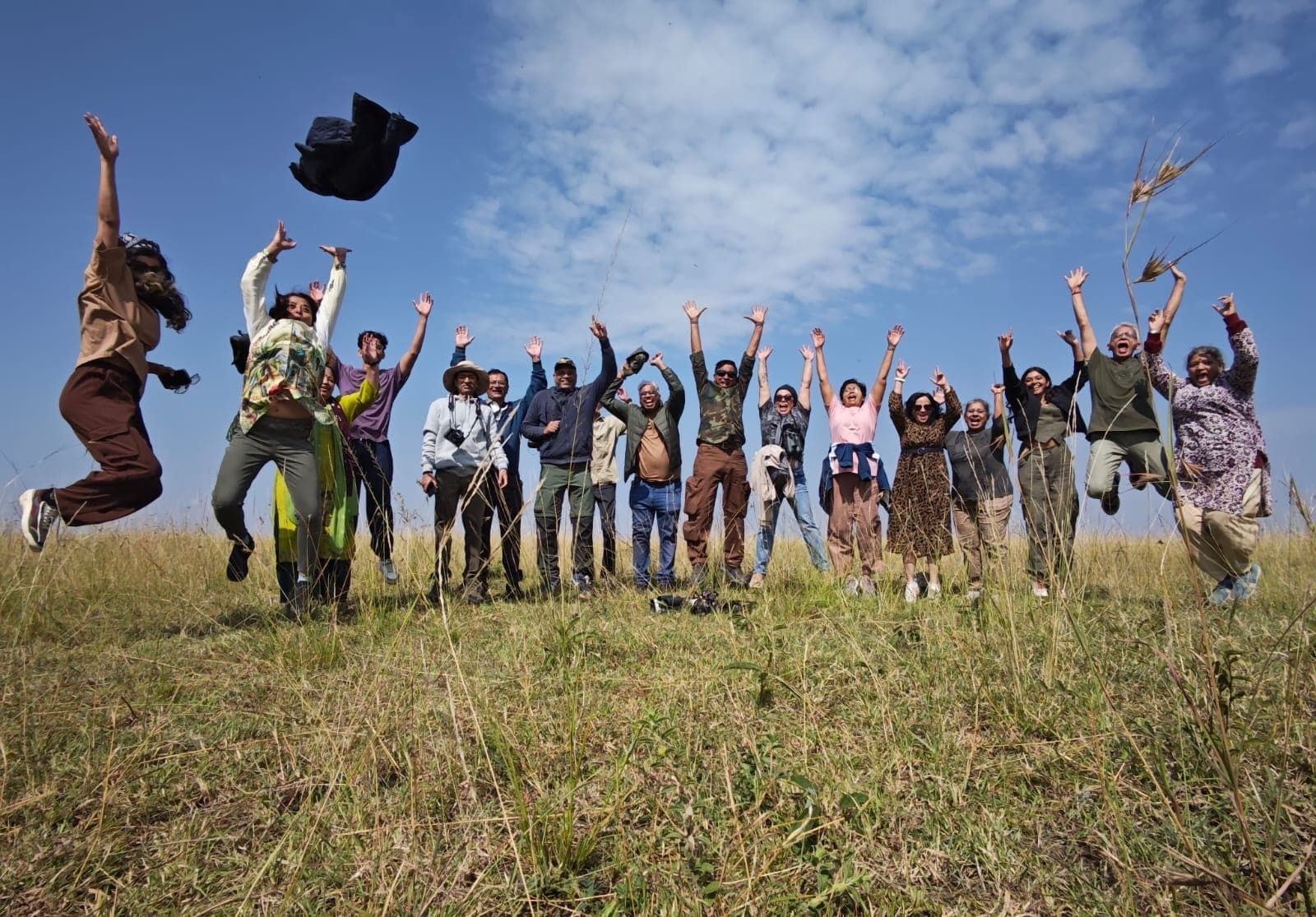
Solo travellers blend in immediately. Couples find common ground with other guests beyond their own relationship. First-timers are supported by experienced safari photographers. The group becomes a temporary community bound by shared early mornings and extraordinary moments.
Cost Efficiency: The Practical Case
A fully private photography safari — your own vehicle, your own guide, Nitin exclusively with you — is available, and it is the ultimate experience. It is also expensive. A private vehicle in the Masai Mara during peak season, with an experienced driver-guide, costs significantly more per day than a shared vehicle.
A small group photography safari distributes vehicle costs, guide costs, park fees, and Nitin's guiding fee across multiple guests. The result is a significantly lower per-person price for an experience that, for most photographers, is not meaningfully different from a private setup.
You still get a window seat. You still get Nitin's guidance. You still get a photography-first pace. You get all of this at a fraction of the private cost — plus the social and learning benefits of a group.
For photographers who want the private experience, fototrails 365 offers custom private tours. But for the vast majority, the small group format delivers the best balance of quality, access, and value.
What "Photography-First" Means in Practice
This phrase appears on many safari operator websites. Here is what it means on a fototrails 365 tour, in specific terms:
Game drive timing is based on light. You leave camp before sunrise and return after sunset. The midday hours — when the light is harsh and most animals are resting — are spent at camp reviewing images, resting, or receiving post-processing tips from Nitin.
Vehicle positioning is based on photography. The guide does not park at the nearest spot with a view. They position for light direction, background, and shooting angle. If repositioning is needed after the animal moves, it happens immediately.
Time at a sighting is based on photographic potential. There is no fixed time allocation per sighting. If the situation is producing strong images, you stay. If it is not, you move without guilt.
The itinerary is flexible. If intelligence from other guides suggests a leopard with cubs has been seen in a particular area, the morning plan changes. The schedule serves the photography, not the other way around.
Image review sessions happen daily. Nitin reviews guest images each evening, offering specific, constructive feedback on composition, exposure, and post-processing. This accelerates your learning across the duration of the trip in a way that shooting alone cannot match.
The Difference You Take Home
After a week on safari, the difference between a large group general tour and a small group photography tour shows in the images. Not subtly — dramatically.
The large group tourist comes home with record shots. Proof they saw the animal. The animal in the centre of the frame, harsh midday light, cluttered background, slightly soft because the van was vibrating.
The small group photography guest comes home with portfolio images. The leopard descending the tree in golden light. The elephant at the waterhole with a perfect reflection. The cheetah mid-stride, frozen at 1/2500s, eyes locked on prey. Images that required patience, positioning, guidance, and the physical space to operate a camera properly.
That difference is what a small group photography safari delivers. It is not a luxury upgrade — it is a fundamentally different way to experience and photograph the African wilderness.